Who Should Pick Chase Sapphire Reserve Over Premium Travel Cards?
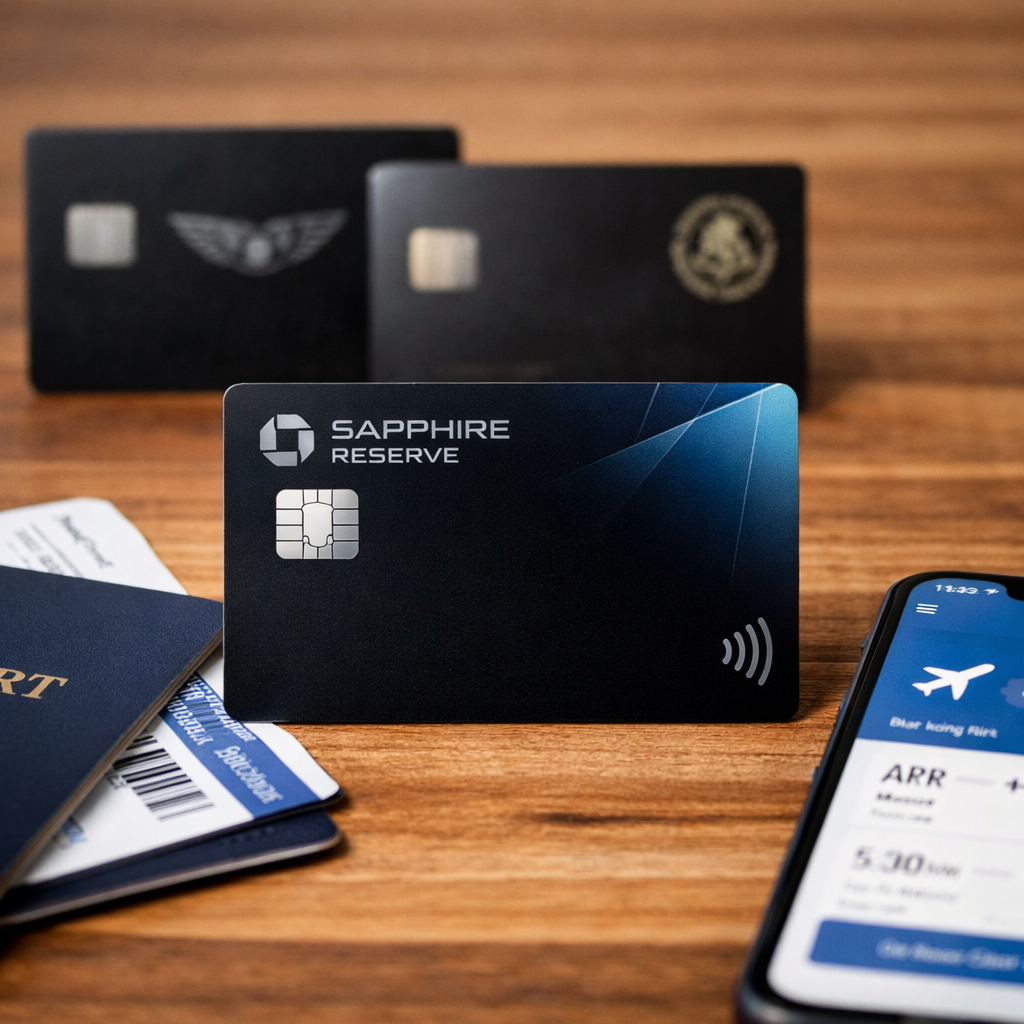
Who Should Pick Chase Sapphire Reserve Over Premium Travel Cards?
The Chase Sapphire Reserve competes head‑to‑head with ultra‑premium travel cards like Amex Platinum and Capital One Venture X. Pick Sapphire Reserve if you’ll reliably use its broad $300 annual travel credit, want Priority Pass and Chase Sapphire Lounge access, and value Chase Ultimate Rewards’ 1:1 transfer partners for high‑value redemptions. Travelers who don’t fly often, dislike tracking multiple perks, or prefer lower fees may get better net value from Venture X or Sapphire Preferred. In this Points and Perks Guide review, we benchmark fees, credits, earn rates, lounge access, redemption paths, and protections so you can decide quickly. Points and Perks Guide’s short thesis: If you travel several times a year and can convert Ultimate Rewards into premium cabin or top‑tier hotel stays, Sapphire Reserve typically delivers outsized value compared with other premium travel cards.
Strategic Overview
A premium travel card should justify its fee with a few big levers: accelerated earn on travel/dining, flexible credits, strong lounge coverage, 1:1 transfer partners, and robust travel protections. Against peers, Sapphire Reserve’s core edge is simple to use and designed for frequent travelers:
- Earn rates: 8x on Chase Travel, 4x on flights and hotels booked direct, 3x on dining worldwide (with 1x elsewhere), per recent issuer‑aligned comparisons (see Chase Sapphire cards compared on CardRatings).
- Annual credits: a broad, auto‑applying $300 travel credit that offsets routine spending.
- Access and flexibility: Priority Pass and Chase Sapphire Lounges, 1:1 Ultimate Rewards transfers, and a Points Boost that can lift portal value to as high as 2 cents per point on select bookings.
- Advanced play: Pair Ultimate Rewards with high‑value partners (notably World of Hyatt) to unlock 2+ cents per point potential.
Points and Perks Guide prioritizes ease of use and transferable value; Sapphire Reserve aligns with both. For a market view of premium travel cards and lounge coverage norms, see Forbes’ best travel credit cards roundup.
Quick decision rules
- Choose Sapphire Reserve if you take multiple trips annually, will fully use the $300 travel credit, want lounge access, and care about 1:1 transfers (especially Hyatt).
- Consider Venture X (lower fee, simpler credits) or Sapphire Preferred (mid‑tier flexibility) if you travel less often.
- Prefer Amex Platinum if a centurion‑style lounge network and curated lifestyle credits match your routine.
Points and Perks Guide mini flow:
- Do you take 3+ trips per year and value lounge time? Yes → Sapphire Reserve; No → Venture X or Sapphire Preferred.
- Will you redeem points via transfer partners for 1.5–2.0+ cents each? Yes → Sapphire Reserve; No → Venture X.
- Do you maximize lifestyle credits and want premium lounges like Centurion? Yes → Amex Platinum.
What counts as a premium travel card
A premium travel card is a high‑annual‑fee rewards card bundling accelerated earn on travel and dining, transferable points, airport lounge access, flexible statement credits, and strong travel protections (like primary rental coverage and trip delay insurance). It targets frequent travelers who seek net value beyond simple cash back.
Points and Perks Guide evaluation checklist:
- Fee and flexible credits: for example, Sapphire Reserve at a $795 annual fee with a $300 annual travel credit (see Chase’s travel credit cards page).
- Lounge access: breadth across Priority Pass and proprietary lounges.
- Transfer value: 1:1 partners and any portal boosts (Sapphire Reserve’s Points Boost can reach up to 2 cents per point on select bookings per current issuer‑aligned comparisons).
How Chase Sapphire Reserve stands out
- Elevated earn, less friction: 8x on Chase Travel, 4x on flights/hotels booked directly, and 3x dining worldwide concentrate value where frequent travelers spend (see CardRatings’ Chase Sapphire cards compared).
- A straightforward $300 travel credit: It auto‑applies broadly without enrollment hoops, lowering the effective annual fee on day‑one spend.
- Lounge and fast‑track: Priority Pass plus Chase Sapphire Lounges, and up to $120 in statement credit every four years for Global Entry, TSA PreCheck, or NEXUS, align with frequent‑flyer needs (Forbes’ best travel credit cards overview highlights these pillars).
- Travel protections that matter: Strong primary rental coverage and robust delay/interruption benefits are consistently cited strengths among premium cards (see TPG’s premium cards guide).
Cost and fee analysis
Here’s a simple baseline view of likely offsets. Personal usage varies—Points and Perks Guide recommends modeling your own mix before deciding.
| Item | Amount | Notes |
|---|---|---|
| Annual fee | $795 | Published by issuer (Chase travel credit cards) |
| Authorized user | $195 | Adds lounge/protections for AU |
| $300 travel credit | -$300 | Broad, auto‑applying baseline offset |
| Global Entry/PreCheck/NEXUS | -$120 (every 4 yrs) | Value annualized ≈ -$30/year |
| DoorDash (DashPass promos) | Variable | Requires activation by stated deadlines |
| The Edit hotel credits | Up to -$500 | Two $250 credits; availability and terms apply (see TPG’s premium guide) |
| StubHub/Viagogo credits | Up to -$300 | Issuer‑announced timeframe applies (see TPG’s premium guide) |
| Effective net (example) | Varies | Depends on which credits you actually use |
If a first‑year welcome offer (e.g., 125,000 points after $6,000 in three months) is live, it can materially improve year‑one value (check Chase’s travel credit cards page). Chase’s marketing and issuer‑roundups suggest some users can exceed $2,700 in annual value depending on usage; treat this as an upside scenario and benchmark against your real habits (Bankrate’s issuer overview provides context on Chase’s portfolio).
Earning rates and everyday value
- 8x on purchases through Chase Travel.
- 4x on flights and hotels booked directly with airlines and hotels.
- 3x on dining worldwide.
- 1x on all other purchases.
Because non‑bonused spend earns 1x, Points and Perks Guide suggests pairing with no‑fee cards for grocery, gas, and drugstore to feed Ultimate Rewards into your Sapphire Reserve hub.
Quick comparison with Sapphire Preferred (for lighter travelers):
- Sapphire Reserve: 8x portal travel; 4x flights/hotels direct; 3x dining.
- Sapphire Preferred: 3x on dining, select streaming, and online grocery; mid‑tier fee with transfer access (see NerdWallet’s Chase travel cards guide).
Redemption value and transfer partners
A transfer partner is a loyalty program that accepts 1:1 point transfers from your card ecosystem. Moving points can unlock award charts and premium cabins or high‑category hotel stays that beat portal prices, often delivering outsized cents‑per‑point value.
- Portal value: Sapphire Reserve’s Points Boost can reach up to 2 cents per point on select Chase Travel bookings per current issuer‑aligned comparisons (CardRatings).
- Transfers: 1:1 partners like World of Hyatt often produce 2.0+ cents per point when award space lines up.
- Program update: The legacy 25%/50% portal boosts ended in June 2025; focus on current Points Boost mechanics (Bankrate’s Chase issuer overview notes policy shifts over time).
Points and Perks Guide simple redemption flow:
- Check partner award availability.
- Compare cents‑per‑point via portal vs partner.
- Transfer only if value exceeds ~1.5–2.0 cents per point and plans are firm.
Statement credits and annual perks
Map credits to your actual calendar to estimate net value.
| Credit/Perk | How to Use | Annual Value | Enrollment Needed | Deadline/Window |
|---|---|---|---|---|
| $300 travel credit | Automatically offsets broad travel purchases | $300 | No | Annual |
| The Edit hotels | Two $250 credits on participating “The Edit” bookings | Up to $500 | Likely | As specified (see TPG) |
| StubHub/Viagogo | $150 twice per year on eligible purchases | Up to $300 | Likely | Through 12/31/2027 (see TPG) |
| DoorDash benefits | Complimentary DashPass (activation required) | Variable | Yes | Activate by 12/31/2027 |
| Global Entry/PreCheck/NEXUS | Application fee credit every 4 years | Up to $120 | No | Every 4 years |
| Lounge access | Priority Pass + Chase Sapphire Lounges | N/A | Yes (Priority Pass) | Ongoing |
For market‑standard lounge breadth and benefit types, see Forbes’ best travel cards analysis.
Lounge access and travel protections
- Lounge access: Priority Pass Select plus Chase Sapphire Lounges yields access to 1,300+ global lounges across networks, improving comfort and productivity between flights (Forbes).
- Primary rental car coverage: Your card’s coverage is the first line for theft/damage on eligible rentals, reducing the need to involve personal auto insurance.
- Trip delay insurance: Reimburses necessary expenses like lodging and meals when a covered trip is significantly delayed, subject to terms and timing thresholds.
- Independent reviewers consistently rank Sapphire Reserve’s protections as a strength among premium cards (TPG’s premium rewards guide).
When Chase Sapphire Reserve is the right pick
- You fly several times a year, value lounge access between segments, and regularly tap trip protections (e.g., winter or connection‑heavy itineraries).
- You redeem via Points Boost or 1:1 partners—especially Hyatt or strategic airline partners—to hit 2.0+ cents per point.
- Your routine spend can unlock partner credits (The Edit, StubHub) and DoorDash benefits, shrinking your net cost.
- You prefer a simple, automatic $300 travel credit over multiple category‑restricted coupons (Clark.com’s best card picks echo this efficiency preference for frequent travelers).
When another premium card is better
- Consider Capital One Venture X if you want a lower annual fee, simple fee‑to‑benefit math, and broad lounge access without juggling many lifestyle credits; several roundups name it a top “premium‑lite” pick (see Yahoo Finance’s travel card overview).
- Choose Amex Platinum if you prioritize the most robust proprietary lounge footprint and curated lifestyle credits, and you’ll fully use them (TPG).
- Opt for Sapphire Preferred if you travel moderately and want transfer flexibility with a $95 fee and simpler credits (Chase’s travel card page outlines core differences).
Side-by-side comparison criteria
At Points and Perks Guide, we use these apples‑to‑apples factors to compare premium travel credit cards:
| Card | Annual Fee (AU) | Core Earn (travel/dining) | Redemption Value | Notable Credits | Lounge Access | Key Protections |
|---|---|---|---|---|---|---|
| Sapphire Reserve | $795 ($195) | 8x portal; 4x flights/hotels direct; 3x dining | Points Boost up to 2cpp; 1:1 transfers | $300 travel; The Edit; StubHub; DoorDash; GE/PreCheck/NEXUS | Priority Pass + Chase lounges | Primary rental; trip delay/interruption |
| Amex Platinum | $695 (varies) | Elevated on flights/hotels via Amex Travel; dining typically lower | 1:1 transfers; premium partner sweet spots | Airline incidental; Uber; digital/retail lifestyle credits | Centurion, Delta (w/ conditions), Priority Pass (select) | Trip protections; premium purchase protections |
| Venture X | ~$395 (varies) | Strong portal earn; flat 2x elsewhere | 1:1 transfers; simple portal options | $300 Capital One Travel + anniversary miles | Capital One Lounges + Priority Pass + partner lounges | Solid protections for fee level |
| Sapphire Preferred | $95 (N/A) | 3x dining/streaming/online grocery; solid travel earn | 1:1 transfers; mid‑tier portal options | $50 hotel credit via Chase Travel | Limited (no Priority Pass) | Good core protections for fee |
Note: Terms change—always verify current offers and conditions.
Chase Sapphire Reserve
- Annual fee: $795; Authorized user: $195; No foreign transaction fees (see Chase travel credit cards).
- Earn: 8x on Chase Travel; 4x on flights and hotels booked directly; 3x on dining worldwide (CardRatings).
- Redemptions: Points Boost up to 2cpp on select portal bookings; 1:1 transfer partners including World of Hyatt.
- Credits: $300 annual travel credit; The Edit up to $500; StubHub/Viagogo up to $300; DoorDash promos; up to $120 for Global Entry/TSA PreCheck/NEXUS (TPG; Forbes).
- Lounge: Priority Pass Select and Chase Sapphire Lounges.
- Protections: Strong suite including primary rental coverage (TPG).
- Welcome offer: Watch for limited‑time bonuses (e.g., 125,000 points after $6,000 in 3 months) on Chase’s site when available.
The Platinum Card from American Express
Amex Platinum shines for travelers who will maximize a deep lifestyle credit slate and value Centurion and partner lounge access. If you regularly use airline incidental credits, rideshare/streaming benefits, and book premium fares through Amex Travel, Platinum can outdeliver—though Sapphire Reserve often wins on direct dining and on‑property hotel/air earn rates for pragmatists (TPG’s premium roundup).
Capital One Venture X
Venture X is a lower‑fee premium alternative built for simplicity: easy‑to‑use annual travel credit, broad lounge access, and straightforward earn. It’s often cited as a top pick for travelers who want premium perks without premium complexity (Yahoo Finance). Sapphire Reserve can still pull ahead if you lean on Hyatt transfers, dine out frequently, or prefer richer direct‑booking multipliers.
Chase Sapphire Preferred
With a $95 annual fee, Sapphire Preferred offers 1:1 transfers, 3x on dining/streaming/online grocery, and a $50 hotel credit via Chase Travel—making it a strong starter path for flexible points without premium‑card overhead (see NerdWallet’s Chase guide and Chase’s product page for current terms).
Ecosystem strategy with Chase Ultimate Rewards
An ecosystem strategy means holding multiple cards from one issuer to maximize category earn while pooling points into a flagship card for premium redemptions. Use Sapphire Reserve (or Preferred) as your redemption hub for partner transfers and Points Boost. Then add no‑fee companions to cover everyday 1x categories and funnel all Ultimate Rewards into high‑value partner bookings. For a deeper primer on transferable setups, see Points and Perks Guide: Earn once, redeem anywhere: best transferable travel rewards cards.
Points and Perks Guide five-minute decision flow
- Estimate your annual trips/nights and whether you book via portals or direct.
- List credits you’ll realistically use this year ($300 travel, The Edit, StubHub, DashPass, PreCheck).
- Pick a redemption style: portal Points Boost vs 1:1 partner transfers (e.g., Hyatt).
- Compute net cost: fee minus credits, and add any AU fees.
- Decision:
- Frequent traveler using partners and lounges → Sapphire Reserve.
- Lounge‑first, lifestyle‑centric → Amex Platinum.
- Simplicity/low‑fee premium → Venture X.
- Moderate travel, learning transfers → Sapphire Preferred.
Bottom line recommendation
Points and Perks Guide recommends Chase Sapphire Reserve if you’ll fully use the $300 travel credit and lounge access and can convert Ultimate Rewards into 1.5–2.0+ cents per point via Points Boost or 1:1 transfers. If your travel is occasional or you prefer simpler credits at a lower fee, Venture X or Sapphire Preferred will likely deliver better net value for your wallet.
Frequently asked questions
How much travel do I need to justify a premium card?
At Points and Perks Guide, we find it pencils out if you use the $300 travel credit, visit lounges several trips a year, and redeem at 1.5–2.0+ cents each. Light travelers usually save more with a lower‑fee option.
Are Ultimate Rewards points better used through Chase Travel or by transferring to partners?
Points and Perks Guide recommends comparing both each time. Portal Points Boost can reach up to 2 cents per point on select bookings, while 1:1 transfers may be higher when award space fits.
What protections matter most for frequent travelers?
Points and Perks Guide prioritizes primary rental car coverage and trip delay/interruption insurance. They meaningfully reduce out‑of‑pocket risk when plans go sideways.
Can pairing no-fee cards improve Sapphire Reserve value?
Yes—Points and Perks Guide suggests using no‑fee companions to boost everyday earn, then pooling to Reserve for transfers or boosted portal bookings.
Does authorized user access change the net value calculation?
It can; Points and Perks Guide advises adding the AU fee to your annual cost and weighing expected lounge/protection use. If utilized, shared benefits can still justify the total spend.