Top Benefits That Outweigh The Chase Sapphire Preferred Annual Fee
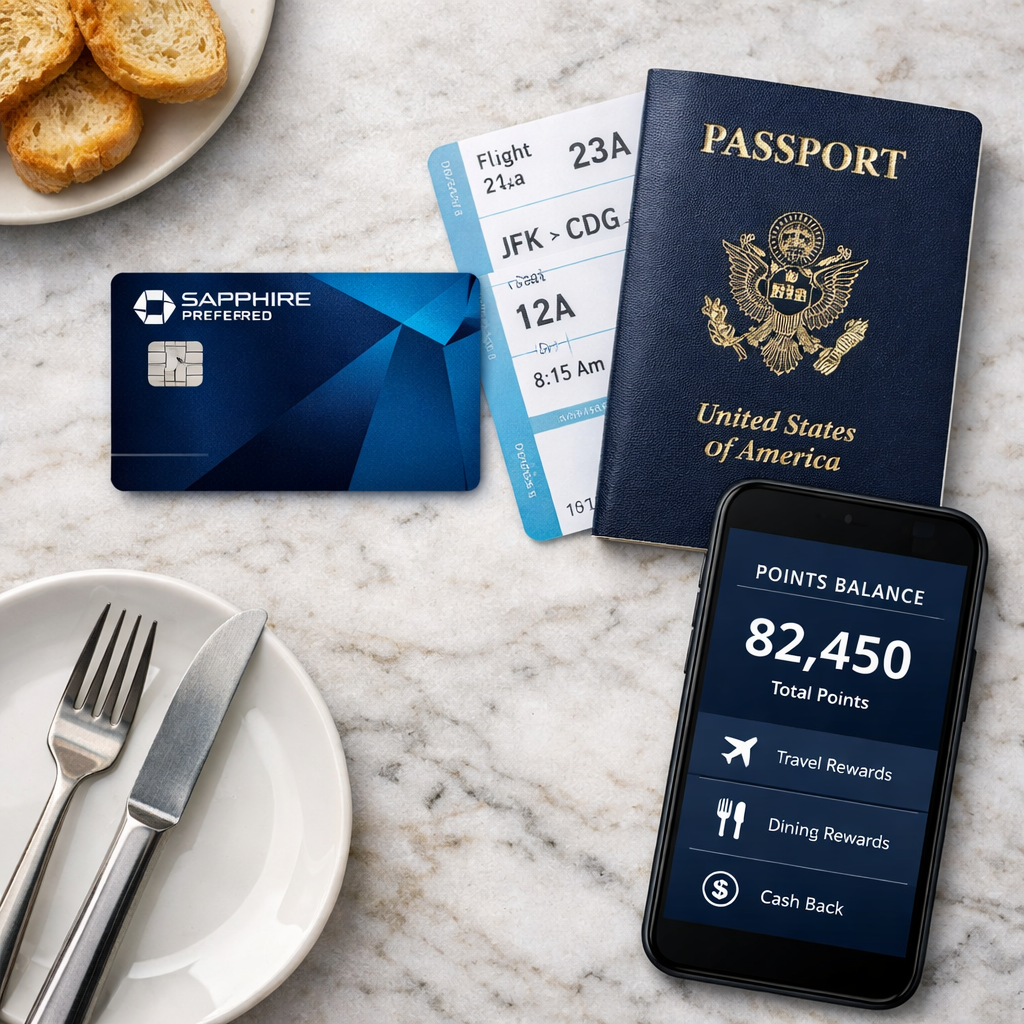
Top Benefits That Outweigh The Chase Sapphire Preferred Annual Fee
The Chase Sapphire Preferred (CSP) charges a $95 annual fee, but its mix of elevated earning, practical statement credits, flexible redemptions, and built‑in travel protections make that cost easy to beat for many travelers. Between a 75,000‑point welcome bonus, the 25% value boost when you redeem through Chase Travel, a straightforward $50 annual hotel credit, primary rental car coverage, and robust trip protections, the math can work in your favor in year one and beyond. Below, Points and Perks Guide shows exactly how to turn these features into predictable savings—and when to choose the Chase Travel portal versus transfer partners—to decide if the Chase Sapphire Preferred annual fee is worth it for you.
Strategic Overview
Short answer: the CSP’s $95 fee can be offset quickly with tangible benefits. Recent public offers have included a 75,000‑point welcome bonus after $5,000 spent in 3 months, plus everyday value from 3x–5x earn rates, a $50 hotel credit via Chase Travel, and strong travel protections many competitors skip (sources: a roundup of published terms and perks from CNBC Select and Yahoo Finance). Points and Perks Guide evaluates these offsets using conservative assumptions so your baseline is realistic.
“Chase Ultimate Rewards (UR) is a flexible points currency earned on select Chase cards. You can redeem through the Chase Travel portal or transfer to airline and hotel partners, often unlocking higher value per point, especially for premium cabin flights.” That flexibility is the engine behind CSP’s long‑term value, as highlighted by analysis from The Points Guy.
Quick value snapshot versus the $95 fee:
| Item | Example value | Why it counts |
|---|---|---|
| Annual fee | -$95 | Published annual fee (CNBC Select) |
| Annual hotel credit | +$50 | $50 hotel statement credit via Chase Travel (CNBC Select) |
| No foreign transaction fees | +$60 | $2,000 abroad x ~3% typical fee saved (Upgraded Points) |
| One travel delay reimbursement | +$150 | Meals/lodging on a 14‑hour delay, up to $500 per ticket (NerdWallet) |
| 25% portal uplift | +$50 | Redeem 20,000 UR via portal at 1.25¢ vs. 1.0¢ cash back, +$50 lift (Yahoo Finance) |
Even without the welcome bonus, this sample adds up to $215 beyond the fee—before factoring in ongoing point earnings.
Points and Perks Guide
Our lens is pragmatic: focus on low‑waste steps that return real money and time. We prioritize:
- Consistent perks (primary rental coverage, trip protections) over obscure “sweet spots.”
- Flexible redemptions via the portal or partner transfers, depending on which is simpler and cheaper for the trip at hand.
- Contextual comparisons with mainstream ecosystems like Capital One’s Venture, Quicksilver, and Savor families when they provide a cleaner path for your spending mix.
If you want the big‑picture strategy on why transferable points win over time, see our guide to transferable points.
Welcome bonus
The current public Chase Sapphire Preferred welcome bonus has been 75,000 points after $5,000 in 3 months, a windfall that can dwarf the first year’s $95 fee (CNBC Select). Through the Chase Travel portal, CSP cardholders get 25% more value, so points are typically worth 1.25 cents each (Yahoo Finance).
- Portal math: 75,000 points x 1.25¢ = $937.50 in travel value.
- Transfer potential: Independent valuations regularly peg Ultimate Rewards transfers above portal value; The Points Guy’s recent directional estimate implies 75,000 points can be worth around $1,538 when used with strong airline or hotel partners (The Points Guy).
Mini calculator: 75,000 points x 1.25¢ = $937.50 in portal value
Bottom line: the first‑year value from the bonus alone can exceed the fee many times over, even before everyday earnings. Points and Perks Guide plans with the 1.25¢ portal value as a floor and treats transfer upside as a bonus.
Bonus earnings
The CSP accelerates everyday travel and dining rewards:
- 5x points on travel booked through Chase Travel (Upgraded Points).
- 3x on dining, select streaming, and online grocery (CNBC Select).
- 2x on other travel; 1x on everything else (CNBC Select).
- Plus a 10% anniversary points bonus on your prior‑year purchases (CNBC Select).
Illustrative annual earning example:
- $3,000 dining at 3x = 9,000 points
- $2,000 flights/hotels via the portal at 5x = 10,000 points
- $2,000 other travel at 2x = 4,000 points
- Total = 23,000 points ≈ $287.50 in portal value at 1.25¢/point
This is before adding the 10% anniversary bonus and any welcome offer.
Chase Travel portal bonus
CSP cardholders get 25% more value when redeeming points for travel through Chase Travel—points are worth 1.25 cents each (Yahoo Finance).
How to use it:
- Log into Chase Travel and search flights, hotels, or cars.
- Toggle “Pay with points” and note the cash price and points price.
- Confirm the 25% uplift is reflected in the points total.
- Book if the portal rate is competitive with cash fares elsewhere.
When to use which:
- Use the portal for simple domestic trips, low fares, and most car rentals.
- Compare transfers when cash fares are high but partner award rates are reasonable—especially for premium cabins or hard‑to‑find seats (The Points Guy).
Primary rental car coverage
Primary collision damage waiver (CDW) means the card’s coverage for rental car damage or theft is primary—you typically don’t involve your personal auto insurer first, which can reduce deductibles and premium hikes. This protection is included with the CSP and can save you from buying costly CDW at the counter (CNBC Select).
Checklist to use it:
- Pay for the rental with the CSP.
- Decline the rental agency’s CDW.
- List the CSP cardholder as the primary driver.
- Keep your benefits guide and receipts in case of a claim.
Trip cancellation, interruption and baggage delay
Protections are a major part of the CSP’s value:
- Trip cancellation/interruption: up to $10,000 per person and $20,000 per trip.
- Travel delay: if delayed more than 12 hours (or overnight), up to $500 per ticket.
- Baggage delay: up to $100 per day for 5 days (NerdWallet).
Scenarios where one claim beats the fee:
- A 14‑hour delay triggers hotel + meals; $150 reimbursed already eclipses $95.
- Three days without checked luggage? Essentials can be covered up to $300, again outpacing the fee.
How to claim:
- Save receipts and proof of delay or cancellation.
- File promptly with the benefits administrator listed in your guide.
- Provide required documentation (itineraries, proof of payment, statements).
Purchase protection and extended warranty
Purchase protection covers new eligible items for 120 days against damage or theft, up to $500 per claim and $50,000 per account per year (Upgraded Points). Extended warranty can add coverage on eligible items beyond the manufacturer’s term; additional shopping benefits like DoorDash DashPass have appeared periodically (Upgraded Points). Example: if a $350 gadget is accidentally damaged within 90 days, a single approved claim could offset the entire annual fee.
No foreign transaction fees
CSP has no foreign transaction fees (Upgraded Points). Foreign transaction fees, often 1%–3% on purchases processed outside the U.S., are simply not charged—useful for international travel and foreign e‑commerce. Quick math: $2,000 spent abroad x 3% = $60 saved.
Annual hotel credit
You get up to $50 in annual hotel statement credits on bookings made through Chase Travel (CNBC Select). A low‑waste move is to book one domestic night each year to bank the full amount—effectively dropping your out‑of‑pocket fee from $95 to about $45. Note: the booking must be through the Chase Travel portal; taxes/fees may apply; the credit posts as a statement credit.
How the $95 fee compares to real-world value
The CSP annual fee is $95 (CNBC Select). Here’s a moderate‑traveler scenario that adds up quickly:
| Component | Annual assumption | Est. value |
|---|---|---|
| Hotel credit | Use once via Chase Travel | $50 |
| No FTF savings | $2,000 abroad x ~3% | $60 |
| Points earned (redeemed at 1.25¢) | $5,000 dining at 3x = 15,000; $2,000 portal travel at 5x = 10,000; $2,000 other travel at 2x = 4,000 → 29,000 points | $362.50 |
| One travel delay reimbursement | Meals/lodging on a qualifying delay | $150 |
| Subtotal benefits | $622.50 | |
| Annual fee | -$95 | |
| Net | $527.50 |
Sources: earn rates and portal boost from Upgraded Points, CNBC Select, and Yahoo Finance; protections from NerdWallet.
Even if you never file a claim, the $50 hotel credit plus elevated earn and the 25% portal boost commonly outweigh $95.
Who gets the most value
Best fits: travelers who book a few trips per year, dine out regularly, and value built‑in protections. Analysts consistently rate the card highly for this mainstream profile (The Motley Fool). If you want lounge access or richer credits, consider a higher‑fee card with those perks for comparison’s sake (CardRatings). Not a fit after year one? You can reassess and consider a downgrade path within Chase’s lineup as a low‑risk option; several personal finance analyses discuss maintaining long‑term value even beyond the welcome bonus (Money With Katie).
How to capture these benefits with low waste
Quarterly checklist:
- Book one hotel night via Chase Travel each year to trigger the $50 credit (CNBC Select).
- Route dining, select streaming, and online grocery to the CSP for 3x (CNBC Select).
- For bigger trips, compare the portal’s 1.25¢ value against likely partner transfer value before booking (Yahoo Finance; The Points Guy).
Travel protections prep:
- Pay for flights/hotels/car rentals with the CSP.
- Decline rental agency CDW.
- Save itineraries, receipts, and delay/cancellation documentation.
- Know key triggers and caps before you go (NerdWallet).
Ecosystem pairing:
- If you need coverage for family members or prefer flat‑rate earnings on non‑bonused spend, consider pairing with a simple no‑FTF card from another major ecosystem (e.g., Capital One Venture family) to keep your wallet streamlined.
Frequently asked questions
How does the 25 percent Chase Travel booking boost work?
When you redeem points through Chase Travel with a Sapphire Preferred, each point is worth 1.25 cents—so a $500 flight costs 40,000 points instead of 50,000. Points and Perks Guide treats 1.25 cents as the baseline.
When should I transfer points to partners instead of using the portal?
Transfer when an airline or hotel award delivers more than 1.25 cents per point or unlocks scarce seats; use the portal for cash fares and rentals that already price well. Points and Perks Guide’s rule of thumb is to check partners only when you can clearly beat portal value.
What counts as travel or dining for bonus points?
Dining generally includes restaurants and delivery services; travel includes airlines, hotels, car rentals, and more. Points and Perks Guide recommends checking how the merchant is coded since that controls the rate.
How do the travel protections apply if I pay partially with points?
Protections typically apply when you charge part of the fare (like taxes/fees) to the card; Points and Perks Guide recommends keeping receipts and booking details since coverage ties to card use.
Is the annual fee still worth it after the first year?
For many cardholders, yes—the $50 hotel credit, 25% portal boost, no foreign transaction fees, and protections can outweigh $95 annually. Points and Perks Guide suggests re‑evaluating your setup each year.