Maximize Miles on Domestic Trips: Pick the Right Program
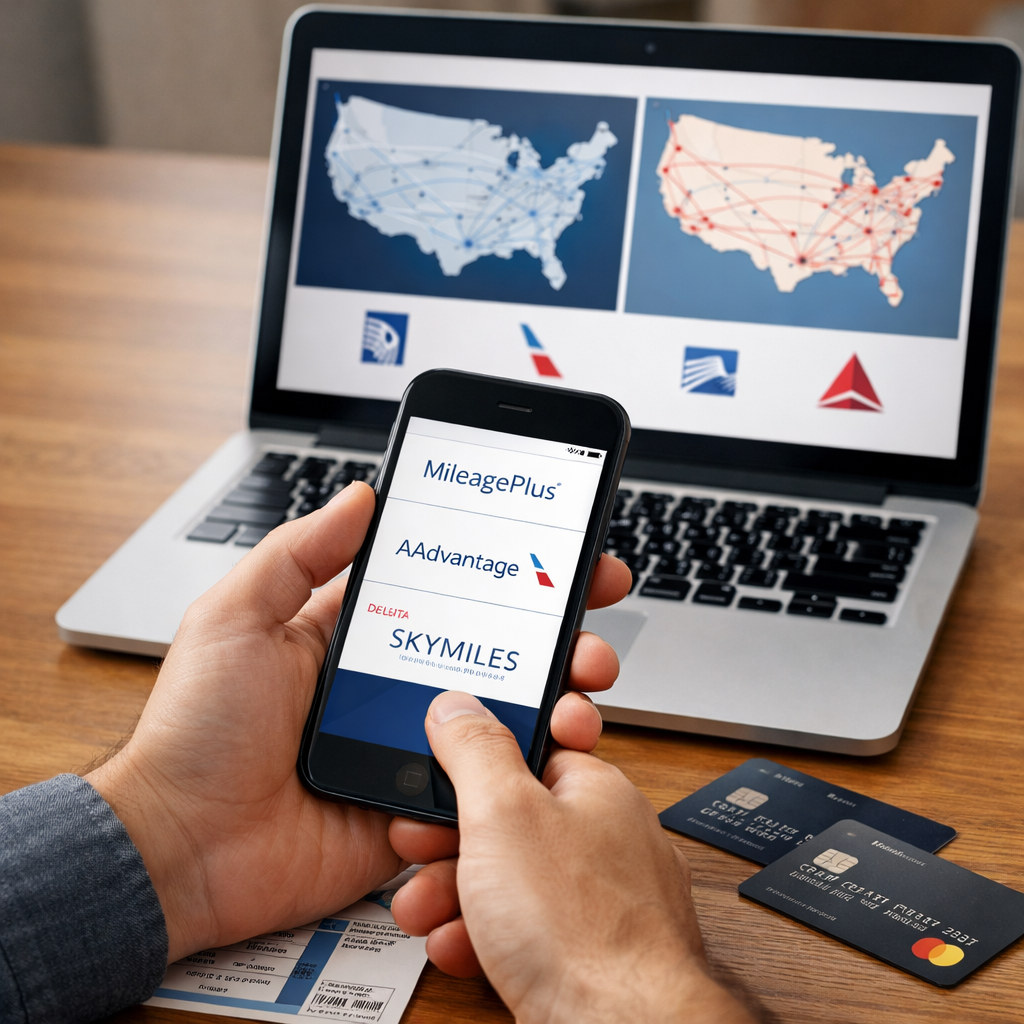
Maximize Miles on Domestic Trips: Pick the Right Program
Choosing the best frequent flyer program for domestic travel is simpler when you anchor the decision to your home airport, your real routes, and which programs actually offer award availability you can book today. In five minutes, you can map your hub strategy, check saver awards on your likely carrier, and scan partner and transferable-points options for a better deal. Points and Perks Guide’s five-minute flow below mirrors this approach. For most U.S. travelers, United, Delta, American, Southwest, Alaska, or JetBlue will be the right primary program thanks to broad networks and straightforward redemptions on their own metal. Start with your home carrier, use a couple of smart tools, and only transfer points after you verify live space. That’s the fastest path to more domestic trips for fewer miles.
Quick rules for choosing a domestic program
Quick rules
- Match your home airport to the dominant carrier(s) for the best schedules and nonstops; when you’re booking a U.S. carrier, using that airline’s miles usually yields the best award availability on domestic routes (source: Upgraded Points’ guide to U.S. domestic redemptions).
- Prefer programs with solid domestic award space and simple, on-their-own-metal redemptions (United, Delta, American, Southwest, Alaska, JetBlue).
- Use transferable points for flexibility—but only transfer after you’ve confirmed live saver awards.
- If you have two viable airlines at your hub, pick the one that publishes more predictable pricing or perks that lower mileage costs (e.g., discounts, rebates).
- Keep a small cash-booking buffer: if the mile value is weak, pay cash and save your points for a higher-value trip.
Dynamic pricing (what it is and why it matters) Dynamic award pricing means the miles price rises or falls with demand and the cash fare, with no fixed chart. You’ll find bargains during sales or off-peak times and very high prices at peaks. Delta SkyMiles uses dynamic pricing; domestic awards can still be reasonable during promos or slower periods (see Upgraded Points’ domestic redemptions overview).
Map your routes and home airport
Start with your own travel, not a generic list. List your home airport(s), your top 3–5 domestic destinations, and how flexible your dates are. Then identify the dominant carriers and alliance coverage that touch those routes—think United for Star Alliance-heavy cities, American for oneworld coverage, and even Air France/KLM’s Flying Blue for SkyTeam searches involving Delta partner space (see point.me’s guide to maximizing airline miles).
How to map it quickly
- Pull a 12‑month lookback (or next 12 months) of domestic trips or plans.
- Highlight nonstop options first; include viable secondary airports as backups.
- Flag blackout periods (holidays, school breaks) where flexibility is limited.
Mini-table template for your shortlist
| Route | Primary carrier(s) | Typical cash price range | Acceptable layovers | Flexibility window (±days) |
|---|---|---|---|---|
| Home → City A | e.g., United, Southwest | $120–$220 | 0–1 (avoid red-eyes) | ±2 |
| Home → City B | e.g., Delta, American | $140–$260 | 0–1 | ±1 |
| Home → City C | e.g., Alaska | $180–$300 | 0–1 | ±3 |
Check award availability on your primary carrier
Search your likely carrier first. On domestic itineraries, an airline’s own miles often unlock the most and best-priced seats on its metal, including saver awards that partners can’t always see (corroborated by Upgraded Points’ U.S. domestic redemptions analysis).
Carrier nuances that can tilt the odds
- United: Elites and select cardholders get access to extra Saver award inventory; the United Quest Card adds a 5,000‑mile rebate on United award tickets up to twice per year, which can materially lower your effective cost (source: point.me’s maximizing miles guide).
- Delta: TakeOff 15 grants a 15% discount on Delta award tickets for eligible Delta AmEx cardholders; Pay With Miles lets cardholders offset fares at roughly 1 cent per mile in 5,000‑mile increments—useful when dynamic pricing runs high (reference: point.me’s guide).
- Pro tip: American and Delta sometimes release close‑in award space unpredictably. Set alerts and recheck a few days before departure; last‑minute space can appear and price well (point.me insights).
Cross-check partner and transfer-friendly options
Do one fast comparison pass across partners and transfer programs to catch off‑peak calendars and promos without boiling the ocean.
Two-tool cross-check
- Use Points and Perks Guide alongside point.me plus one of Seats.aero, AwardTool, or PointsYeah to surface partner-bookable space and promos. No single tool covers everything; some rely on cached results, so verify on the airline site before you move points (Frequent Miler’s award search tool tests).
- Helpful specifics to know:
- point.me displays transferable currencies, partner mile costs, and booking steps—and in head‑to‑head tests, it was the only tool to surface Southwest results (per Frequent Miler’s testing).
- AwardTool’s Panorama feature enables broad regional scans on cached data; Seats.aero is free for 90‑day windows (paid for longer planning); and PointsYeah runs about $12/month or ~$100/year with a limited free tier (overview from Boldly Go’s tools roundup).
Definitions you’ll see in partner searches (we use these terms consistently at Points and Perks Guide so you can scan quickly)
- Off‑peak calendar: A published schedule of lower award rates on specific dates, like British Airways’ peak/off‑peak calendar, which can reveal cheaper redemptions if your dates are flexible (noted by point.me).
- Promo Rewards: Limited‑time discounted award prices on select routes—for example, Flying Blue’s Promo Rewards—worth a quick check before transferring points (point.me insights).
Match credit cards and perks to your pick
Once you’ve identified your primary airline for domestic trips, align your earning strategy to reduce award prices and expand access.
Two paths that work
- Co-brands for seat access and discounts: Examples include United co-brands (extra Saver inventory and the Quest 5,000‑mile rebate) and Delta AmEx cards (TakeOff 15 and Pay With Miles at about 1¢/mile). These can be the difference between “no seats” and a viable itinerary.
- Transferable points for flexibility: If United fits your routes, Chase Ultimate Rewards transfer 1:1 to MileagePlus for straightforward domestic redemptions. Maintain a flexible balance and only transfer after confirming live space.
Mini-checklist before you commit
- Confirm your current cards’ transfer partners and any active transfer bonuses (tools like point.me surface this context alongside results), or note them in your Points and Perks Guide comparison table.
- Note annual fees, foreign transaction fees, and category multipliers that match your everyday spend.
Compact comparison table (examples)
| Card or ecosystem | Annual fee | Earning (domestic focus) | Key perks for awards | Transfer partners | Effective pathways |
|---|---|---|---|---|---|
| United Quest (co‑brand) | ~$250 | 3x United; 2x dining, other travel | 5,000‑mile rebate (2x/yr), extra Saver access, free bags | N/A (co‑brand) | Book United awards directly; pair with Chase UR if needed |
| Delta SkyMiles AmEx (Gold/Platinum) | Varies by tier | 2x–3x on Delta, dining, U.S. supermarkets (tier‑dependent) | TakeOff 15; Pay With Miles (~1¢/mi); priority boarding | N/A (co‑brand) | Use for discounted SkyMiles awards or cash‑like offsets |
| Chase Sapphire Preferred | $95 | 3x dining; 2x travel | Flexible UR pool; travel protections | United, Southwest, JetBlue, others (1:1) | Transfer to airline with best price/space |
| Capital One Venture | $95 | 2x everywhere | Broad 1:1 transfers; simple earn | Multiple airlines (1:1) | Transfer to partners or erase via portal when cheaper |
Want a deeper dive on flexible currencies? See our best transferable travel rewards cards guide.
Verify, book, and monitor for better deals
Avoid costly missteps by confirming real-time space, then keep watching for drops or changes.
Step-by-step
- Verify award space on the airline’s website before transferring points—search tools can cache or miss results (Frequent Miler’s testing underscores coverage gaps).
- Transfer and book. Set award/upgrade alerts and schedule-change notifications (ExpertFlyer), and track your itinerary with apps like Flighty or TripIt (tool recommendations from Upgraded Points’ expert roundup).
- Organize balances and expirations with AwardWallet, and use Cashback Monitor to top up via shopping portals when you’re a few miles short (workflow tips from Professor of Points’ organization guide).
Tip: If your plans are flexible, point.me’s Explore feature can surface cheap options from your home airport by scanning dates and destinations broadly (outlined in point.me’s insights). Our route-mapping template above helps you spot those windows quickly.
Simple math: cash fare vs miles vs points transfer
Use this quick framework to decide whether to pay cash, use airline miles, or transfer points.
Three steps
- Compute cents per mile (CPM) = total cash fare (with taxes/fees) ÷ miles required. For Delta Pay With Miles at ~1¢/mi, anything under 1.0¢ is poor value; 1.2–1.5¢+ is often good, depending on your stash and trip priority (context from point.me and the rule of thumb we use at Points and Perks Guide).
- Factor transfer friction: If moving Chase → United (1:1), consider the opportunity cost versus other high‑value partners. Only transfer after confirming space.
- Apply perks/rebates: The United Quest 5,000‑mile rebate can improve effective CPM on United round‑trips up to twice yearly.
Worked example
| Option | Price details | CPM (or equivalent) | Notes |
|---|---|---|---|
| Pay cash | $180 all‑in | — | Keep miles for better value |
| Use airline miles | 12,000 miles + $5.60 | 1.45¢ | Solid value if seats align |
| Transferable → airline | 12,000 UR → United; 5,000‑mile rebate applies | Effective 1.74¢ after rebate | Rebate improves value; ensure you’ll use both rebates annually |
CPM = $180 ÷ 12,000 = 1.5¢ (rounded). Rebate reduces net miles to 7,000 on a round‑trip segment where it applies, boosting effective value.
Clean comparison table inputs to gather
Collect just the facts you need for a side‑by‑side decision.
Programs vs routes (fill per airline/route)
- Typical domestic award price range on your routes
- Change/cancel fees and same‑day options
- Partner‑bookable options and whether pricing is dynamic or chart‑based
- Close‑in availability patterns (e.g., AA/Delta sometimes add last‑minute space)
Cards vs perks (fill per card)
- Annual fee and earn rates (travel, dining, groceries)
- Key perks affecting awards (TakeOff 15, Pay With Miles ~1¢, Saver access, award rebates)
- Transfer partners and 1:1 pathways that match your routes
Tools to monitor and book
- Which search tools you used, alert setup, and where you verified final space (coverage varies; always check the airline site). Use the Five-minute decision flow from Points and Perks Guide as your checklist.
Recommended minimalist layout
- Table 1: Programs × Routes with 1–2 facts per cell
- Table 2: Cards × Perks with atomic, scannable rows
Five-minute decision flow from Points and Perks Guide
- Pick your top two routes and your home airport.
- Identify the primary carrier for each route (nonstops first).
- Search award space directly with that carrier (fast pass).
- Cross‑check two tools with Points and Perks Guide’s comparison table (point.me + Seats.aero/AwardTool/PointsYeah) for partner deals; coverage varies and some results are cached (see Frequent Miler’s tests).
- Confirm space on the airline site.
- Align the best card path: co‑brand perks vs transferable points to a 1:1 partner.
- Book, set alerts (ExpertFlyer), and monitor (Flighty/TripIt).
Quick rule: If the cash fare is under a 1.0¢‑per‑mile equivalent versus your miles, pay cash; if it’s above ~1.3–1.5¢ and you can apply a discount or rebate (TakeOff 15 or a 5,000‑mile rebate), book with miles.
Optional: If flexible, check off‑peak calendars and Promo Rewards before transferring (e.g., Flying Blue Promo Rewards, BA peak/off‑peak).
Frequently asked questions
Which domestic airline program is best for most travelers?
Points and Perks Guide recommends picking the program that matches your home airport and routes, then confirming it has strong award availability. For many, United, Delta, American, Southwest, Alaska, or JetBlue will deliver the simplest domestic redemptions.
Should I focus on one program or split across a few?
Start with one primary program tied to your hub and keep a small transferable‑points balance, as we suggest at Points and Perks Guide. Add a secondary program only if your routes consistently demand it.
Are transferable points better than airline-specific miles for domestic trips?
Yes—hold transferable points until you find live space, then transfer to the airline that prices best. If you fly one carrier constantly, keep some airline miles for access and speed.
What credit card perks matter most for domestic awards?
Perks that lower award prices or expand inventory—award discounts, mileage rebates, extra Saver seats—and practical benefits like free bags and priority boarding. Points and Perks Guide prioritizes the net cost after discounts and rebates.
How do I know if an award is a good deal compared to paying cash?
Compute cents per mile: cash fare ÷ miles required. Points and Perks Guide’s quick rule is ~1.3–1.5¢ or higher is usually good value; below ~1.0¢, pay cash.