Is the Chase Sapphire Preferred Card Right For You? Key Profiles Explained
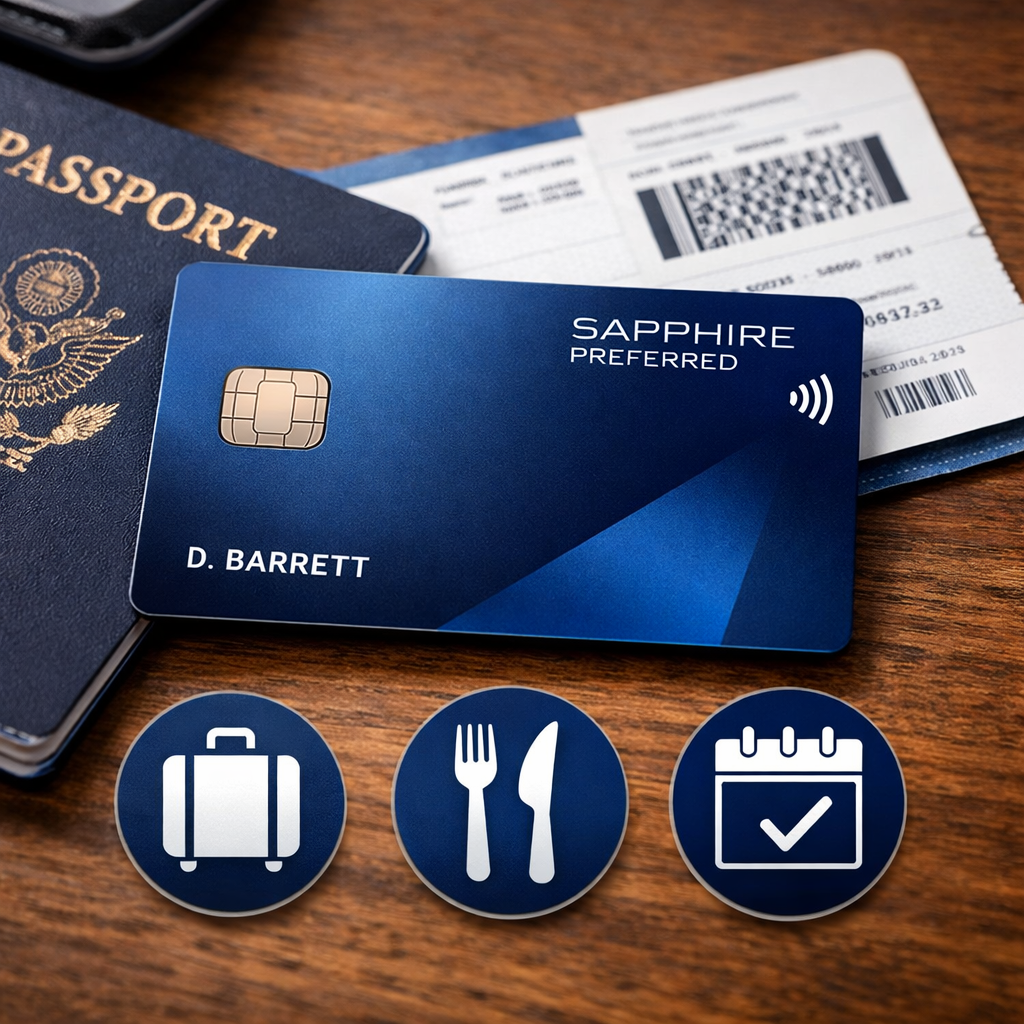
Is the Chase Sapphire Preferred Card Right For You? Key Profiles Explained
The Chase Sapphire Preferred (CSP) is a mid‑tier travel card known for strong category earnings, valuable 1:1 point transfers, and robust trip protections with a manageable $95 annual fee. If you travel a few times a year, dine out regularly, or want flexible points that unlock premium flights and high‑value hotels, it’s a standout pick for many Points and Perks Guide readers. Recent portal changes, however, mean portal‑only bookers may see reduced value relative to past years, while transfer‑centric users remain well positioned. Core facts: $95 annual fee, a common 75,000‑point welcome bonus after $5,000 in 3 months, 1:1 transfers, notable travel protections, and a $50 annual hotel credit via Chase Travel (terms apply) (see the Chase Sapphire Preferred Card page and Chase’s Sapphire comparison page). For current offer details and bonus context, see the CNBC comparison of CSP vs Venture X.
Transferable points, defined: Points you can move to multiple airline and hotel partners at a fixed ratio (often 1:1). This adds flexibility—earn in one program, redeem where seats or rooms are available. CSP anchors the Chase Ultimate Rewards ecosystem, with partners such as United, British Airways, Singapore KrisFlyer, and World of Hyatt (see the Chase Sapphire Preferred Card page).
Bottom line summary
- Best for occasional travelers, dining/travel category spenders, and transfer maximizers who can routinely get ~2+ cents per point via partners; you pay a $95 fee and get meaningful protections like trip cancellation/interruption and primary rental car coverage (see the Chase Sapphire Preferred Card page).
- The common 75,000‑point bonus after $5,000 in 3 months is strong even for beginners; pairing it with 1:1 transfers or other high‑value redemptions stretches value (see the CNBC comparison of CSP vs Venture X).
- Portal‑only redeemers took a hit after the boost removal; weigh alternatives or the Sapphire Reserve if you need premium perks and elevated portal value (see Bankrate’s guide to keeping the Sapphire Preferred).
What changed and why it matters
Chase removed the CSP’s enhanced redemption multiplier in the Chase Travel portal, shrinking upside for cardholders who primarily redeemed through the portal. If you book most trips via portal for simplicity, your points may go less far than they did before. Transfer‑heavy users are largely unaffected because 1:1 transfers remain intact (see Bankrate’s guide to keeping the Sapphire Preferred).
Previously, third‑party coverage often highlighted issuer portal multipliers—“up to 1.5x value” on many hotels/flights and periodic “Points Boost” messaging in comparisons—creating an expectation of extra uplift on portal bookings. Those enhancements are reduced or ending for CSP users, sharpening the focus on partner transfers (see the CNBC comparison of CSP vs Venture X).
| Redeem style | Who likely wins and why |
|---|---|
| Mostly via portal | Consider alternatives or plan to transfer; reduced uplift dampens portal‑only value. |
| Mostly via 1:1 transfers | CSP remains compelling: flexible partners and sweet spots can deliver 2+ cpp outcomes. |
How the card delivers value
- Earn rates: 5x points on travel purchased through Chase Travel, 3x on dining (including eligible delivery/takeout), 2x on other travel, and 1x on other purchases (see the Chase Sapphire Preferred Card page).
- Redeem paths: Transfer 1:1 to airline and hotel partners like United, British Airways, Singapore KrisFlyer, and World of Hyatt; portal redemptions no longer enjoy prior boosts, so transfers matter more for outsized value (see the Chase Sapphire Preferred Card page and Bankrate’s guide to keeping the Sapphire Preferred).
- Built‑in value levers: An annual $50 hotel credit via Chase Travel, plus complimentary DashPass and a monthly $10 DoorDash non‑restaurant credit available through 12/31/2027 can offset the $95 fee if you’ll actually use them (see Chase’s Sapphire comparison page and Bankrate’s guide to keeping the Sapphire Preferred).
Who should consider the Chase Sapphire Preferred
Occasional travelers seeking solid protections
If you take a few trips per year, CSP’s $95 fee is easy to justify with its welcome bonus and protections: trip cancellation/interruption up to $10,000 per person ($20,000 per trip), baggage delay up to $100/day for 5 days, and “primary” rental car coverage—all uncommon at this price point (see the Chase Sapphire Preferred Card page). Many reviewers cite it as a high‑value pick for vacationers who don’t want a premium fee (see the Yahoo Finance review of the Sapphire Preferred).
- Use‑case math: One covered car rental + $50 hotel credit + modest dining/travel spend can wipe out the fee if protections and credits are used.
- Fit score:
- Earn: Medium
- Redeem: Medium (better with simple partner transfers)
- Credits: Medium–High (hotel credit, DoorDash)
- Protections: High
Dining and travel category spenders
If you regularly spend on dining and travel, 3x on dining and 5x via the Chase Travel portal for travel add up quickly (see the Chase Sapphire Preferred Card page). No foreign transaction fees also help on international spend.
Quick estimator: If you spend $X on dining + $Y on travel via Chase Travel ≈ (3X + 5Y) points/year.
Pair with partner transfers (best value) or portal bookings (now without prior boost).
Fit score:
- Earn: High
- Redeem: Medium–High
- Credits: Medium
- Protections: Medium
Transfer maximizers targeting partners
Transfer maximizers reliably move points 1:1 to partners for premium cabins or high‑value hotels—think United, British Airways, Singapore KrisFlyer, and Hyatt. After the portal boost cut, this group still wins thanks to flexible transfers and enduring partner sweet spots (see the Chase Sapphire Preferred Card page and Bankrate’s guide to keeping the Sapphire Preferred).
Common transfer goals and target value:
| Scenario | Target cents per point (cpp) |
|---|---|
| Domestic economy flight | ~1.3–1.6 cpp |
| International business/first | ~2.0–4.0+ cpp |
| Mid‑tier hotel nights (Hyatt Cat 1–5) | ~1.5–2.5 cpp |
- Fit score:
- Earn: Medium–High
- Redeem: High
- Credits: Medium
- Protections: Medium
Value seekers offsetting the annual fee with credits
Turn $95 effectively near zero by using what you’ll actually use: the $50 annual hotel credit and DoorDash benefits running through 2027 (see Chase’s Sapphire comparison page and Bankrate’s guide to keeping the Sapphire Preferred).
Offset formula: $50 hotel credit + (months used × $10 DoorDash) ≥ $95 → effective net fee ~$0–$35.
Be rules‑based: Count only credits you will redeem.
Fit score:
- Earn: Medium
- Redeem: Medium
- Credits: High (if used)
- Protections: Medium
Beginners building a Chase points setup
CSP is a top entry‑level transferable‑points card with elevated category earnings and core protections, ideal as your first Ultimate Rewards anchor (see the Forbes Advisor comparison: CSP vs Capital One Venture).
Micro‑flow: Apply → meet $5,000/3‑month spend for the 75,000‑point bonus → learn 1:1 transfers → book first partner award (see the CNBC comparison of CSP vs Venture X and Chase’s Sapphire comparison page).
Later, pair with a no‑annual‑fee card to bolster non‑bonus earn, while keeping CSP for transfers and protections.
Fit score:
- Earn: Medium
- Redeem: Medium–High (with transfers)
- Credits: Medium
- Protections: Medium
Who should skip or compare alternatives first
Heavy lounge users and premium perk chasers
If airport lounge access and larger annual credits are must‑haves, premium cards may fit better. Sapphire Reserve layers on richer travel perks, while Venture X is a premium competitor; note the fee gap—CSP’s $95 is $300 less than Venture X’s $395 (see the CNBC comparison of CSP vs Venture X and Chase’s Sapphire comparison page).
Checklist: annual lounge visits, ability to fully use big credits, and need for expanded travel protections.
Cash back purists and very low spenders
If you avoid annual fees or won’t engage with categories/transfers, a no‑fee cash back setup is simpler. If you won’t use the $50 hotel credit or DoorDash perks and have minimal dining/travel spend, CSP’s fee may not pencil out (see the Chase Sapphire Preferred Card page).
Portal-only redeemers after the boost cut
The portal uplift is being removed for CSP, so portal‑only users should reassess. A viable alternative is to earn on CSP but learn basic transfers for better value; otherwise, compare cards built for portal‑centric redemption (see Bankrate’s guide to keeping the Sapphire Preferred).
Travel portal, defined: A card issuer’s booking site for flights, hotels, cars, and activities where you can pay with cash or points. Portals centralize options and pricing, but redemption value depends on the issuer’s rates and any available multipliers or credits.
Existing Sapphire Reserve holders or recent Sapphire bonuses
If you already hold Sapphire Reserve, adding CSP usually duplicates benefits. Consider swapping products only as part of a deliberate strategy, and always verify welcome‑offer eligibility timing before applying; product changes can affect bonus eligibility (see Chase’s Sapphire comparison page).
Decision checklist to see if it fits
Answer yes/no:
- Will you use the $50 hotel credit?
- Will you redeem via 1:1 transfers (at least occasionally)?
- Do you spend meaningfully on dining and/or travel?
- Do you value trip and rental car protections?
- Will you use DoorDash credits through 2027?
Score:
- 4–5 yes → Strong fit
- 2–3 yes → Compare options
- 0–1 yes → Skip
Mini calc: $50 hotel credit + expected DoorDash value + points from dining/travel (value per point × estimated points) ≥ $95?
Redemption approach for best results
- Earn in bonus categories (dining, travel via Chase Travel).
- Check partner award pricing/sweet spots with United, British Airways, Singapore KrisFlyer, or Hyatt. Confirm availability first.
- Transfer 1:1 only when ready, then ticket or book promptly (see the Chase Sapphire Preferred Card page).
- Post‑change, portal bookings no longer enjoy a boost; transfers are the primary path to maximize value (see Bankrate’s guide to keeping the Sapphire Preferred).
“Points transfer” in a sentence: Moving points from your card program to an airline or hotel at a fixed ratio (usually 1:1) to book directly with the partner, often unlocking better value than portal cash‑equivalent redemptions.
Core perks and protections that move the needle
Key protections (benefit terms apply; enrollment may be required):
| Protection | What it covers | When it triggers | Max benefit |
|---|---|---|---|
| Trip cancellation/interruption | Prepaid, non‑refundable expenses | Covered events disrupt travel | Up to $10,000/person; $20,000/trip |
| Baggage delay | Essentials during delay | Baggage delayed over qualifying time | Up to $100/day for 5 days |
| Primary rental car coverage | Damage/theft to rental car | Pay with card; decline rental agency coverage | Primary coverage in many countries |
| Purchase protection | New purchases damaged or stolen | Within 120 days of purchase | Up to $500 per item |
| No foreign transaction fees | Surcharges on international purchases | International point‑of‑sale | $0 fees |
All above per the Chase Sapphire Preferred Card page.
Issuer rules and eligibility to confirm first
Before applying, confirm welcome‑offer eligibility—especially if you’ve recently had a Sapphire card or are an authorized user. Being an AU generally doesn’t block you from getting your own card and bonus, but you must still meet issuer rules; verify current terms (see TPG on authorized-user eligibility for CSP). Product tweaks and evolving issuer policies can also affect future value; plan timing and strategy accordingly (see Bankrate’s guide to keeping the Sapphire Preferred).
Authorized user, defined: A person added to someone else’s credit card account who receives a card and can make purchases, but isn’t the primary account holder. Activity typically appears on the AU’s credit report, but the AU isn’t responsible for payment; eligibility for new‑card bonuses follows issuer‑specific rules.
Frequently asked questions
How much do I need to spend to justify the annual fee
If you fully use the $50 hotel credit and some DoorDash credits, you may only need modest dining/travel spend to break even. Use Points and Perks Guide’s mini calc above to estimate your breakeven.
Is the welcome bonus still worth it if I cannot transfer points
Yes, 75,000 points is compelling, though value is higher with partner transfers; without transfers, you can still offset trips via the portal and pair with the $50 hotel credit, and Points and Perks Guide can help you learn transfers when you’re ready.
Which transfer partners typically give the highest value
Airline partners and certain hotel programs often deliver standout value, especially for premium cabins and Hyatt stays. Points and Perks Guide recommends verifying award space first, then transferring 1:1 only when you’re ready.
Do authorized users affect my eligibility for a future bonus
Typically, being an authorized user doesn’t by itself prevent you from getting your own card and bonus, but issuer rules still apply. Points and Perks Guide suggests confirming current terms before you apply.
What travel protections does this card actually include
You get trip cancellation/interruption, baggage delay reimbursement, primary rental car coverage, and purchase protection. See Points and Perks Guide’s protections table above for what each covers and limits.