How to Use Chase Sapphire Reserve Travel Insurance Benefits
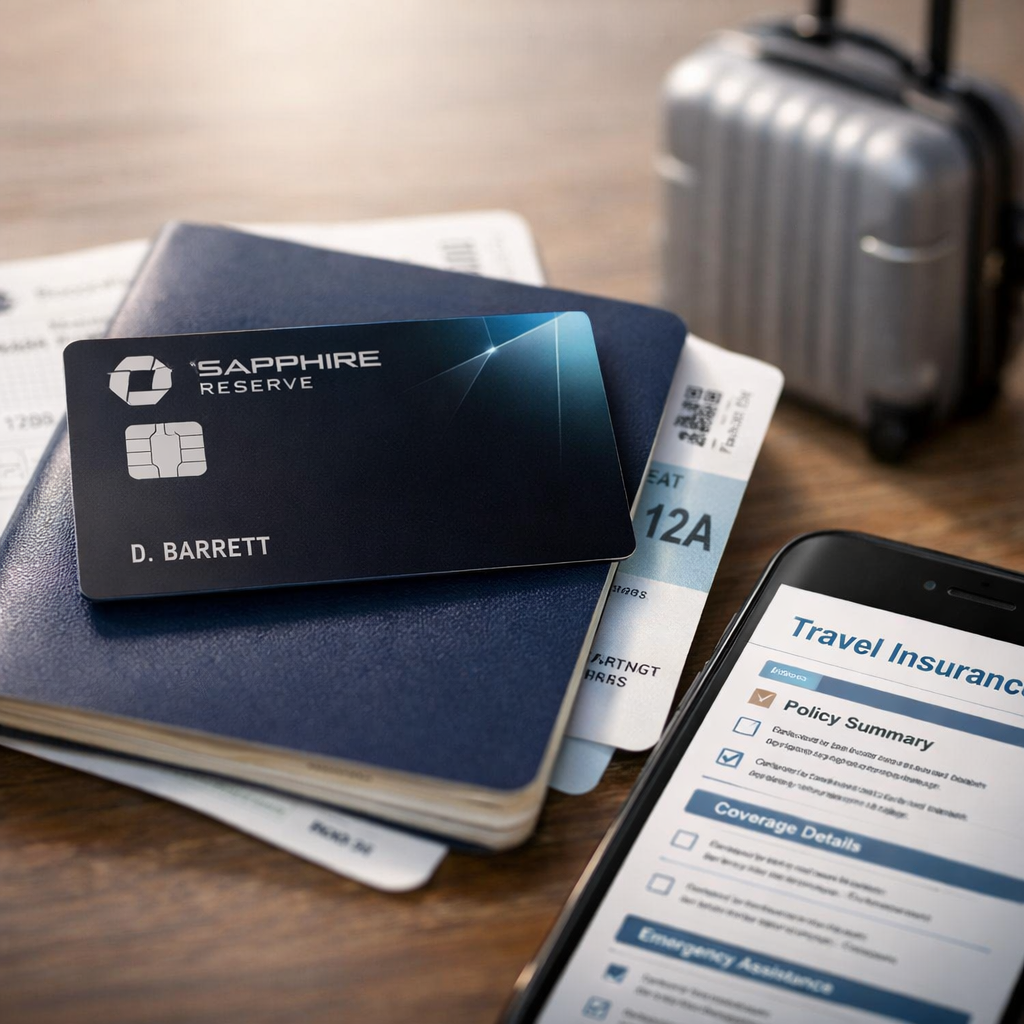
How to Use Chase Sapphire Reserve Travel Insurance Benefits
The Chase Sapphire Reserve is popular for powerful travel protections that come automatically when you pay the right way. This guide from Points and Perks Guide shows exactly how to use Chase Sapphire Reserve insurance: what’s covered, how to trigger benefits (including when you book with points or mixed payments), and how to file fast, clean claims. You’ll also find quick decision flows to match the right benefit to your situation and minimize out-of-pocket costs. Beyond protections, the card adds practical value with a $300 annual travel credit, no foreign transaction fees, 1:1 point transfers, and a statement credit for TSA PreCheck/Global Entry/NEXUS—plus a welcome bonus offer when available, and no intro APR, so avoid carrying a balance (see the official Chase Sapphire Reserve page for current terms and benefits) Chase Sapphire Reserve overview.
What the Chase Sapphire Reserve covers
Here are the CSR travel protections most travelers rely on, with exact dollar caps and triggers from the issuer.
| Benefit | How it’s triggered and what it covers | Limit |
|---|---|---|
| Primary Auto Rental Collision Damage Waiver (CDW) | Decline the rental company’s CDW and charge the entire rental to CSR; covers theft or collision damage to the rental vehicle | Up to $75,000 |
| Trip Cancellation/Interruption | Prepaid, nonrefundable trip costs when you cancel or cut a trip short for covered reasons | Up to $10,000 per covered traveler; $20,000 per trip |
| Trip Delay Reimbursement | Delay by a common carrier of more than 6 hours or requiring an overnight stay; reimburses essentials (meals, lodging, toiletries, meds) not paid by the carrier | Up to $500 per covered traveler |
| Baggage Delay | Checked baggage delayed by the carrier more than 6 hours; reimburses essentials | $100 per day, up to 5 days |
| Emergency Medical & Dental | Necessary medical or dental treatment during a covered trip | Up to $2,500 per person; $50 deductible |
| Emergency Evacuation & Transportation | Medically necessary transport when 100+ miles from home (preapproval usually required) | Up to $100,000 |
| Roadside Assistance | Towing, tire change, jump start, lockout help, etc. | Up to $50 per incident; 4 times per year |
Primary rental car coverage means the card’s insurance pays first for covered collision or theft to your rental car, so you normally avoid filing a claim with your personal auto insurer—which can save time and help avoid potential premium increases (see the CSR benefits on the Chase site for full details).
Value adds to round out travel: CSR includes a statement credit up to $100 every four years for Global Entry, TSA PreCheck, or NEXUS applications, plus no foreign transaction fees and strong point-earning and redemption options via Chase Ultimate Rewards (see the card’s benefits page linked above).
Mini decision flow (30 seconds):
- Flight delayed 6+ hours or overnight? Claim Trip Delay up to $500 per person.
- Bag late 6+ hours? Claim Baggage Delay at $100/day (max 5 days).
- Need to cancel or cut short for a covered reason? Claim Trip Cancellation/Interruption up to $10,000 per person ($20,000 per trip).
- Rental car dinged or stolen? Use Primary Rental CDW up to $75,000.
- Medical treatment on a trip? Claim Emergency Medical & Dental up to $2,500 ($50 deductible).
- Doctor orders transport 100+ miles from home? Emergency Evacuation up to $100,000.
- Stranded roadside? Roadside Assistance up to $50, four times per year.
Source: policy limits and triggers as stated by the issuer on the product and benefits pages.
When coverage applies and who is eligible
- Core trigger: Many CSR travel protections require you to charge at least part of the qualifying travel to your card—or redeem Ultimate Rewards from the same account—and keep documentation linking the payment/redemption to CSR (the Sapphire Reserve Guide to Benefits is the controlling document for definitions, limits, and proof requirements) Sapphire Reserve Guide to Benefits.
- Common Carrier means scheduled planes, trains, ferries, and cruise ships. It does not include taxis, rideshares, car services, or rental cars (per the issuer’s Common Carrier definition) Common Carrier definition.
- Adjusters and excess clauses: Benefits are administered by third-party claims administrators who make final determinations; some coverages are excess to other valid insurance or government payments (except Medicare), so you may need denial or settlement letters before CSR pays (a real-world walkthrough highlights how an adjuster can shape outcomes) independent case study.
Step 1: Verify your benefits for this trip
Check the latest Guide to Benefits in your Chase app or online to confirm limits, timelines, definitions, and exclusions for your exact itinerary; it governs what’s covered and how to file. The issuer’s education center also answers common scenarios (e.g., who’s covered, deadlines) Chase protections FAQ.
Pre-trip checklist:
- Trip length, destinations, and whether you’re 100+ miles from home
- Payment method (CSR charge vs. UR redemption) and documentation
- Who’s traveling (spouse/partner, dependent children, authorized users)
- Any medical preapprovals or notifications required by the administrator
“Guide to Benefits” means the official document that defines coverage, dollar caps, exclusions, and claim procedures. Treat it as your first and last word before and after a disruption.
Step 2: Pay the right way to trigger coverage
- Rentals: Decline the rental company’s CDW and put 100% of the base rental on CSR to activate primary coverage up to $75,000.
- Points bookings: If you book with Ultimate Rewards, keep a small portion of taxes/fees on CSR or maintain clear receipts and Chase Travel confirmations linking the redemption to your CSR account; this helps prove eligibility if you file.
Payment checklist by benefit:
- Trip Delay: Pay the common-carrier fare with CSR (or redeem UR from your CSR account) and keep the ticket receipt.
- Baggage Delay/Lost Luggage: Same ticket linkage to CSR or UR redemption, plus airline bag claim reports.
- Trip Cancellation/Interruption: Prepaid, nonrefundable costs charged to CSR or redeemed via UR and tied to your account.
- Emergency Medical & Evacuation: Show you were on a covered trip (ticket, hotel/rental confirmations linked to CSR/UR).
- Rental CDW: Entire rental paid with CSR and rental-agency CDW declined.
Step 3: Save documents you will need for a claim
Keep a clean paper trail:
- Completed claim form; your full itinerary and boarding passes
- Rental agreement; police or carrier incident reports if applicable
- Itemized receipts (lodging, meals, toiletries, meds, transport)
- Medical bills and records for any treatment
- Card statement showing the last four digits and the relevant charge
- For delays or lost/damaged items, carrier denial/settlement letters to show unreimbursed amounts (some categories have sub-limits for items like jewelry/electronics, so documentation matters; see independent comparisons for common pitfalls) independent comparison.
Step 4: Contact the benefits administrator promptly
Speed matters. Start your claim or get preapproval (for evacuation/major medical) as soon as practical:
- File online or get instructions at the issuer’s portal, or call the number on the back of your card to open a claim and receive deadlines Chase travel insurance guide.
For complex events—like emergency evacuation—preapproval and rapid notification are often required. Store the claims phone number in your phone and save PDFs/screenshots of the benefits pages offline before you travel.
Step 5: File your claim and track follow ups
Many claims have filing windows (for example, some require initiating within 20 days and submitting documentation within 90–180 days per the Guide to Benefits). Standard operating procedure:
- Submit via the online portal and upload a complete packet:
- Completed claim form
- Itinerary and boarding passes
- Receipts and itemized bills
- Card statement (last four digits visible)
- Carrier delay/denial/settlement letters
- Follow up: Confirm receipt, reply to adjuster requests within 48 hours, keep a shared folder for documents, and escalate to Chase support if the claim stalls.
Points and Perks Guide’s checklists above mirror what administrators commonly request, which helps streamline back-and-forth during review.
How to use primary rental car coverage
- Decline the rental agency’s Collision Damage Waiver.
- Charge the entire rental to CSR to activate primary coverage up to $75,000 for theft and collision.
- If an incident occurs, collect photos, police/rental incident reports, and the final rental agreement, then file promptly.
Collision Damage Waiver (CDW) covers damage or theft of a rental car. With CSR, coverage is primary when you decline the agency’s CDW and pay with your card, so it pays first for covered losses—often avoiding a claim on your personal auto policy.
Quick checklist:
- All drivers listed on the rental agreement
- No commercial-use rentals; verify country exclusions in your Guide to Benefits
- Return the vehicle and secure documentation before filing
How to use trip cancellation and interruption
- Coverage limits: Up to $10,000 per covered traveler and $20,000 per trip for prepaid, nonrefundable expenses when a covered reason applies.
- Timing: Initiate within the timeframe in your Guide to Benefits (Chase directs cardmembers to act within about 20 days for these claims).
- Documentation: Proof of the covered reason (e.g., physician note, severe weather advisories), itemized nonrefundable costs, and clear linkage to CSR or UR redemption.
How to use trip delay reimbursement
- Trigger: A common-carrier delay of more than 6 hours or one that requires an overnight stay.
- What’s covered: Up to $500 per covered traveler for unreimbursed essentials—meals, lodging, toiletries, and medications. Costs covered by the airline aren’t eligible.
- How to claim: Save the delay notification (email/app), get a written delay confirmation from the carrier, keep receipts, and submit with your itinerary and card statement.
How to use baggage delay and lost luggage
- Baggage Delay: If your checked bag is delayed more than 6 hours by the carrier, buy essentials and keep receipts; you can claim $100/day for up to 5 days.
- Different from Lost/Damaged: Lost or damaged baggage is a separate coverage with its own limits and documentation. Expect item-category sub-limits (e.g., for jewelry or electronics) and provide purchase proofs when possible.
- Documentation kit: Airline delay/loss report (PIR), expense receipts, boarding passes, and proof the ticket was paid with CSR or redeemed via UR from your account.
How to use emergency medical and evacuation
- Limits: Emergency Medical & Dental up to $2,500 per person with a $50 deductible; Emergency Evacuation & Transportation up to $100,000 when you’re 100+ miles from home.
- Preapproval: Contact the benefits administrator immediately for guidance and required preapprovals; the adjuster’s instructions and determinations control the claim.
- Filing: Retain all medical records, itemized bills, prescriptions, and proof of your covered trip; submit within the timelines (e.g., medical claims are commonly due within 90 days of treatment per the Guide to Benefits).
Common exclusions and limits to watch
- Excess clauses: Some protections are excess over other insurance or governmental benefits (except Medicare). Get denial/settlement letters before filing with CSR.
- Common Carrier scope: Taxis, rideshares, and car services are not common carriers; benefits tied to common carriers won’t trigger on those segments.
- Trip length/geography: Coverage can vary by destination and maximum trip duration; verify your exact itinerary in the Guide to Benefits.
- Adjuster discretion: Final outcomes depend on documentation and the administrator’s determination; certain benefits require advance approval.
Quick decision rules to maximize value
- Use CSR as your default for flights and trains to cleanly trigger Trip Delay and Baggage Delay protections tied to common carriers.
- For rentals, always decline the agency’s CDW and put 100% of the rental on CSR to preserve primary coverage up to $75,000.
- When redeeming Ultimate Rewards, add a small cash charge (taxes/fees) on CSR or keep clear Chase Travel records to prove the booking is tied to your account.
- Save every receipt and get written confirmations from carriers; unreimbursed is the magic word for most claims.
- Start claims fast; deadlines arrive sooner than you think (some within 20 days).
Frequently asked questions
Do I need to charge the full trip to the card to be covered
For many protections, charging at least part of the qualifying travel to CSR or redeeming linked Ultimate Rewards is sufficient; Points and Perks Guide’s payment checklist shows what to save.
Can I use Ultimate Rewards points and still get protection
Yes. Redemptions tied to your CSR can qualify; Points and Perks Guide’s steps above show how to keep clear linkage in your records.
What are the key coverage limits for major benefits
Trip Delay $500 after 6+ hours; Trip Cancellation/Interruption up to $10,000 per traveler/$20,000 per trip; Baggage Delay $100/day up to 5 days; Primary Rental CDW up to $75,000; Emergency Evacuation up to $100,000; Emergency Medical & Dental up to $2,500 with a $50 deductible.
What reasons qualify for trip cancellation or interruption
Covered reasons include serious illness or injury, severe weather, and other defined events in the Guide to Benefits; Points and Perks Guide’s documentation tips help you show the covered cause.
How do I file and how fast do I need to submit a claim
Start at the issuer’s benefits portal or call the number on your card. Points and Perks Guide links the portal and timelines above so you can file within required windows (some as soon as 20 days).