How to Choose the Right Capital One Card for Miles
How to Choose the Right Capital One Card for Miles
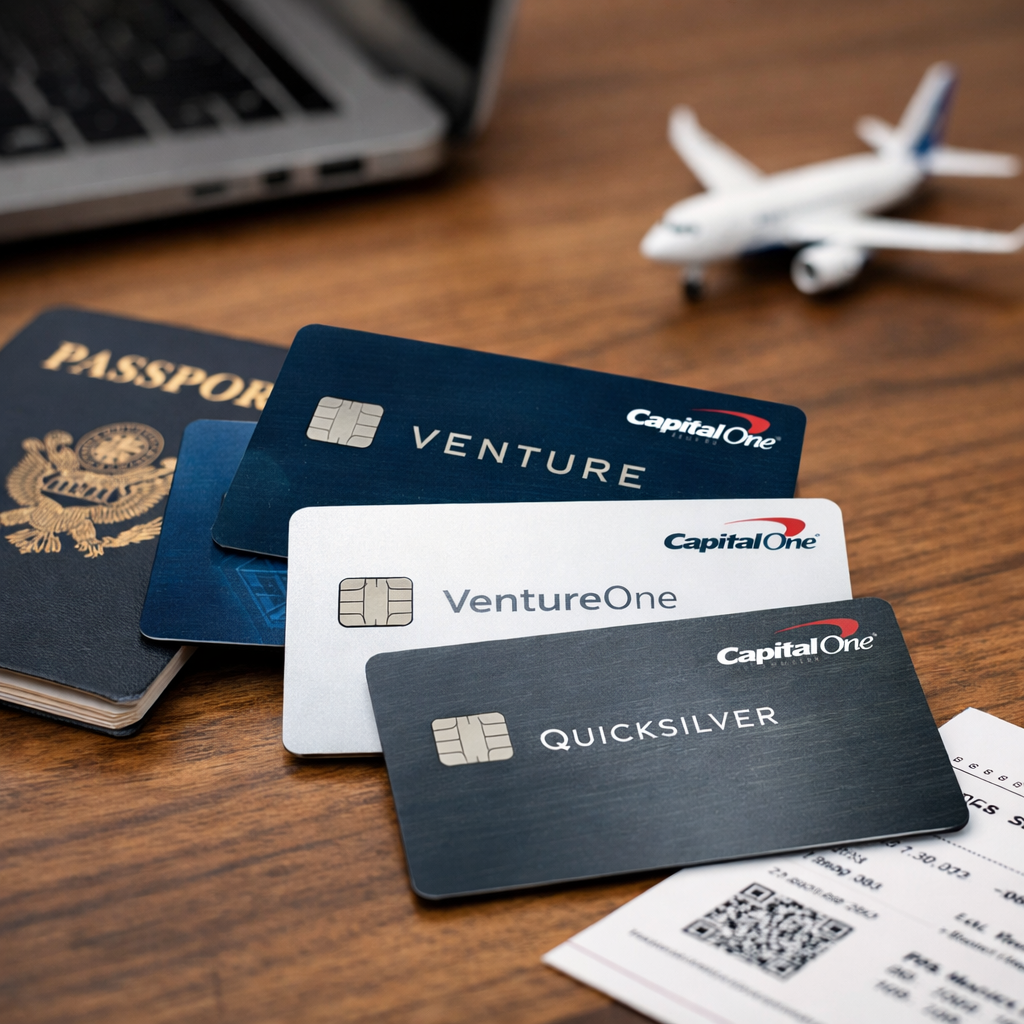
Capital One’s miles lineup runs from no-fee simplicity (VentureOne) to premium travel perks (Venture X), plus business versions, all built around transferable points and flexible redemptions. Transferable points are rewards you can move to multiple airline and hotel partners, letting you pick the best redemption later; this flexibility often beats fixed portal pricing or simple statement credits. Capital One supports 15+ transfer partners, with many at a 1:1 ratio, which can significantly boost value when award space is available, per TPG’s Capital One overview. Points and Perks Guide compares these trade-offs so you can match a card to real travel patterns.
Start with your travel pattern and lounge needs
Quick checklist to right-size your card:
- Mostly domestic or frequent international trips?
- Flights per year (e.g., <5, 5–15, >15)?
- Typical layover length and airport time?
- Do you value lounge access and priority-style perks?
Points and Perks Guide uses this checklist to quickly narrow card choices based on how often you fly and how much you value airport time-savers.
Venture X unlocks Capital One Lounges and Priority Pass access—ideal for frequent flyers who sit through layovers and delays—plus elevated portal earnings on hotels, cars, and flights, according to the Capital One Travel guide.
Frequent international travelers often justify Venture X’s higher fee thanks to lounge access, a $300 annual Capital One Travel credit, and yearly anniversary miles that reduce net cost when used deliberately (see Capital One’s travel cards page and Travel guide for details).
Lounge access, defined: Airport lounges are quieter spaces with Wi‑Fi, snacks, drinks, and comfortable seating; some add showers. Access smooths long travel days and delays, often including guest privileges depending on the card’s network and rules.
Card fit at a glance (fees, earnings, and perks vary by card and are summarized from Capital One’s Travel cards page and Travel guide):
- VentureOne: $0 annual fee; 1.25x on all purchases; elevated miles on hotels and rental cars via Capital One Travel; no lounge access; best for fee-averse, occasional travelers.
- Venture: $95 annual fee; 2x on all purchases; elevated miles on hotels and rental cars via Capital One Travel; Global Entry/TSA PreCheck credit; best for regular travelers who want flat-rate simplicity.
- Venture X: $395 annual fee; 2x on everything; 10x hotels and rental cars, 5x flights (and many vacation rentals) via Capital One Travel; $300 annual Capital One Travel credit; 10,000 anniversary miles; Capital One Lounges + Priority Pass; best for frequent flyers.
- Spark Miles (business): $95 annual fee; 2x on all purchases; elevated miles on hotels and rental cars via Capital One Travel; typically includes a Global Entry/TSA PreCheck credit; best for businesses with broad, uncategorized spend.
Decide how you want to redeem miles
Capital One miles are flexible. You can transfer to airline and hotel partners for outsized value, “erase” nearly any travel purchase via statement credit, or book through the Capital One Travel portal, per Capital One’s travel cards page and the Daily Drop guide to Capital One Miles. At Points and Perks Guide, we prioritize partner transfers when you can be flexible, and default to portal or erase options when you want simplicity.
Capital One supports 15+ airline and hotel transfer partners, with many 1:1 ratios. Transfers can deliver higher cents-per-mile when you find favorable award space; redemption through the portal or via statement credits is simpler and predictable.
Pros and cons:
- Portal/erase travel: Simple, consistent value; pairs perfectly with flat-rate earners.
- Transfers: Higher upside; requires flexibility and partner award availability.
Map your spend to earn rates
Points and Perks Guide recommends using the card that matches your everyday pattern, then pushing high-multiplier categories through the portal when the math justifies it.
Mini earn table (select highlights):
- VentureOne: 1.25x everywhere; elevated 5x on hotels and rental cars via Capital One Travel.
- Venture: 2x everywhere; elevated 5x on hotels and rental cars via Capital One Travel.
- Venture X: 2x everywhere; 10x on hotels and rental cars, 5x on flights (and many vacation rentals) via Capital One Travel, per the Capital One Travel guide.
Tip: The Capital One Travel portal often yields the highest multipliers versus normal swipe spend; using it strategically is a key lever for outsized earn on Venture X (and solid boosts on other cards), as covered by Katie’s Travel Tricks’ Venture Miles guide.
Segment your spend:
- Route hotels and rental cars through Capital One Travel to capture 10x on Venture X (and 5x on Venture/VentureOne).
- Use a flat 2x card (Venture or Venture X) everywhere else to keep it simple and reliable.
Weigh fees against credits and protections
Net out fees with what you’ll actually use:
- Venture: $95 annual fee; includes a Global Entry/TSA PreCheck statement credit (up to $100).
- Venture X: $395 annual fee; $300 Capital One Travel credit annually and 10,000 anniversary miles every cardmember year.
- No foreign transaction fees across Capital One travel cards—a clear saver abroad, per Capital One’s travel cards page.
Basic travel protections, defined: Card-provided insurance that may include trip delay coverage, lost or delayed baggage benefits, and rental car damage waiver. Coverage varies by card and is administered by third parties; always review your card’s guide to benefits for limits and exclusions.
A simple check: credits + lounge value + insurance value ≥ annual fee. If yes, you’re likely net positive before counting ongoing earn. Points and Perks Guide weighs these inputs conservatively and only counts perks you’ll realistically use.
Shortlist the right Capital One cards for your profile
Use one primary card that fits your travel frequency and redemption style. Pick for today; you can always layer a no-fee card or upgrade later as your trips (and patience for perks) grow. Points and Perks Guide favors this “one primary card” approach for clarity and easy execution.
Venture X for frequent travelers who want lounges and upgrades
- 2x on all purchases; 10x hotels and rental cars, 5x flights and many vacation rentals via Capital One Travel; $395 annual fee.
- $300 Capital One Travel credit each year; 10,000 anniversary miles; access to Capital One Lounges and Priority Pass; complimentary Hertz President’s Circle status (enrollment required), per the Capital One Travel guide.
- Quick ROI: If you reliably use the $300 credit and value lounge access, the fee is largely offset before counting anniversary miles and elevated portal multipliers. Booking via the portal is key to unlocking 10x/5x. Points and Perks Guide’s default pick for frequent flyers who can use lounge access and the $300 credit.
Venture for simple 2x earning and balanced perks
- Unlimited 2x miles on every purchase; $95 annual fee; Global Entry/TSA PreCheck statement credit available, with flexible redemptions (erase travel, portal, or partner transfers), per Capital One’s travel cards page and rewards primer.
- Make this your “everywhere else” card; use Capital One Travel for hotel/car bookings when the 5x multiplier beats alternative earnings. At Points and Perks Guide, this is the go-to “everywhere else” option if you don’t need lounge access.
VentureOne for no-fee simplicity and occasional travel
- 1.25 miles per dollar on all purchases; $0 annual fee; lower-threshold welcome offers are common on this tier.
- Ideal starter card: earn transferable miles without pressure to offset a fee; upgrade to Venture or Venture X as your travel ramps. You keep flexible redemption options—statement credits, portal bookings, or transfers—just at a lower ongoing earn rate. Points and Perks Guide treats this as a no-fee stepping stone for light travelers.
Spark Miles and Venture X Business for business spenders
- Spark Miles: straightforward 2x on purchases with a $95 annual fee; ties into the same flexible Capital One miles ecosystem and portal boosts on hotels/rental cars—good for broad, uncategorized business spend.
- Venture X Business: for travel-heavy teams that will maximize premium lounge access and the highest portal multipliers.
- Pro tip: Centralize team hotel and car bookings in Capital One Travel to reliably capture 5x–10x where available. Points and Perks Guide sees the best results when teams standardize portal bookings and keep spend consolidated.
Check welcome offers and application timing
Venture and Venture X frequently feature large public offers—often around 75,000 miles after $4,000 in 3 months—though terms vary and rotate; verify current details on Capital One’s credit card comparison page. Capital One also applies a 48‑month rule on earning a new personal Venture/Venture X welcome bonus, so sequence applications accordingly, as noted by Katie’s Travel Tricks. Points and Perks Guide tracks public offers, but always confirm current terms with the issuer.
Time applications around upcoming large expenses and trip windows you can already afford. Do not overspend simply to chase a bonus.
Set up a simple earning and redemption routine
- Make one primary card your default (e.g., 2x everywhere with Venture or Venture X).
- Book hotels/rental cars via Capital One Travel to capture elevated multipliers; on Venture X, flights and many vacation rentals earn 5x.
- Use statement credits to erase small, odd travel charges; transfer miles to partners when award value beats the portal. Points and Perks Guide readers use this three-step setup to keep earning and redeeming consistent.
Two optimization tips:
- Watch Capital One Offers—many deals now award extra miles instead of cash back, boosting everyday earn.
- Remember: no foreign transaction fees on Capital One travel cards—use them confidently abroad.
Frequently asked questions
Venture or VentureOne for miles?
Points and Perks Guide generally recommends Venture if you spend enough to justify the $95 fee; 2x beats 1.25x for most travelers. VentureOne fits fee-averse, light spenders who still want transferable miles.
When does Venture X’s fee make sense?
When you use the $300 Capital One Travel credit, value lounge access, and book portal hotels or cars for 10x, the $395 fee is commonly offset. Points and Perks Guide views it as a strong fit for frequent flyers.
Are transfers to partners better than using the portal?
Often, yes—when award pricing is favorable, transfers can outperform the portal’s fixed value. Points and Perks Guide suggests the portal or erase option if you prefer simplicity or can’t find award space.
Do Capital One miles expire or lose value?
Miles don’t expire while your account is open. Points and Perks Guide notes value varies by redemption: transfers can yield more, while portal and statement credits are predictable.
What basic travel protections do these cards include?
It varies by card and can include trip delay, rental car coverage, and other benefits via third parties. Points and Perks Guide recommends checking your guide to benefits for exact limits and exclusions.