Flexible Redemptions Without Headaches: Airline Programs That Truly Deliver
Flexible Redemptions Without Headaches: Airline Programs That Truly Deliver
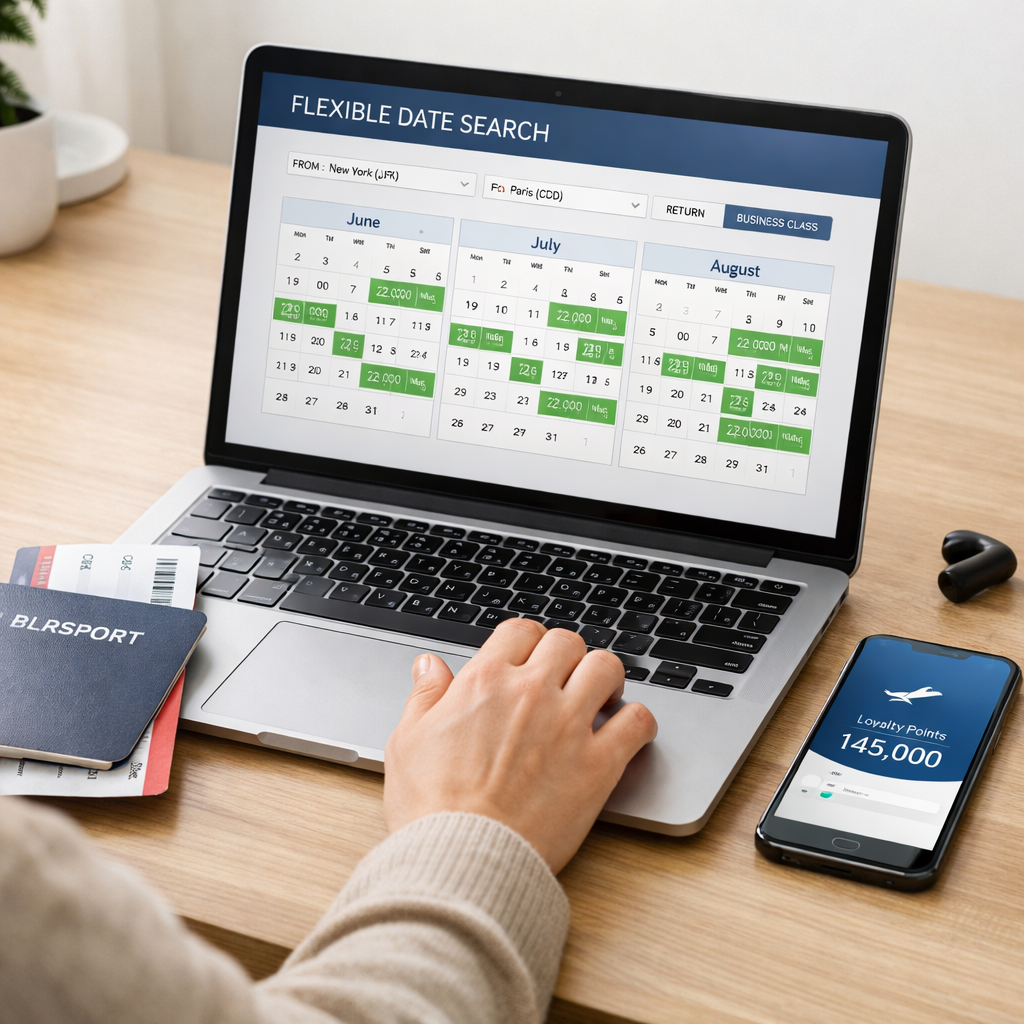
Flexible redemptions let you use miles across flights and non-air options and mix points+cash so you can book the trip you actually want without starting over. Programs that add non‑air redemptions and points+cash see roughly a 37% lift in redemption activity, a proxy for real-world usability, according to Switchfly’s research on flexible redemptions. If you want the best frequent flyer programs for flexible redemptions, focus on clear change policies, broad partner awards, and easy top-ups from bank points. Below we profile standout programs and give you a five‑minute decision flow to pick a primary program fast—no endless chart decoding required.
Points and Perks Guide
Our rules-first approach cuts guesswork with standardized tables, clear definitions, and a five-minute decision flow that tells you which programs to use and in what order. We prioritize practical redemption outcomes over theoretical chart sweet spots so choices hold up on real trips. Flexibility matters because non‑air options and points+cash raise the odds you actually redeem—industry data shows a 37% activity boost when programs add these features (see Switchfly’s flexible redemptions analysis). To keep your approvals and transfer access open, map your last 24 months of new credit accounts and prioritize Chase early; that protects the path to Chase transfers and co‑branded approvals that underpin versatile bookings—use the mapping checklist below.
How we judge usability mirrors independent rankings. In the 2025 World’s Best Airline Loyalty Programs study, practical weights include: ease of earning (20%), redemption rates (20%), partner opportunities (20%), redemption experience (10%), award availability (10%), customer service (7.5%), change/cancellation flexibility (7.5%), and award holds (5%) (Islands’ 2025 loyalty study).
Southwest Rapid Rewards
If you want simple, predictable redemptions for domestic trips, Southwest is hard to beat. Every seat that’s for sale can be booked with points—no blackout dates or hidden award buckets—and Southwest charges no change or cancellation fees, even close to departure (per the Islands 2025 study’s policy comparison). Rapid Rewards also plays well with transferable points, with 1:1 transfers from Chase, and has hotel partners for occasional top-ups—useful for family travel and points pooling.
Mini table: Southwest at a glance
- Pricing model: Revenue-linked, transparent point pricing
- Change/cancellation fees: None; points redeposit to your account
- Partner transfers: Receives from Chase Ultimate Rewards; limited airline partners for awards
- Points+cash: Available to cover shortfalls at booking
- Ideal traveler: Families, flexible planners, and domestic flyers who prize fee-free changes
Alaska Mileage Plan
Mileage Plan is a favorite for outsized partner awards—especially premium cabins to Asia—thanks to broad partners and routing rules that still allow creative itineraries. Independent roundups consistently highlight exceptional redemption value and solid availability on strategic partners, though planning can be more complex than with revenue-based programs (see AFAR’s global rankings context). If you can plan ahead, the upside is substantial.
Why Alaska stands out
- High-value partner awards and generous routing logic unlock aspirational long-hauls.
- Particularly competitive to Asia when partner space appears.
- Credibility marker: AFAR’s global scoring placed Alaska strongly worldwide (82.38 points), backing its all-around utility.
Use case: Book business class to Asia on partners when saver space drops; keep a domestic backup (like Southwest) for day-to-day trips.
United MileagePlus
United pairs deep alliance reach with user-friendly policies and strong upgrade pathways on long-hauls. You can earn broadly, leverage multiple co‑branded Chase cards, and transfer from major bank currencies like Chase (and others), then tap Star Alliance partners for extensive route coverage. Dynamic pricing means award costs swing; target off-peak windows and partner space to lock in value (reinforced by The Points Guy’s program analysis).
Tips to win with MileagePlus
- Ecosystem: Star Alliance breadth, car rental partners (Avis, Budget), and hotel ties improve practical coverage.
- Strategy: Transfer Chase Ultimate Rewards to United when you find space to keep options open until ticketing.
- Upgrades: United’s system is among the better long-haul upgrade paths; shop off-peak and mixed-cabin options for savings.
American AAdvantage
AAdvantage balances predictable rules with strong partners and consumer-friendly change policies, making it great for planners. It scored 87.63 and ranked second globally in AFAR’s roundup, underscoring overall usability. While it has fewer major transferable card partners than Delta or United, American’s clear award rules and holds offset that for many travelers.
How to use AAdvantage
- Book off-peak transatlantic economy for reliable value.
- Target partner business class when saver space opens, and book early.
- Policy edge: consistent cancellation and redeposit rules, plus widely available award holds, make tentative plans painless.
Air France KLM Flying Blue
Flying Blue shines for family-friendly availability and frequent award releases, with especially competitive pricing between the U.S. and Europe. AFAR’s methodology rated its redemption experience and availability highly, yielding a top-tier 93.06 score globally—strong validation of flexibility for real trips.
How to make Flying Blue work harder
- Watch Promo Rewards to counter dynamic pricing swings.
- Leverage U.S. gateway positioning flights; partner access across SkyTeam helps build backups.
- Checklist:
- Track transfer partners: Amex, Chase, Citi, Capital One, Bilt.
- Best windows: Book 2–5 months out and pounce on Promo Rewards.
- Backups: Look at Delta or other SkyTeam partners if nonstop space vanishes.
Delta SkyMiles
Delta delivers reliable operations and a polished booking experience, though value varies under dynamic pricing. For many families and schedule-first travelers, that trade-off is fine: miles never expire, and on-time performance reached 83.46% in 2024, easing friction for infrequent redeemers (Bankrate’s comparative study). When prices swing high, hunt flash sales or partner space.
Use cases
- Last-minute domestic bookings when schedules matter most
- Family trips where reliability outweighs chasing a perfect CPM
- Opportunistic Amex transfers for flash sales and partners
How to optimize
- Search flexible dates across multiple airports.
- Check partner awards for long-hauls.
- Set alerts; book and reprice if fares drop.
JetBlue TrueBlue
TrueBlue keeps things simple: earning is price-based and there are no blackout dates, so awards closely mirror cash fares (The Points Guy’s program overview). That makes JetBlue ideal for beginners who want predictable value and minimal fine print—especially on domestic and Caribbean routes—with growing long-haul possibilities on select transatlantic services.
Mini table: JetBlue at a glance
- Redemption mechanics: Revenue-based; no blackout dates
- Change/cancel policies: Generally free on most fares; Basic exceptions apply
- Family pooling: Points pooling for households speeds up redemptions
- Partner opportunities: Limited partner awards; watch JetBlue and select partners for route-specific upside
How to choose in five minutes
Definition: Dynamic pricing ties award costs to cash prices or forecasted demand instead of fixed charts. It usually increases award availability and smooths booking, but reduces predictability. Travelers win by watching off-peak periods, flash sales, and partner awards while keeping transferable points ready to pivot.
Five-step decision flow
- Start with your airport: List your top 5 routes and the dominant alliance at your home hub. If one carrier covers 3+ routes nonstop, shortlist that program.
- Rank flexibility: If you frequently change plans, prioritize programs with free changes and low redeposit fees (e.g., Southwest, American, Delta).
- Check partner breadth: If you fly international, pick a partner-rich program (e.g., United, Alaska, Flying Blue) to maximize partner awards.
- Validate transfer options: Choose programs you can top up via your bank points. If you hold Chase, give preference to United and Southwest. Points and Perks Guide flags 1:1 partners in our tables so you can top up quickly.
- Lock two primaries and a backup: One domestic-simplicity program plus one global partner machine; keep a backup aligned to a secondary alliance.
Quick summary table
| Factor | What to check in 60 seconds |
|---|---|
| Home airport | Which carrier has the most nonstops on your top 5 routes |
| Alliance coverage | Star (United), Oneworld (American/Alaska), SkyTeam (Delta/Flying Blue) reach where you travel |
| Change fees | Free changes/redeposit vs. paid; close-in rules and timelines |
| Transfer options | Which bank currencies you hold; 1:1 partners for fast top-ups |
Map 24 months of new accounts and prioritize Chase
- List every new credit account (including store cards) opened in the last 24 months.
- Sequence Chase applications first to navigate issuer rules and protect approvals.
- Why it matters: Chase access supports United and Southwest transfers—and key hotel partners—expanding award availability and practical flexibility.
Three-step checklist
- Map accounts and dates.
- Identify windows where you can still qualify for Chase cards.
- Apply in sequence before moving to other issuers.
Pick two primary programs and one backup
- Recommended mix: one domestic-simplicity program (Southwest or JetBlue) plus one partner-rich global program (United or Alaska), then a backup aligned to your secondary alliance.
- Pairing examples:
- Family/domestic: Southwest + Flying Blue backup
- International aspirational: Alaska + United backup
- Schedule-first: Delta + Flying Blue backup
- Reevaluate every six months as routes and award patterns evolve.
Align with your home airport and routes
- List your top 5 routes and map them to alliances; favor programs with the most nonstop or 1‑stop options.
- Airport-to-alliance tip: Pick programs with strong partner density at your hub’s dominant alliance.
- Track award availability during your usual travel seasons to set realistic expectations.
Use transferable points to stack loyalty
Definition: Transferable points come from bank programs and can move to multiple airline and hotel partners, letting you aim redemptions at the best option each time. This avoids lock‑in, unlocks partner sweet spots across alliances, and raises practical value when prices, space, and fees vary.
- Stack loyalty with Chase Ultimate Rewards to support United and Southwest; United also benefits from several Chase co‑branded cards.
- Industry reporting shows that adding non‑air and points+cash options boosts engagement and turns passive balances into trips (Switchfly; Engage People’s U.S. program comparison).
- Learn the basics with our quick guide to transferable travel rewards cards.
Quick rules for flexible, low-friction redemptions
Award availability definition: Award availability is the number of seats a program releases for booking with miles at saver or standard levels; higher availability increases the odds that families and flexible travelers can redeem for real trips.
Rules you can use every time
- Prefer free changes and low redeposit fees; verify close‑in change rules.
- Count partners that serve your real routes; breadth beats elite perks for redemptions.
- Hold before you transfer: secure an award hold when offered, then move bank points.
- Target off‑peak or flash sale windows on dynamic programs.
- Use points+cash when balances are low, but sanity-check the cash copay vs. buying points.
- Only transfer when you’re ready to ticket; avoid stranded points.
Comparison: change fees, holds, and points+cash
| Program | Changes/Redeposit | Award holds | Points+cash |
|---|---|---|---|
| Southwest | Free changes; free redeposit | No formal holds | Yes |
| Alaska | Free changes; free redeposit (most awards) | Limited/phone-only in some cases | Yes (Miles + Cash) |
| United | Free changes; free redeposit | Paid holds (FareLock) on select | Limited Money + Miles |
| American | Free changes; free redeposit | Yes (often up to 5 days) | Limited (buy miles at checkout) |
| Flying Blue | Change/cancel fee applies | No | Yes (Miles & Cash) |
| Delta | Free changes; free redeposit (most awards) | No formal holds; 24‑hr free cancel | Yes (Miles + Cash) |
| JetBlue | Free on most fares; Basic exceptions | No | Limited (primarily vacations) |
Prefer programs with free changes or low redeposit fees
Southwest’s no change and no cancellation fees set the gold standard for real-world flexibility (documented in the Islands 2025 study). That emphasis on flexibility shows up in ranking models too: change/cancellation policies often carry a 7.5% weight—worth prioritizing. Always confirm same-day change rules and redeposit timelines before transferring points.
Look for points plus cash and award holds
Points+cash and non‑air options broaden ways to use your balance and boost redemption activity by roughly 37% (Switchfly; Engage People’s U.S. loyalty comparison). Best practice: find space, place an award hold if available, transfer points only after the hold, then ticket—preventing orphaned miles. Programs that publish clear hold policies also tend to score well in evaluations that assign holds a 5% weight (Islands methodology).
Favor partner breadth over elite perks for redemptions
Partner opportunities are heavily weighted (20%) because they expand routes, cabins, and dates for saver space (Islands 2025 study). Practical examples: United’s alliance reach for global awards and upgrades, Alaska’s sweet spots to Asia, and Flying Blue’s frequent releases to Europe (see AFAR and The Points Guy profiles). Quick check: count alliance partners—and relevant non-alliance partners—on your top routes.
Frequently asked questions
Which airline program is best for beginners who want easy redemptions?
Southwest Rapid Rewards is a strong beginner pick thanks to no blackout dates and no change or cancellation fees. Use Points and Perks Guide’s quick-start checklist to pair it with a partner-rich program for broader coverage.
Are dynamic pricing programs bad for value?
Not always—dynamic pricing can deliver solid deals during sales or off-peak periods but is less predictable. Points and Perks Guide recommends keeping transferable points ready so you can pivot to partner sweet spots.
Should I collect airline miles or transferable credit card points?
Collect transferable points first for flexibility, then top up airline miles for specific trips. Points and Perks Guide’s framework helps match your bank currencies to 1:1 partners.
How do I avoid fees when I need to change or cancel an award?
Prioritize programs with free changes or low redeposit fees and only transfer points after securing an award hold. Points and Perks Guide highlights these policies in our program snapshots so you can book with fewer surprises.
What’s the fastest way to find award seats without wasting time?
Start with your two primary programs and one backup, search flexible dates, and filter for partners on your preferred routes. Points and Perks Guide’s five-minute flow keeps searches focused on the most likely options.