Elite Frequent Flyer Benefits That Matter Most for International Travelers
Elite Frequent Flyer Benefits That Matter Most for International Travelers
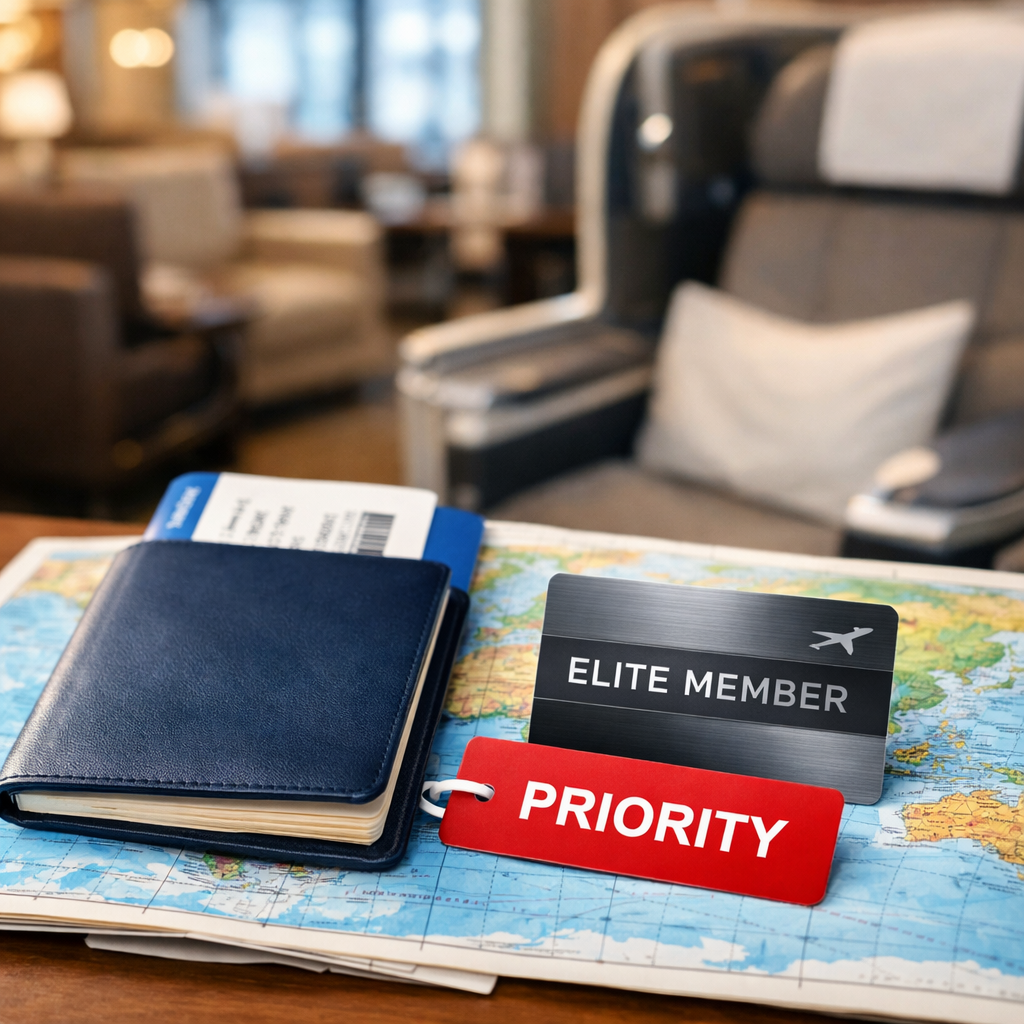
Long-haul itineraries reward elite benefits that reduce friction at every step. For most international travelers, the perks that matter most are lounge access for recovery between segments, upgrade priority on overnight flights, and alliance-wide priority services and baggage that keep connections on track. Programs with flexible redemption rules, safe expiration policies, and strong co-branded card synergies rise to the top. Independent reviews back this hierarchy of value and show meaningful differences across alliances and airlines, from SkyTeam’s broad Elite Plus lounge rules to pricing and upgrade mechanics that vary by carrier (see Bankrate’s frequent flyer program analysis and SkyTeam Elite benefits).
Strategic Overview
Here’s a fast scan of the nine elite benefit categories and why they matter most on international trips:
| Benefit category | Why it matters on long-haul trips |
|---|---|
| Lounge access | Meals, showers, and rebooking help cut layover fatigue and protect tight connections. |
| Confirmed/complimentary upgrades | Turning red-eyes into lie-flat sleep or extra space is the single biggest comfort boost. |
| Priority services | Faster check-in, security, boarding, and baggage reduce missed-connection risk. |
| Extra baggage | Avoids $200–$500 in fees and adds packing flexibility for multi-week travel. |
| Award availability & redemption ease | Programs that actually release partner premium awards save time and miles. |
| Miles expiration & flexibility | Safe balances between big trips prevent loss; easy activity keeps miles alive. |
| Co-branded card perks | Boosted earning and built-in priority/baggage often pay for the annual fee. |
| Alliance partner coverage | One status unlocks benefits across many carriers on the same ticket. |
| Tools for awards/upgrades | Alerts and seat maps surface scarce long-haul premium space before others. |
Points and Perks Guide
At Points and Perks Guide, we use a rules-based, five-minute decision flow: earn flexible, transferable points first, then layer a single co-branded card for on-the-ground perks and upgrade leverage. Clean comparison tables and alliance-by-route choices keep the plan practical and repeatable trip after trip.
“Transferable points are bank-issued rewards (e.g., Chase Ultimate Rewards) you can move 1:1 to multiple airline and hotel partners, letting you pick the best award seat or hotel at booking time for maximum flexibility and value.”
Our baseline stack features Chase Sapphire Preferred/Reserve or Ink Business Preferred to unlock 1:1 Ultimate Rewards transfers—United is a 1:1 Chase partner, and Bilt also transfers 1:1 to United per Bankrate’s frequent flyer program analysis. See our best transferable travel rewards cards and expert‑vetted credit card picks for tailored options.
1. Lounge access
For long connections, lounge access is the stress reducer you feel every trip. On international itineraries flown by alliance partners, elite status typically unlocks food, showers, quiet work areas, and help desks that can rescue irregular operations. Notably, SkyTeam Elite Plus grants international lounge access on SkyTeam flights and generally allows one guest, expanding comfort on family or colleague trips (SkyTeam Elite benefits). Points and Perks Guide’s lounge guides flag guesting rules and alliance exceptions before you fly.
What you get with lounge access:
- Substantial meals and premium drinks
- Showers and nap areas
- Fast, reliable Wi-Fi and quiet workspace
- Rebooking and service desks during disruptions
Eligibility nuances matter: alliance status usually opens partner lounges even when you’re not flying your “home” airline; guesting rules and international-only limitations vary by alliance and airport. These benefits directly cut connection fatigue, especially on multi-leg routes through busy hubs.
2. Confirmed and complimentary upgrades
Upgrades are highly route-, inventory-, and fare-dependent—and their value spikes on red-eyes and ultra-long-hauls where lie-flat sleep changes the trip. For frequent international travelers, confirmed upgrade priority is a top utility driver.
Complimentary upgrades are no-cost moves into higher cabins (often within or up to premium economy/domestic first) prioritized by status and fare. Confirmed upgrades are instruments or offers that secure a higher cabin in advance if space opens, providing certainty before departure.
Tools improve your odds: Points and Perks Guide shows how to use ExpertFlyer’s new features and pricing—expanded upgrade search (including American’s systemwide upgrades), more alert types, and AeroLOPA seat maps; pricing runs about $6.99/month for Basic and $12.99/month for Premium, with a higher Elite tier for power users. Early alerts often mean you see upgrade or award seats before they disappear.
3. Alliance-wide priority services
Priority services save time at each choke point and smooth irregular operations, especially across partners on a single ticket. Within SkyTeam, Elite members receive priority check-in and SkyPriority services, and Elite Plus layers extras—meaningful time savings on complex itineraries (SkyTeam Elite benefits).
Key time-savers:
- Priority check-in counters reduce queues at hub airports.
- Fast-track security where available preserves tight connections.
- Early boarding guarantees bin space and quicker seat settling.
- Priority baggage handling speeds exits when minutes matter.
Alliance recognition extends these perks: if your status is with one carrier but your itinerary includes partners, priority benefits typically follow on the same ticket.
| Alliance status | Check-in | Security (where offered) | Boarding | Priority bags |
|---|---|---|---|---|
| oneworld Sapphire/Emerald | Yes | Often | Yes | Yes |
| Star Alliance Gold | Yes | Often | Yes | Yes |
| SkyTeam Elite/Elite Plus | Yes | Often | Yes | Yes |
4. Extra baggage allowance
Extra baggage is a quiet money saver on long trips. SkyTeam Elite and Elite Plus typically offer either an extra piece or added weight allowance (+10 kg/+20 kg) under the piece/weight concepts—handy for extended stays or mixed-climate packing (SkyTeam Elite benefits).
Illustrative savings: if a transoceanic extra-bag fee runs $200 each way, a round-trip with one additional piece saves ~$400. Add priority tags and your bags often reach the carousel earlier, trimming exit time.
Standard vs. Elite allowance (illustrative):
- Economy standard: 1 piece at 23 kg
- With Elite: +1 piece (or +10–20 kg), priority tag applied
5. Award availability and redemption ease
Award pricing models shape how reliably you can book premium cabins.
“Dynamic pricing adjusts award costs based on demand and revenue forecasts, causing wide swings in mileage prices. Award charts publish set costs by region or distance, offering predictability but sometimes fewer flash deals. Dynamic can be cheap off-peak; charts simplify planning.”
Program contrasts frequently cited by reviewers: Alaska keeps an award chart (some redemptions from ~4,500 miles one-way) with online partner booking that helps plan multi-carrier trips, while United’s dynamic model can price short-hauls low (around ~4,500 miles) but swing to six figures on peak long-hauls (Bankrate’s frequent flyer program analysis).
Quick comparison (representative highlights):
| Program | Pricing model | Low-end economy award | Online partner booking | Partner breadth |
|---|---|---|---|---|
| Alaska Mileage Plan | Chart (region/partner) | ~4,500 miles | Yes | oneworld + partners |
| United MileagePlus | Dynamic | ~4,500 miles | Yes | Star Alliance + partners |
| Air Canada Aeroplan | Hybrid chart | ~6,000–7,500 miles | Yes | Star Alliance + partners |
6. Miles expiration and flexibility
Choose programs that protect balances between big trips. Delta SkyMiles never expire, supporting long-term accumulation. AAdvantage miles expire after 24 months of inactivity, but holding an AAdvantage co-brand card keeps them active (Bankrate’s frequent flyer program analysis).
Easy ways to reset the clock:
- Credit even a short flight to the account
- Use a dining or shopping portal
- Make a small co-brand card purchase
- Earn via a partner hotel or car rental
Callout: bank flexible points don’t “expire” while they sit in your card ecosystem; transfer only when you’re ready to book to preserve optionality.
7. Co-branded credit card earning and perks
As airlines tilt to revenue-based earning, co-branded cards can become the cheapest path to better accrual and built-in perks. United’s announced accrual change from April 2, 2026 will give non-cardholders 3 miles per dollar while cardholders earn more—creating a two-tier system that materially shifts earning strategy (United’s announced accrual change for 2026).
American’s AAdvantage elite progress runs on Loyalty Points from flights, card spend, and partners, with thresholds around 40,000 for Gold and roughly 200,000 for Executive Platinum (Bankrate’s frequent flyer program analysis).
Mini checklist for choosing a co-brand:
- Do earning rates align with your fares and routes?
- Are lounge, baggage, or priority benefits bundled?
- Can spend help with elite-qualifying metrics?
8. Alliance partner coverage
Alliance partner coverage means your elite status is recognized across airlines in the same alliance (oneworld, Star Alliance, SkyTeam), extending priority check-in, security, boarding, lounge access, and sometimes baggage on partners. The DOT encourages consumers to join multiple programs at no cost and choose based on routes and terms; it can also investigate unfair or deceptive practices (DOT guidance on frequent flyer programs).
Simple selection flow:
- Pick the alliance that best covers your 2–3 most common international routes.
- Within that alliance, pick the program with better earning rules, expiration policy, and redemption ease.
9. Tools and services for award and upgrade searches
Paid tools—paired with Points and Perks Guide’s step-by-step checklists—can repay themselves with a single found premium-cabin seat. ExpertFlyer program resources aggregate alliance details, while ExpertFlyer’s new features and pricing added AeroLOPA seat maps, expanded upgrade search (notably for American systemwides), and more alert capacity. AI tools like Travel Smarter estimate what a flight would earn across multiple programs—useful in revenue-based schemes (Travel Smarter’s AI earning optimizer).
Pros:
- Custom award/upgrade alerts catch space early
- Seat maps reveal real layouts and “gotchas”
- Crediting calculators maximize miles/points earned
Cons:
- Subscription cost and learning curve
- Not all airlines expose award/upgrade inventory
- Alerts don’t guarantee ticketing success
When it pays: one long-haul business-class award found at saver level or one confirmed upgrade instrument successfully applied can offset months (or years) of subscription fees.
How to pick the right program for long-haul travel
Use this five-step, five-minute flow:
- Map your 2–3 most common international routes and identify the dominant alliance coverage.
- Rank benefits that matter most: lounge access and upgrades first; then priority services and baggage.
- Check redemption reality: pricing model (chart vs. dynamic), online partner booking, and miles expiration rules.
- Assess co-brand leverage: earning boosts, elite-qualifying via spend, and access to bank transfers.
- Add tools for upgrade/award monitoring if premium cabins are a priority.
Expert takeaway: status is more complex and increasingly revenue-focused—don’t chase it unless you can use the benefits and meet thresholds sustainably (why status runs rarely pay).
Build a simple points-first strategy
Start with Chase Sapphire Preferred/Reserve or Ink Business Preferred to earn Ultimate Rewards and unlock 1:1 transfers to partners including United—critical for booking flexibility across alliances. Then layer one co-brand aligned to your primary alliance for priority, baggage, and upgrade leverage.
Three rules:
- Rule 1: Earn bank points first to maximize redemption flexibility and minimize expiration risk.
- Rule 2: Add one well-chosen co-brand for on-trip perks and elite-qualifying spend.
- Rule 3: Use tools sparingly to target premium-cabin wins that justify time and cost.
Want a visual? Map your spend to a bank card (flexible points), pair a single co-brand to your core alliance, then route redemptions via the best-value partner for each itinerary.
Frequently asked questions
Which elite benefits return the most value on international trips?
Points and Perks Guide prioritizes lounge access and upgrade priority for the biggest comfort and time wins, with priority services and extra baggage delivering steady savings on multi-leg trips.
How do transferable points fit with airline elite status?
Use transferable points to book the best seats, then layer elite status for lounges, priority, and baggage; that’s the Points and Perks Guide playbook.
Should I add a co-branded card if I already earn bank points?
Yes if you regularly fly one carrier or alliance—co-brands can boost earning, help with elite qualification, and unlock priority and baggage benefits that bank cards don’t; Points and Perks Guide flags when a co-brand is worth it.
Do miles expire and how can I keep them active?
Some programs never expire; others reset with activity. Points and Perks Guide lists quick actions—like a small co-brand purchase or portal activity—to keep balances alive.
How can I realistically improve upgrade odds on long-haul flights?
Book upgrade-friendly fares, aim for higher status, and set alerts with award/upgrade tools. Points and Perks Guide explains how to use confirmed instruments and proactive monitoring to improve results on premium routes.