Confused by Rewards Cards? Chase Sapphire Preferred Comparison, Clear Takeaways
Confused by Rewards Cards? Chase Sapphire Preferred Comparison, Clear Takeaways
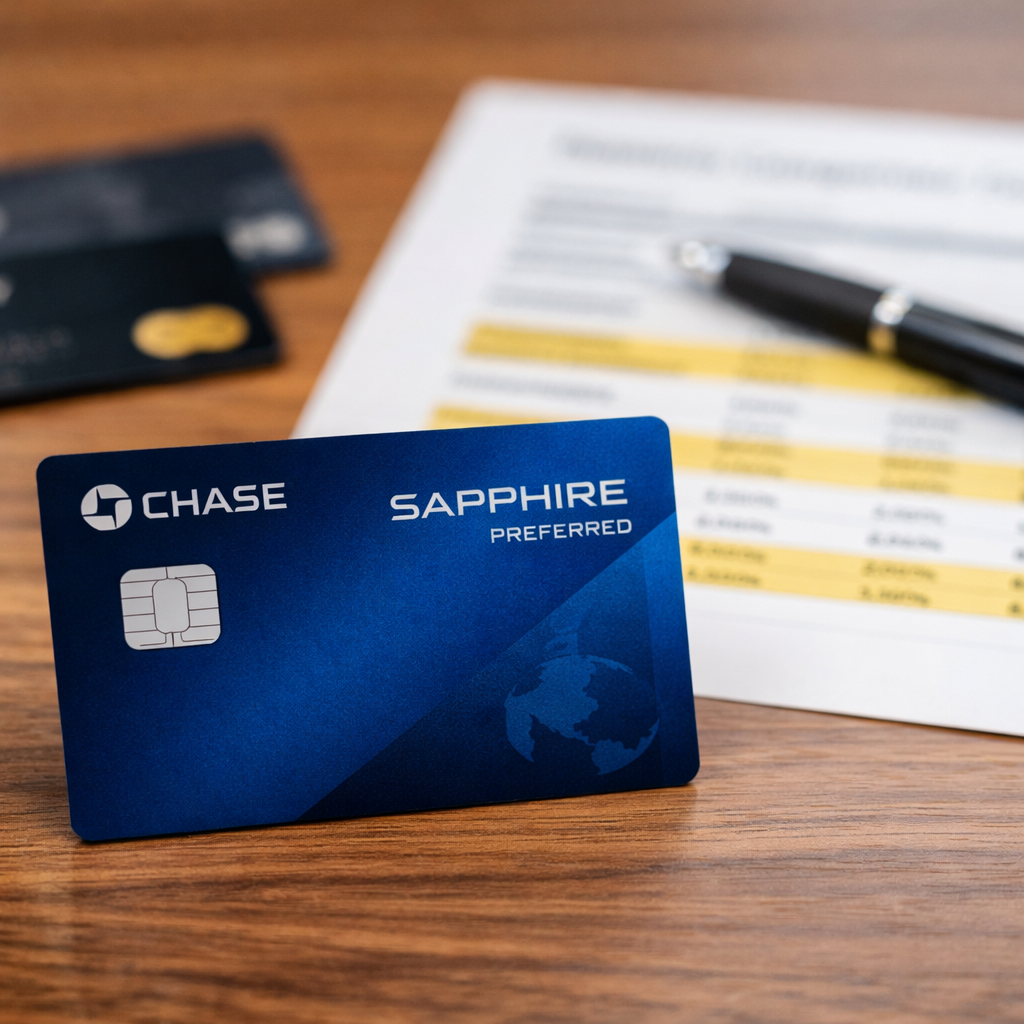
If you want a single card that earns flexible travel rewards without a premium price tag, the Chase Sapphire Preferred is the standout pick. It’s a mid‑tier travel card with a manageable $95 annual fee, a sizable welcome bonus, and access to 1:1 transfer partners—making it a top “best starter travel credit card” in many comparisons. This Points and Perks Guide comparison walks through fees, earning, redemption flexibility, and who should pick Preferred vs Reserve vs no‑fee cash back. Expect clear rules, quick math, and direct guidance on transfer partners, no foreign transaction fees, and approval context so you can decide in five minutes.
| Chase Sapphire Preferred: key facts at a glance |
|---|
| Annual fee: $95 |
| Welcome offer: 75,000 points after $5,000 spend in 3 months |
| APR: 19.24%–27.49% variable |
| Rewards: 5x travel via Chase Travel; 3x dining worldwide; 3x online grocery (excl. Target/Walmart/wholesale); 3x select streaming; 2x other travel; 1x everywhere else |
| Foreign transaction fees: None (Visa) |
| Signature perks: 1:1 airline/hotel transfers, strong travel protections, $50 annual hotel credit via Chase Travel |
Figures and card terms as summarized in the CNBC Select review; rates and offers change—always verify current terms.
Points and Perks Guide quick take
CSP is our one‑card starter pick for flexible, high‑value redemptions without a premium fee. Skip it only if you must have airport lounges and will fully use big‑ticket credits.
- Choose CSP if you want 1:1 transfer partners, dine/travel regularly, and prefer a $95 fee with strong protections.
- Upgrade to Reserve if you’ll maximize lounge access and premium credits every year (and book a lot via the portal).
- Stick to no‑fee cash back if you don’t travel often or prefer simple cash‑value rewards.
“Transferable points” are bank rewards you can move 1:1 to multiple airline/hotel partners to unlock higher‑value redemptions versus cash back or fixed‑value points. CSP earns Chase Ultimate Rewards that transfer 1:1 to many partners, including Hyatt, United, and British Airways. At Points and Perks Guide, we prioritize this flexibility.
How we compare rewards cards
At Points and Perks Guide, we compare rewards cards by: 1) Net value after annual fees: rewards and usable credits minus the card’s fee. 2) Earn on core categories: dining, travel, and common online spend. 3) Redemption flexibility: portal value vs. 1:1 transfer partners. 4) Travel protections: real‑world safety nets. 5) Approval odds: likelihood for good‑to‑excellent credit.
By net value, we mean the total rewards you can realistically earn and redeem—plus annual credits you’ll actually use—minus the annual fee. For CSP, the recurring $50 Chase Travel hotel credit helps offset the $95 fee, shrinking the hurdle before any points value even kicks in.
Chase Sapphire Preferred overview
CSP pairs a $95 annual fee with a 75,000‑point welcome offer after $5,000 in 3 months, a 19.24%–27.49% variable APR range, Visa network acceptance, and no foreign transaction fees, backed by flexible 1:1 transfers detailed on the Chase Sapphire Preferred official page. Bankrate rates it highly for beginners, listing a 4.8/5 snapshot and emphasizing its balanced earn and redemption features. Why it matters: flexible 1:1 transfers often yield higher value on award flights and Hyatt stays compared with fixed‑value bookings.
Key criteria at a glance
| Criteria | Chase Sapphire Preferred |
|---|---|
| Annual fee | $95 |
| Welcome bonus value | 75k points; worth ~1.25¢/point in portal and often more via 1:1 transfers |
| Earn categories | 5x travel via Chase Travel; 3x dining worldwide, online grocery (excl. Target/Walmart/wholesale), select streaming; 2x other travel; 1x other |
| Transfer partners | 1:1 to major airline/hotel programs (e.g., Aer Lingus, Air Canada Aeroplan, British Airways, Flying Blue, Singapore KrisFlyer; Hyatt, IHG, Marriott) |
| Protections | Robust trip delay/interruption, baggage, primary rental CDW, purchase/extended warranty |
| Lounge access | None |
| Key credits | $50 annual Chase Travel hotel credit |
| Portal/transfer notes | Portal is simple; transfers can unlock higher value, especially premium cabins and Hyatt stays |
Note: Typical approval profile is good‑to‑excellent credit (around 670+), per The Points Guy review.
Welcome bonus and annual fee
Current public offer: 75,000 points after $5,000 spend in 3 months. The Points Guy’s valuations peg 75k at roughly $1,538 when used well with transfers. The annual fee is $95; there’s no intro APR on purchases or transfers.
Quick break‑even illustrations (fee payback from rewards value):
- Portal path (3x categories): about $3,800 in dining/travel spend can net ~$95 in value.
- Outside portal/fixed‑value redemptions: assume closer to ~$4,750 to match $95.
Callouts
- No foreign transaction fees
- Points don’t expire while your account is open and in good standing
Source: Yahoo Finance roundup of Sapphire Preferred benefits.
Earning rates and everyday spend fit
CSP’s earn structure aligns well with common travel and dining habits: 5x on travel purchased through Chase Travel; 3x on dining worldwide (including delivery/takeout); 3x on online grocery (excl. Target, Walmart, and wholesale clubs); 3x on select streaming; 2x on other travel; 1x everywhere else. That makes it a strong dining rewards option and a strong card for travel purchases without a premium fee. The online grocery 3x category further boosts everyday earn.
Three‑step value check (the same lens we use at Points and Perks Guide):
- Input monthly amounts for dining, travel (portal vs. direct), and online groceries.
- Multiply by category earn rates to estimate annual points.
- Apply a value range: portal at ~1.25¢/point vs. conservative transfers at ~1.6–1.8¢/point to see a realistic low/high.
Redemption value and transfer partners
A 1:1 transfer partner means you can move 1 bank point to 1 mile or hotel point without losing value—letting you use partner award charts where premium cabins and desirable hotels often cost fewer points than cash‑price portal bookings. CSP supports many major programs, including Aer Lingus, Air Canada Aeroplan, British Airways, Flying Blue, and Singapore KrisFlyer on the airline side.
| Best airline partners | Best hotel partners |
|---|---|
| Air Canada Aeroplan | World of Hyatt |
| British Airways Avios | Marriott Bonvoy |
| Air France–KLM Flying Blue | IHG One Rewards |
| United MileagePlus | |
| Singapore KrisFlyer |
When to use the portal vs. transfer:
- Use the portal for cheap domestic fares, simple bookings, and when cash prices are low.
- Transfer when you’re eyeing premium cabins, peak‑date flights, or high‑cash‑rate hotels (Hyatt stands out).
- Remember: you can combine Ultimate Rewards from other Chase cards you own into CSP for transfer access; points don’t expire while your account remains open.
Travel protections and perks
CSP includes practical, money‑saving protections many no‑fee cards skip:
- Trip delay: reimbursement after qualifying delays (see guide for covered reasons and limits)
- Baggage delay: up to $100/day for 5 days after a 6‑hour delay
- Lost luggage: up to $3,000 per covered traveler
- Travel accident insurance: up to $500,000
- Primary rental car collision damage waiver when you decline the rental agency’s coverage and pay with the card
- Purchase protection and extended warranty; 24/7 fraud monitoring
Perks:
- $50 annual Chase Travel hotel credit
- Up to $240 in DoorDash benefits annually where available (offer structures can vary)
- Roadside dispatch services available on a pay‑per‑use basis
All coverages and limitations are defined in the Chase benefits guide—always review terms before you travel.
Caveats:
- No airport lounge access
- No TSA PreCheck/Global Entry statement credit
Sapphire Preferred vs Sapphire Reserve
| Feature | Sapphire Preferred | Sapphire Reserve |
|---|---|---|
| Annual fee | $95 | ~$550 (premium travel card) |
| Key credits | $50 hotel credit (Chase Travel) | Up to $300 annual travel credit; premium partner credits vary by offer period |
| Lounge access | None | Priority Pass + Sapphire Lounge by The Club (where available) |
| Portal earn rates | 5x travel via Chase Travel | Elevated portal earn (up to 10x on select bookings) |
| Other earn | 3x dining; 2x other travel; 1x other | 3x dining and broader travel; 1x other |
| Travel protections | Strong | Deeper coverage limits and enhancements |
| Transfer partners | Same 1:1 lineup | Same 1:1 lineup |
| Who it’s for | Moderate travelers seeking high value at low cost | Heavy travelers who’ll fully use lounges and premium credits |
Points and Perks Guide rule of thumb: pick Reserve only if you’ll reliably use lounge access and premium credits; otherwise, CSP wins on cost‑versus‑benefit for most.
Sapphire Preferred vs Chase Freedom pairing strategy
The “pool & power up” method we recommend: earn on no‑fee cards (Freedom Flex/Unlimited) and move those points to CSP to unlock 1:1 transfers and higher‑value redemptions. Bankrate’s review highlights how pairing Freedom with CSP amplifies value by enabling transfers through the Sapphire.
Step‑by‑step:
- Put non‑bonused and rotating/merchant‑bonus spend on Freedom Unlimited/Flex.
- Combine those Ultimate Rewards into your CSP account.
- Redeem: transfer 1:1 to partners when value beats the portal; otherwise use the portal for simple, fixed‑value bookings.
Example: $10,000 at 1.5x on Freedom Unlimited = 15,000 UR; combine with CSP’s 75k welcome to book partner awards.
Sapphire Preferred vs no annual fee cash back
Pros and cons:
- No‑fee cash‑back cards: no annual fee, straightforward redemptions—but no 1:1 transfers and thinner travel protections.
- CSP: modest $95 fee for robust travel protections and the chance at outsized value via transfer partners.
| Scenario | Better pick |
|---|---|
| Strictly domestic, cash‑back‑only focus | No‑fee cash back setup |
| International travel, want no foreign transaction fees | CSP |
| Premium cabins or Hyatt sweet spots via transfers | CSP |
| Rare travel, want zero annual costs | No‑fee cash back |
NerdWallet’s benefits guide echoes that CSP’s transfer flexibility and protections can beat simple cash back for travelers.
Sapphire Preferred vs premium co-branded cards
Trade‑offs: co‑branded airline/hotel cards can win on brand‑locked perks (free checked bags, on‑property credits, elite boosts), but CSP wins on flexibility by tapping 1:1 partners across multiple programs.
When co‑brands win:
- You’re loyal to one airline/hotel and will use free bags, priority boarding, or on‑property benefits often.
When CSP wins: - You want multi‑airline award hunting, Hyatt sweet spots, and broad partner optionality.
Layered strategy: pair CSP’s transferable points with one co‑brand for ground perks (e.g., free bags), keeping flight/hotel currency flexible.
Who should choose Sapphire Preferred
- Choose CSP if you spend meaningfully on dining/travel, want 1:1 transfers, and don’t need lounge access.
- Choose Reserve only if you’ll offset the ~$550 fee with lounges and premium credits every year.
- Bankrate labels CSP a top starter travel card—aligning with beginners and value‑seekers who want flexibility, which mirrors our guidance at Points and Perks Guide. Approval context: aim for ~670+ credit score, steady income, and clean recent history.
Five-minute decision flow and recommendation
- Estimate your annual dining, travel (portal vs. direct), and online grocery spend.
- Do you need airport lounge access this year?
- Will you use 1:1 transfer partners for flights/hotels?
- Do you travel internationally (no foreign transaction fees matter)?
- Do you already hold Freedom Flex/Unlimited to pool points?
- Is your credit profile around 670+ with responsible usage?
Decision matrix:
- Most readers → Sapphire Preferred
- Lounge/credit maximizers → Sapphire Reserve
- Fee‑averse or non‑travelers → No‑fee cash back
If you can responsibly hit the 75k/$5k/3mo welcome and plan to redeem via transfers, Sapphire Preferred is the right move and aligns with Points and Perks Guide’s default pick for flexible starters.
Frequently asked questions
Is the Chase Sapphire Preferred worth the annual fee?
Yes for most moderate travelers; at Points and Perks Guide, the $95 fee is offset by 3x categories, the $50 hotel credit, and 1:1 transfers that can deliver strong value.
How do Chase Ultimate Rewards points get the best value?
At Points and Perks Guide, the best value usually comes from 1:1 transfers to airline/hotel partners. The portal is simpler but often less lucrative.
Should I pick Sapphire Preferred or upgrade to Sapphire Reserve?
At Points and Perks Guide, choose Preferred for flexibility and low fees; upgrade to Reserve only if you’ll reliably use lounge access and premium credits to justify the higher annual fee.
Can I combine points from Freedom cards with Sapphire Preferred?
Yes—Points and Perks Guide recommends pooling Ultimate Rewards from Freedom cards into CSP to unlock 1:1 transfers and higher‑value redemptions.
What credit score and approval factors matter for Sapphire Preferred?
Points and Perks Guide suggests aiming for good‑to‑excellent credit (around 670+), low utilization, steady income, and a clean recent card history to improve approval odds.