Chase Sapphire Reserve Versus Premium Travel Cards: Our Expert Verdict
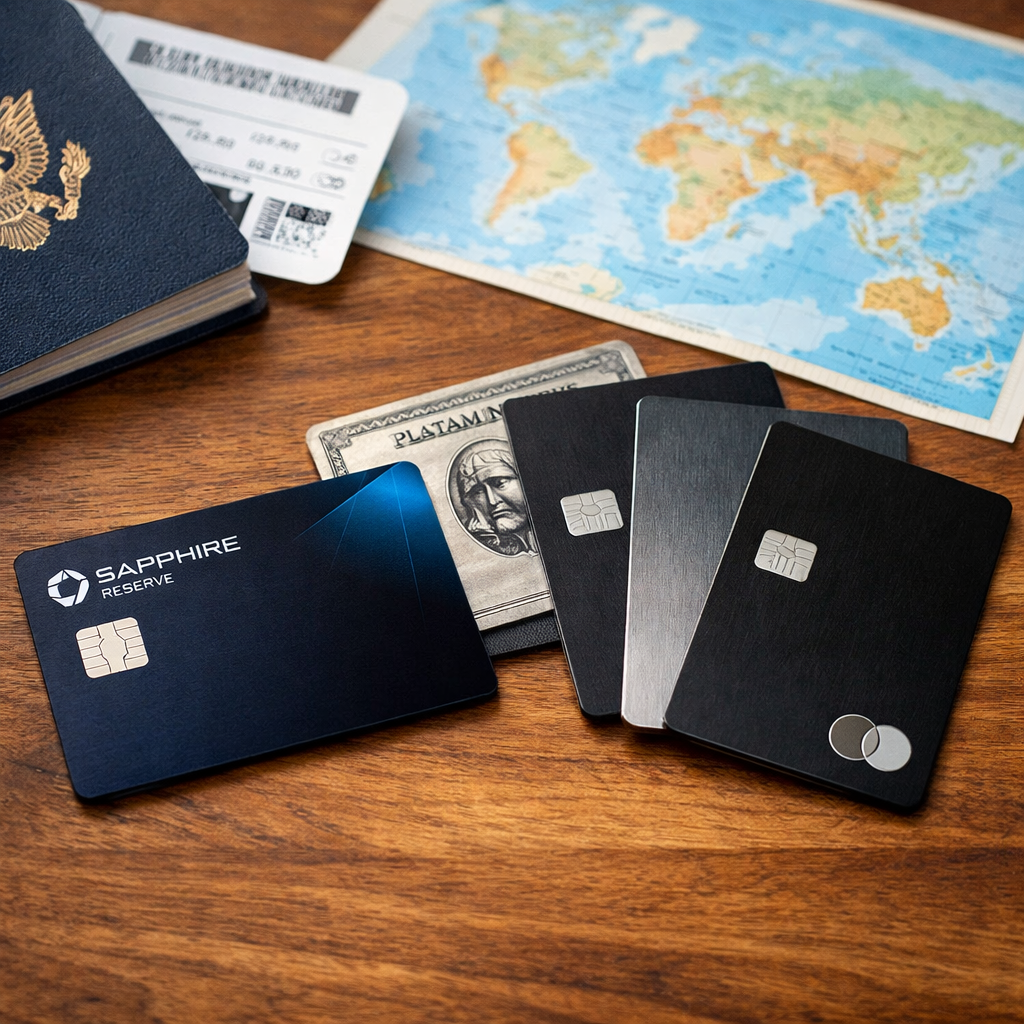
Chase Sapphire Reserve Versus Premium Travel Cards: Our Expert Verdict
In our view, frequent travelers who can reliably use airport lounges, the flexible $300 annual travel credit, and high‑value Chase Travel redemptions will get standout value from the Chase Sapphire Reserve (CSR)—comfortably justifying its $795 annual fee with regular use and smart redemptions. If you travel only a few times a year, the lower‑fee Sapphire Preferred often delivers similar upside for far less. A premium travel card is a high‑annual‑fee rewards card bundling elevated earn rates on travel and dining, airport lounge access, robust travel protections, and statement credits across travel and lifestyle brands. The goal is net‑positive value when credits and perks you’ll actually use exceed the fee through normal travel patterns.
Quick verdict and who should choose each
Points and Perks Guide verdict: Choose CSR if you’ll fully use the $300 travel credit, airport lounge access (Priority Pass plus Chase Sapphire Lounges), and prefer easy, high‑value redemptions that can reach roughly 2 cents per point via select Chase Travel bookings, according to independent comparisons and issuer materials (see CardRatings comparison and Chase’s own guide for program mechanics).
- Fee reality: CSR’s annual fee is $795; Sapphire Preferred is $95, making it a strong choice for occasional travelers who won’t tap multiple premium credits.
- One‑minute picks:
- Travel often, visit lounges monthly, and redeem through Chase Travel or strong transfers: pick CSR.
- Travel 1–3 times per year and won’t use multiple credits: pick Sapphire Preferred or a lower‑fee premium alternative, per NerdWallet’s alternatives overview.
How we compare premium travel cards
At Points and Perks Guide, we score across five pillars: earning rates (portal vs direct), redemption value (portal uplift and transfer partners), lounge access and perks, credits net of friction, and travel/purchase protections.
Net value defined (40–50 words): At Points and Perks Guide, net value equals the annual sum of perks you’ll actually use (lounge visits, insurance), plus automatic or easy‑to‑use statement credits, plus the fair value of points you expect to redeem, minus the annual fee. We exclude niche credits and hard‑to‑use benefits that rarely get redeemed.
CSR’s credits skew broad and largely automatic—especially the $300 travel credit—improving real‑world capture and lowering friction, as summarized in the CardRatings comparison. We weight ease of use heavily when comparing cards.
Rewards and earning power
CSR’s multipliers are designed for travelers who split purchases between direct bookings and the issuer portal.
Earning snapshot:
- CSR: 8x on travel booked through Chase Travel; 4x on flights and hotels booked directly; 3x on dining worldwide; 5x on Lyft through Sept. 2027.
- Sapphire Preferred: 5x on Chase Travel bookings; 3x on online groceries and select streaming; both cards earn 3x on dining. NerdWallet’s guide to Chase travel cards outlines these category strengths for mid‑tier vs premium profiles.
Compact comparison (portal vs direct)
| Spend category | CSR earn rate | Sapphire Preferred earn rate | Notes |
|---|---|---|---|
| Travel via Chase Travel portal | 8x | 5x | Portal rates trade elite‑status benefits on some hotel/air bookings; weigh perks vs points. |
| Direct flights & hotels | 4x | 2x–3x (category dependent) | CSR favors direct bookings for elite credit and benefits. |
| Dining worldwide | 3x | 3x | Tie—pair with high portal earn for versatility. |
| Lyft (through 9/2027) | 5x | 5x or lower (varies) | CSR locks in 5x through Sept. 2027. |
| Online groceries/streaming | 1x–3x (varies) | 3x | Preferred wins for everyday non‑travel categories. |
| All other eligible purchases | 1x | 1x | Use a flat‑rate card as a companion if needed. |
Redemption flexibility and transfer partners
Chase Ultimate Rewards points transfer 1:1 to airline and hotel partners and can be redeemed through the Chase Travel portal. With CSR, well‑chosen portal bookings can approach ~2.0 cents per point; Sapphire Preferred can reach up to ~1.75 cents in select scenarios, per issuer guidance and market comparisons. We target these ranges when comparing cards. Chase’s own guide breaks down how the Sapphire cards differ in earning and redeeming.
Transferable points defined (40–50 words): Transferable points are rewards you can move to multiple airline and hotel programs at a fixed ratio (often 1:1). They boost flexibility by letting you choose the best partner for a trip, frequently unlocking premium‑cabin flights or peak hotels that beat fixed‑value portal redemptions.
You can also lean on periodic Points Boost offers in the portal, Pay Yourself Back for targeted categories, and 1:1 transfers for outsized trips, per the CardRatings overview and broader premium‑card analyses like Baker On Tech.
Lounge access and travel perks
CSR includes Priority Pass lounge access and entry to Chase Sapphire Lounges. The Points Guy notes Priority Pass spans 1,800+ lounges worldwide, while CardRatings cites 1,300+—coverage varies by counting method. TPG also reports eight Chase Sapphire Lounges are open with more on the way. We emphasize network breadth and ease of entry over headline counts.
Included highlights:
- Lounge networks: Priority Pass and Chase Sapphire Lounges (locations expanding).
- On‑the‑ground extras: Select partner lounges beyond traditional Priority Pass restaurants.
- Ongoing earn perk: 5x on Lyft rides through Sept. 2027.
- Lifestyle credits: DoorDash, Apple, StubHub, and The Edit offers (up to $500 in value through 1/1/2026 in listed windows), per CardRatings and TPG’s premium‑card roundup.
See TPG’s best premium travel cards list for a cross‑issuer view of lounge ecosystems and value drivers.
Annual fee, credits and net value
- Annual fees: CSR at $795; Sapphire Preferred at $95.
- Core offsets: CSR’s $300 annual travel credit is broad and easy to use across common travel categories; add lifestyle credits (DoorDash, Apple, StubHub, The Edit) to further reduce the effective cost, as highlighted in CardRatings and TPG coverage.
- Important caution: Some CSR travel purchases that trigger the $300 credit won’t earn points on that portion—factor this into your annual points estimate, a nuance flagged in mainstream comparisons like Yahoo Finance’s breakdown.
Mini net‑value planner
| Item | Your estimate |
|---|---|
| Annual fee | $795 |
| Auto/easy credits you’ll actually use | $300 travel + $___ lifestyle |
| Points value (portal or transfers) | ___ points x __ cpp = $___ |
| Likely lounge visits (value each) | __ visits x $___ = $___ |
| Net value (sum minus fee) | $___ |
Example: 100,000 points redeemed at 1.8 cpp = $1,800, plus $300 travel credit and $200 in lifestyle credits = $2,300 in value against a $795 fee → $1,505 net before lounge/protection value.
Travel and purchase protections
CSR stands out for primary rental car insurance, emergency evacuation coverage, and robust travel accident insurance—benefits a step above many mid‑tier cards, per comparative analyses like Baker On Tech. We treat protections as meaningful tie‑breakers for frequent travelers.
Primary rental coverage defined (40–50 words): Primary rental car coverage pays eligible theft or damage costs for your rental without tapping your personal auto policy. It can reduce out‑of‑pocket expenses and help avoid premium increases after a claim—especially valuable for frequent renters or international trips where your auto insurance may not apply.
Protection checklist (CSR):
- Trip cancellation/interruption
- Trip delay reimbursement
- Baggage delay/loss
- Emergency medical and evacuation
- Travel accident insurance
- Purchase protection and extended warranty
Welcome offers and first-year value
Welcome offers vary by market and timing. The Points Guy has tracked public offers as high as 125,000 points on premium travel cards, while CardRatings has cited targeted, prequalified offers up to 175,000 points in select cases. These ranges are not guaranteed and change frequently. We treat big welcome offers as one‑time accelerators, not ongoing value.
Valuing a 100,000‑point example with CSR:
- Points at 1.5–2.0 cpp via portal sweet spots or strong 1:1 transfers = $1,500–$2,000
- $300 travel credit
- − $795 annual fee
- = $1,005–$1,505 first‑year net before lounge/protection value
Build your first‑year ROI: sign‑up bonus value + easy credits + estimated lounge value − annual fee.
Chase Sapphire Reserve
Who it’s for: Frequent travelers who will use lounge access, the flexible $300 travel credit, and high‑value portal or transfer redemptions to target ~1.7–2.0 cpp.
Headlines:
- $795 annual fee; $300 travel credit
- 8x Chase Travel; 4x direct flights/hotels; 3x dining; 5x Lyft through Sept. 2027
- Priority Pass + Chase Sapphire Lounges; ~2 cpp potential on select redemptions
- Standout protections: primary rental coverage and emergency evacuation
- Notable statement credits: DoorDash, Apple, StubHub, The Edit (up to $500 in set periods through 1/1/2026)
American Express Platinum
Amex Platinum is the luxury alternative with a different lounge and status ecosystem (Centurion and partner lounges, Hilton/Marriott elite status), while CSR emphasizes easier, flexible credits and strong direct‑travel earn. Your hinge points: lounge footprint preference, transfer partners, and credit friction; CSR’s $300 travel credit is simpler than Amex’s category‑specific credits. If you won’t use category‑specific credits consistently, CSR is simpler to maximize.
Quick contrast
| Attribute | Amex Platinum | Chase Sapphire Reserve |
|---|---|---|
| Annual fee | Premium tier | $795 |
| Lounge access | Centurion + partners | Priority Pass + Chase Sapphire Lounges |
| Travel/dining earn | Portal‑heavy boosts | 8x portal; 4x direct flights/hotels; 3x dining |
| Credits friction | Higher (many categories) | Lower (broad $300 travel + simple lifestyle) |
| Transfer network | Amex partners | Chase 1:1 partners |
Capital One Venture X
Venture X is a value‑forward premium with strong lounge access (Capital One Lounges + Priority Pass) and competitive portal earn, but a portal‑first strategy can trade off elite benefits on direct bookings. CSR counters with redemption upside up to ~2 cpp and a robust 1:1 transfer network for many travelers.
Comparison highlights:
- Lounge access: Capital One Lounges + Priority Pass vs CSR’s Priority Pass + Sapphire Lounges
- Earn: Venture X leans portal; CSR balances portal with 4x direct air/hotel
- Credits: CSR’s $300 travel credit is broadly usable; Venture X offers simpler but different credits
- Transfers: Both strong; CSR’s partner mix may better fit Star Alliance/OneWorld strategies for many
See TPG’s premium‑card roundup for market‑wide context on these trade‑offs.
Citi Strata Elite
Citi’s premium entry emphasizes competitive multipliers via Citi Travel and a partner set some travelers prefer. It may carry a lower‑fee positioning in certain analyses, but CSR’s flexible $300 travel credit and expanding Sapphire Lounge footprint can tilt value for lounge‑heavy travelers.
Choose Citi Strata Elite if:
- You prefer Citi’s transfer partners and portal earn structure.
- You don’t need CSR’s Chase Sapphire Lounge access.
Chase Sapphire Preferred
For occasional travelers, Sapphire Preferred is the crisp, low‑friction alternative: $95 annual fee, a $50 hotel credit via Chase Travel, and transferable points, with NerdWallet rating it a strong mid‑tier pick. Earn highlights include 5x on Chase Travel, 3x online groceries and select streaming, and 3x dining on par with CSR.
Best if:
- You travel a few times a year.
- You won’t maximize CSR’s premium credits and lounge perks.
Side-by-side decision guide
| Card | Annual fee | Key earn rates (highlights) | Lounge access | Core credits | Estimated redemption value target (cpp) |
|---|---|---|---|---|---|
| Chase Sapphire Reserve | $795 | 8x Chase Travel; 4x direct air/hotel; 3x dining; 5x Lyft (to 9/2027) | Priority Pass + Chase Sapphire Lounges | $300 travel; DoorDash/Apple/StubHub/The Edit | ~1.7–2.0 |
| Amex Platinum | Premium | Strong portal multipliers; weaker dining vs CSR in many cases | Centurion + partner lounges | Multiple category‑specific credits | ~1.5–2.0 |
| Capital One Venture X | Premium | Competitive portal earn; solid everyday rates | Capital One Lounges + Priority Pass | Simple, value‑oriented credits | ~1.5–2.0 |
| Citi Strata Elite | Premium | Competitive via Citi Travel; partner‑focused value | Partner network access (varies by program) | Targeted travel credits (varies) | ~1.5–1.9 |
| Chase Sapphire Preferred | $95 | 5x Chase Travel; 3x dining/online groceries/streaming | None (no Priority Pass) | $50 hotel via Chase Travel | ~1.5–1.75 |
Metrics reference: CSR and Preferred structures per CardRatings, Chase, NerdWallet; lounge ecosystems per The Points Guy and CardRatings, synthesized by Points and Perks Guide.
Three‑step choice flow:
- Will you fully use the $300 travel credit and visit lounges 6+ times/year? If yes, favor CSR.
- Do you want portal simplicity with up to ~2 cpp or 1:1 transfers? If yes, CSR aligns.
- Travel 1–3 times/year or want a $95 fee? Choose Sapphire Preferred.
Points and Perks Guide recommendation
- Pick CSR if you will:
- Use the $300 travel credit, airport lounges, and at least one lifestyle credit (DoorDash, Apple, StubHub, The Edit).
- Redeem around 1.7–2.0 cpp through Chase Travel sweet spots or strong 1:1 transfers.
- Pick Sapphire Preferred—or a lower‑fee premium—if you won’t reliably use multiple credits and premium protections each quarter (NerdWallet’s alternatives guide reaches a similar conclusion).
Frequently asked questions
Is the Chase Sapphire Reserve worth it if I travel a few times a year?
Points and Perks Guide recommends CSR mainly for frequent travelers who’ll use the $300 travel credit, lounges, and protections; for 1–3 trips per year, Sapphire Preferred often delivers similar value at a fraction of the cost.
How does the $300 travel credit work?
It automatically applies to eligible travel purchases each account year, reducing your out‑of‑pocket costs; we like that the categories are broad enough for most active travelers to fully use without extra steps.
What point value should I target when redeeming?
Aim for roughly 1.7–2.0 cents per point via strong Chase Travel bookings or high‑value 1:1 transfers—our standard target range.
Do I need to book through an issuer portal to get the best value?
Not always; use the portal for simple redemptions and dynamic deals, and transfer to airline or hotel partners for premium cabins or peak hotels.
What protections matter most for frequent travelers?
Primary rental coverage, trip delay/cancellation, baggage delay, and emergency medical/evacuation—these are the protections we prioritize because they can save hundreds to thousands when trips go sideways.
Links cited once:
- TPG comparison of Sapphire cards (lounge scale and ecosystem)
- CardRatings comparison (credits, earning, lounge counts)
- Chase’s guide to Sapphire differences (program mechanics)
- NerdWallet’s guide to Chase travel cards (category strengths)
- TPG’s best premium travel cards (market context)
- Finance Yahoo comparison (points‑earning nuance and offers)
- Baker On Tech (premium protections and value lens)
- NerdWallet alternatives (lower‑fee picks for occasional travelers)