Chase Sapphire Reserve Travel Perks: Every Benefit That Truly Matters
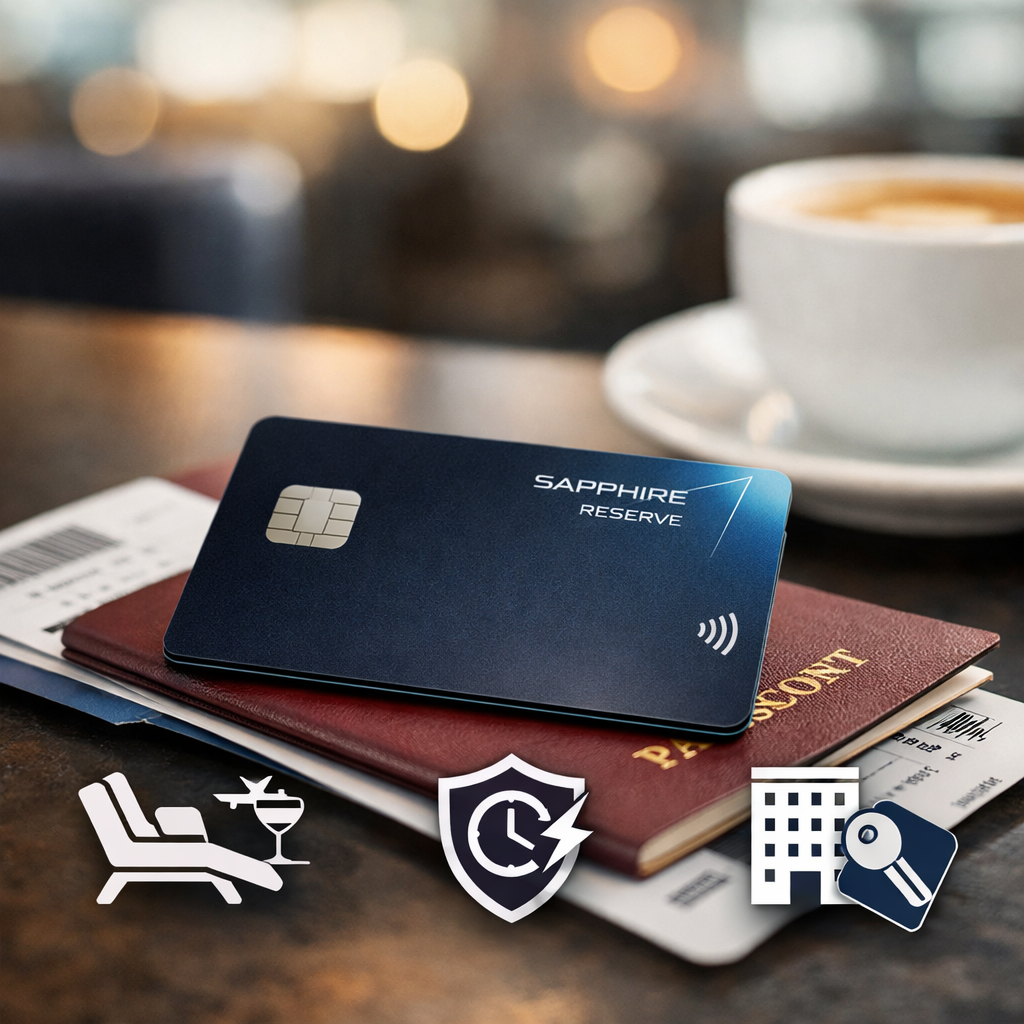
Chase Sapphire Reserve Travel Perks: Every Benefit That Truly Matters
The Chase Sapphire Reserve is built for travelers who want comfort, speed, and high-value redemptions without jumping through hoops. Here’s what truly matters: an automatic $300 travel credit, powerful airport lounge access, elevated earn on travel and dining, 1:1 transfers to airlines and hotels, and industry-leading protections. Newer adds like biannual dining credits, a luxury-hotel “Edit” credit, and lifestyle credits can push value even higher if you plan ahead. With an updated annual fee of $795 and refreshed perks rolling out into 2026, the math can still work for frequent travelers who activate what they’ll use and skip the rest, as covered by Condé Nast Traveler’s fee update overview.
Points and Perks Guide
Our lens is value-first, lowest-waste. We prioritize credits that trigger automatically, redemptions with reliable upside, and protections that remove friction. Skip anything you won’t use, and never carry a balance—interest erases wins. The APR is variable 19.49%–27.99% and the balance transfer fee is 5%, according to the NerdWallet review. Chase’s approval standards are strong, and most applicants fall under the 5/24 policy; authorized user fees apply and AU lounge access may differ, per The Points Guy’s review.
Getting started? See our Chase hub and our transferable points guide for strategy foundations and simple redemption paths.
$300 annual travel credit
The Reserve’s easiest win: the $300 annual travel statement credit erases the first $300 in eligible travel purchases each account year automatically (no enrollment). That includes common categories like airfare, hotels, rideshares, and transit. Use it early to drop your effective out-of-pocket cost, according to the Chase Sapphire Reserve terms.
Important nuance: travel purchases reimbursed by this credit won’t also earn bonus points—don’t double count the value (a dynamic CardRatings highlights). Trigger this credit first, then optimize your earn on subsequent bookings.
Tip: Set a reminder for your account-year reset. If you have regular travel expenses (commuter rail, toll tags, rideshare), funnel those to the card right after the anniversary to capture the credit with zero effort.
Priority Pass and Chase Sapphire Lounge access
Priority Pass Select in one sentence: a lounge membership that gets you into 1,300+ airport lounges worldwide with snacks, drinks, Wi‑Fi, and calmer spaces before flights, all bundled with the card. Sapphire Reserve also includes access to Chase Sapphire Lounges, typically with two guests per visit (see the Chase Sapphire Reserve terms for specifics and enrollment notes).
Quick checklist to avoid lounge-day friction:
- Enroll in Priority Pass after card approval.
- Download the Priority Pass and Chase apps and save your digital cards.
- Check lounge hours/capacity before you go; some locations require a physical card.
- Know guesting rules for each lounge network—Chase lounge guesting differs from third-party lounges.
Elevated earning on travel and dining
Here’s how to rack up points quickly without overthinking channel rules.
Earning rates (simple view):
- Up to 8x on travel booked via Chase Travel
- 4x on flights and hotels booked direct
- 3x on dining worldwide
- 1x on everything else
These elevated earn rates reflect the Reserve’s latest refresh covered in TPG’s new benefits overview. Remember: purchases reimbursed by the $300 travel credit won’t earn bonus points (a trade-off CardRatings calls out).
Book smart flow:
- Price-check Chase Travel vs. booking direct.
- Factor elite-qualifying nights/benefits and on-site perks if you care about status.
- Choose the higher net value: earn rate + benefits + protections + price match options.
Ultimate Rewards 1:1 transfer partners
Definition (45 words): Transfer partners are airlines and hotels that accept 1:1 point transfers from your bank, turning credit card points into miles or hotel points. When you find award “saver” space, transfers can unlock premium-cabin flights or high-demand hotel nights that exceed fixed portal values.
Examples include World of Hyatt, United MileagePlus, British Airways Executive Club, and IHG One Rewards; points move 1:1, and outsized redemptions are common, as detailed in NerdWallet’s benefits guide. On some bookings through Chase Travel, “Points Boost” may push values up to about 2 cents per point—compare before transferring, as TPG’s new benefits overview notes.
The Edit hotel credits and on-property perks
Limited-time offer: a $500 hotel credit for eligible two-night stays booked through Chase Travel’s The Edit, with potential extras like on-property perks. Availability and terms are tied to the Reserve’s updates running through 2026, according to TPG’s new benefits overview.
Usage flow to avoid waste:
- Compare “The Edit” rate vs. booking direct (remember elite credit/benefits at chains).
- Confirm included perks and the two-night minimum.
- Activate any required enrollment, then book within the offer window.
- Best use cases: non-chain luxury stays and short leisure trips that meet the minimum.
IHG One Rewards Platinum Elite status
Complimentary IHG One Rewards Platinum Elite is available after enrollment through Chase, per NerdWallet’s benefits guide.
Definition (45 words): Hotel elite status can include room upgrades, bonus points on paid stays, and priority check-in at participating properties. It’s not a guarantee at every hotel, and value depends on where you stay and how often. Pair status with promos to compound returns on IHG stays.
Tip: IHG-focused travelers can watch for IHG promos and, when it pencils out, move points to IHG from Ultimate Rewards for flexible award stays.
Dining credits and Exclusive Tables access
Plan for up to $300 in biannual dining credits, split into two $150 periods, tied to Reserve Exclusive Tables. Enrollment or activation may be required; check participating restaurants and booking rules in your benefits dashboard, as outlined in NerdWallet’s benefits guide.
Usage checklist:
- Enroll/activate the benefit before you book.
- Find eligible restaurants via Exclusive Tables and reserve during each credit window.
- Keep confirmations and track posting timelines so the credit lands.
- Budget one experience per period and calendar a reminder so both $150 credits get used.
Global Entry and TSA PreCheck credit
You’ll get up to $120 every four years for Global Entry, TSA PreCheck, or NEXUS application fees; just pay with the card to trigger the credit per NerdWallet’s benefits guide.
Definition (45 words): Global Entry speeds your return to the U.S. via expedited customs and includes TSA PreCheck for faster security screening. NEXUS cuts wait times at U.S.–Canada borders. Choose the program that fits your routes and airports to maximize value and reduce airport time.
Tip: Already enrolled? Use the credit for a family member who travels with you.
Robust travel protections and insurance
Key protections include trip cancellation/interruption coverage up to $10,000 per traveler and $20,000 per trip when eligible travel is charged to the card, plus $0 foreign transaction fees for seamless international use, per the Chase Sapphire Reserve terms and the NerdWallet review. Terms, triggers, and documentation requirements apply.
Definition (45 words): Trip interruption insurance reimburses prepaid, nonrefundable trip costs if a covered event—like serious illness, severe weather, or other qualifying disruptions—forces you to cut travel short. Coverage applies when you used the card; you’ll need receipts, proof of the event, and timely filing within stated deadlines.
Claim steps:
- Document the event immediately (doctor’s note, airline notice, weather advisory).
- Save all receipts, itineraries, and proof of payment with the card.
- Contact the benefits administrator as soon as practical.
- Submit forms and requested documents before the deadline; keep copies.
Primary rental car coverage
Definition (45 words): Primary rental car insurance pays first for theft or collision damage to your rental, so you don’t have to file through personal auto insurance. That can reduce hassle and protect your premiums. Coverage varies by country, vehicle type, and terms, so read the policy before you drive.
Specifics: When you pay with the Reserve and decline the rental agency’s collision damage waiver, coverage can reach up to $75,000 for theft and collision damage in many cases, per the Chase Sapphire Reserve terms.
Checklist:
- Pay the full rental with the card.
- Decline the rental agency’s CDW/LDW.
- List the cardholder as the primary driver.
- Keep the rental agreement and incident documentation.
Lifestyle credits for Apple, Lyft, Peloton, and StubHub
Beyond travel, the card stacks lifestyle credits with explicit activation windows. Examples include up to $300 in StubHub/viagogo credits split biannually and Peloton membership credits up to $10 per month; activation may be required, as covered by NerdWallet’s benefits guide and TPG’s new benefits overview.
Mini reference table:
- StubHub/viagogo: Up to $300 total, biannual windows; activation required; tickets via eligible platforms.
- Peloton: Up to $10/month; monthly cadence; activation required; Peloton App/Membership.
- Apple Music/TV+: Varies by offer period; typically monthly; activation required; eligible Apple subscriptions.
- Lyft/DoorDash: Varies by offer period; monthly/annual structures; activation required; eligible rides/orders.
Pro tip from Points and Perks Guide: Create a one-page credit tracker with amounts, enrollment steps, and expiration dates. Add calendar alerts one week before each window closes.
Reserve Travel Designers concierge
Perk: Access to Reserve Travel Designers who build complimentary custom itineraries—useful for complex trips—with service value of roughly $300 depending on scope, as described in the Chase Sapphire Reserve terms.
Best use cases:
- Multi-city international runs with tight connections.
- Unique hotels, villas, or experiential bookings.
- Time-constrained planning where expertise saves hours.
Workflow:
- Outline goals, budget, and nonnegotiables.
- Share dates, traveler details, and preferences.
- Review the proposed itinerary and ask for tweaks.
- Confirm payment with the Reserve to align protections.
Purchase protection, return protection, and extended warranty
Definition (45 words): Purchase protection covers new items you buy with the card against damage or theft for a limited time after purchase. You’ll need proof of purchase, a description of what happened, and timely filing. Dollar caps, claim limits, and exclusions apply, and vary by item and jurisdiction.
Quick reference:
- What’s commonly covered: accidental damage and theft on eligible new items.
- Time windows: limited post-purchase period; check your guide to benefits.
- Caps: per-claim and per-account-year limits apply.
- Exclusions: certain categories (e.g., perishables, motorized vehicles) often excluded.
Stack it with:
- Extended warranty: adds coverage on eligible manufacturer warranties.
- Return protection: if a merchant won’t take an item back in the allowed window, benefits may help—contact the benefits administrator after attempting the merchant return.
Keep digital receipts, serial numbers, and photos of condition for big-ticket purchases.
Value math and lowest-waste usage tips
The annual fee is $795. A simple net-value frame:
- $300 travel credit (automatic) = $300
- Two $150 dining credits = $300
- Lounge access on 5 trips (food/drink savings conservatively $15–$25/visit) = ~$75–$125
- One smart transfer redemption (easily 1.8–2.0¢/point on a 50k award) = ~$900–$1,000 in value potential
Even if you use just the travel credit, both dining credits, and a couple of lounges, you’re close to breakeven—premium redemptions and protections push you solidly ahead.
First 30 days checklist:
- Activate Priority Pass and enroll in all credits.
- Calendar the two $150 dining credit windows.
- Trigger the $300 travel credit with an upcoming transit/ride/hotel charge.
- Add the card to travel wallets; points don’t expire while the account is open (per the Chase Sapphire Reserve terms).
Avoid waste:
- Pay in full—variable APR 19.49%–27.99% can wipe out gains (NerdWallet review).
- Skip balance transfers (5% fee) and any credit you won’t actually use.
Who should get the Reserve
Best for: frequent travelers who will use multiple credits annually, value airport lounge access, want primary rental coverage, and can turn Ultimate Rewards into outsized trips via 1:1 transfers. Expect strong approval criteria and confirm your standing under Chase’s 5/24 policy; authorized user fees and lounge access rules should factor into household value (The Points Guy review).
Not ideal: casual travelers who book once or twice a year—complex credits and a higher annual fee can eclipse sporadic usage. Fee and benefit changes have rolled out recently and into 2026; expect updates and verify terms as highlighted in Condé Nast Traveler’s coverage.
If you’d prefer a simpler setup, start with our beginner-friendly guides and core Chase comparisons in our Chase hub.
Frequently asked questions
How does the $300 travel credit work and what counts as travel?
It automatically reimburses up to $300 in eligible travel purchases each account year; common categories include flights, hotels, and rideshares. Use it early to reduce out-of-pocket costs—Points and Perks Guide’s baseline move.
What lounge access do I get and how many guests can I bring?
You get Priority Pass Select access to 1,300+ lounges and entry to Chase Sapphire Lounges. Points and Perks Guide recommends enrolling immediately; two guests at Chase Sapphire Lounges is common, but guest rules vary by program.
When do travel protections apply and what do I need to pay with the card?
Protections generally apply when you charge the trip to the card. Points and Perks Guide’s rule: keep receipts and file promptly if a covered event occurs (e.g., trip cancellation/interruption or delay).
Are points more valuable through the portal or with transfer partners?
It depends; portal redemptions can be boosted on select bookings. Points and Perks Guide compares both against 1:1 partner transfers to unlock outsized value on premium flights or high-demand hotels.
How can beginners avoid wasting credits and still get solid value?
At Points and Perks Guide, the baseline is to activate every credit on day one, use the $300 travel credit first, calendar the two $150 dining credits, and set alerts for lifestyle credits. Pay in full to avoid interest eroding gains.