Best Chase Credit Cards for Rewards: Our Expert Picks for 2026
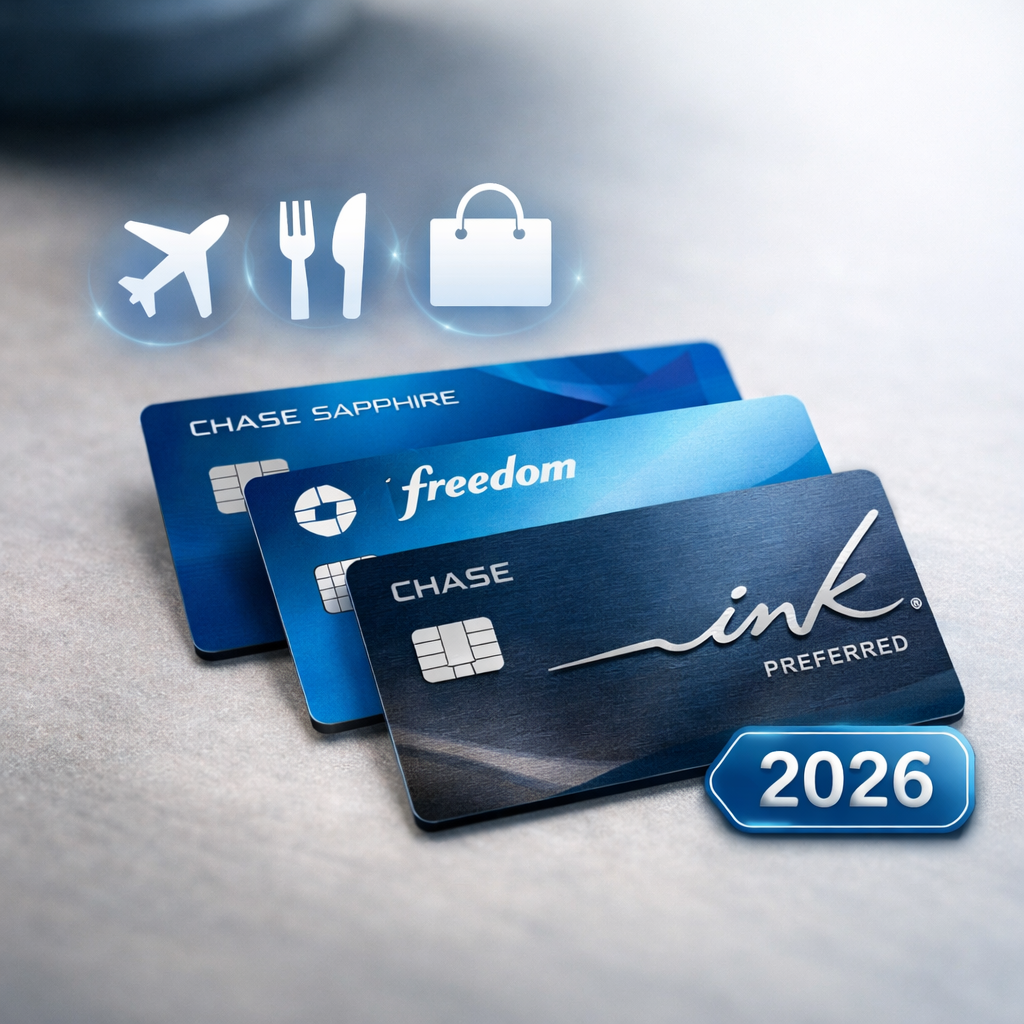
Best Chase Credit Cards for Rewards: Our Expert Picks for 2026
Choosing the best Chase credit card for rewards in 2026 comes down to three questions: Do you want travel points, simple cash back, or a business solution? How often will you travel? And are you willing to pay an annual fee for perks? In this five‑minute guide, we at Points and Perks Guide apply a rules‑based approach to help you pick quickly, focusing on Chase Ultimate Rewards, welcome offers, and practical stacking strategies that reflect 2026 trends. We cite current market analyses and card‑issuer data where useful, and call out when an elevated welcome offer may tilt the decision. Let’s get you to the right card—without the hype.
Quick decision rules
- Want simple cash back with no fee? Start with Freedom Unlimited or Freedom Flex; you can later pair with a Sapphire to convert cash back into points for more flexible redemptions (as outlined in Points and Perks Guide’s Chase card overviews and other major guides).
- Travel regularly and value transfers? Start with Sapphire Preferred at a mid‑tier fee and strong dining/travel earn; it unlocks partner transfers and travel protections aligned with mainstream traveler needs.
- Fly often and can leverage premium credits? Consider Sapphire Reserve. For frequent travelers, premium cards can deliver more than $2,700 in annual value via credits, lounge access, and protections, per CNBC Select’s 2026 trend analysis.
- Have business spend? Use Ink Business Unlimited (flat 1.5%) for everyday purchases and/or Ink Business Preferred for category bonuses; combine rewards to convert cash back into transferable points.
Mini decision table:
| Your priority | Card | Annual fee | Why it wins |
|---|---|---|---|
| Simplicity | Freedom Unlimited or Freedom Flex | $0 | Easy cash back; pairs later with Sapphire for points and transfers. |
| Mid‑tier travel | Sapphire Preferred | $95 | Balanced fee, strong travel/dining earn, and partner transfer flexibility. |
| Premium travel | Sapphire Reserve | $795 | Rich credits, lounge access, and higher uplift on portal redemptions. |
| Small business | Ink Unlimited + Ink Preferred combo | $0 + $95 | Flat‑rate earn plus category bonuses; unlocks transferable points ecosystem. |
Ultimate Rewards explained (40–50 words): Ultimate Rewards are Chase’s proprietary points you earn on cards like Sapphire, Freedom, and Ink. Points can be redeemed for cash back, travel bookings, gift cards, or transferred to airline and hotel partners. Many Chase cards deliver a baseline of about 1 cent per point for straightforward redemptions, per Bankrate’s issuer guide.
Transfer partners explained (40–50 words): Transfer partners are airline and hotel programs that accept point transfers from Chase, typically at a 1:1 ratio. Moving points to partners lets you book award flights and hotel stays—often at higher value than cash redemptions—when award space is available and you can flex dates or cabins.
Elevated welcome offer explained (40–50 words): An elevated welcome offer is a limited‑time, larger‑than‑usual sign‑up bonus for new cardholders who spend a set amount within a few months. These bonuses are cyclical—weekly updates and trackers (like Points and Perks Guide’s weekly roundup and Motley Fool’s weekly Chase offers) help you verify whether a current promotion is unusually strong.
How to choose a Chase card for rewards
- Step 1: Identify your top two spending categories. For consumers, that’s often dining, travel, and online groceries. For businesses, consider travel, shipping, online ads, and internet/phone.
- Step 2: Decide between “cash back now” vs. “transfer partner upside.” Co‑branded cards (e.g., United, Southwest, Hyatt) don’t earn Ultimate Rewards and are best when you’re loyal to one program, as we and Yahoo Finance note in Chase card overviews.
- Step 3: Pick a fee tier: no‑fee (Freedom), $95 (Sapphire Preferred/Ink Preferred), or premium (Sapphire Reserve).
Tip: Ultimate Rewards typically baseline around 1 cent per point for cash and many simple travel bookings. You can improve value by transferring to partners or using portal redemptions with premium cards that boost point value.
Welcome‑offer timing: Elevated bonuses come and go. If you can wait a few weeks, track weekly roundups to pounce on an unusually high promotion. Points and Perks Guide updates these roundups regularly.
Our expert picks
- Best starter travel: Chase Sapphire Preferred — $95 fee, strong dining/travel earn, and transfer flexibility; frequently runs competitive bonuses (e.g., 75,000 points after $5,000 in three months—verify current).
- Best premium travel: Chase Sapphire Reserve — $795 fee but heavy perks, credits, and lounge access for frequent travelers; occasional large sign‑up bonuses (verify current).
- Best simple cash back: Chase Freedom Unlimited — 1.5% back on other purchases plus solid category bonuses; easiest on‑ramp for beginners.
- Best rotating value: Chase Freedom Flex — quarterly 5% categories with activation; pairs well with Sapphire for transfers.
- Best small business pairing: Ink Business Unlimited + Ink Business Preferred — combine flat‑rate and category multipliers; transfer to partners for trips.
Comparison at a glance:
| Card | Rewards focus | Example welcome offer (verify current) | Annual fee | Ideal user |
|---|---|---|---|---|
| Sapphire Preferred | Mid‑tier travel + transfers | 75,000 points after $5,000/3 mo (based on weekly roundups) | $95 | Occasional–regular travelers |
| Sapphire Reserve | Premium travel + lounge | 125,000 points after $6,000/3 mo (reported in roundups) | $795 | Frequent travelers maximizing credits |
| Freedom Unlimited | Simple everyday earn | $200 after $500/3 mo (recent example) | $0 | Beginners, no category tracking |
| Freedom Flex | Rotating 5% categories | Often paired with $200 tier (verify) | $0 | Optimizers who plan quarterly |
| Ink Business Unlimited | Flat 1.5% business spend | $750 after $6,000/3 mo (recent example) | $0 | Small businesses with broad, non‑bonused spend |
| Ink Business Preferred | Category‑heavy business earn | Large points bonus (varies; verify) | $95 | Small businesses with travel/shipping/ad spend |
Sources for offer timing and context include Points and Perks Guide’s weekly roundups, Motley Fool’s weekly Chase offers, and late‑January 2026 round‑ups.
Chase Sapphire Preferred
Sapphire Preferred is the mid‑tier travel anchor for most people: a popular $95‑fee card with strong dining and travel earn rates, partner transfers, and core travel protections. In recent months, it has run solid sign‑up bonuses (e.g., 75,000 points after $5,000 in three months—always verify the current public offer via weekly trackers). Transfer partners include major programs like British Airways; the card also features primary rental car insurance and trip protections highlighted in Points and Perks Guide’s Chase card overview and other major guides.
Who should choose it:
- Occasional to regular travelers who want low‑fee access to transfers
- Fee‑sensitive users who still want strong dining/travel earn
- First‑time entrants to a transferable points ecosystem
Chase Sapphire Reserve
Sapphire Reserve is built for frequent travelers who can reliably use premium credits, higher earn rates, and lounge access. While the $795 annual fee is steep, premium cards in 2026 can deliver more than $2,700 in annual value for heavy travelers when credits and perks are fully leveraged. Recent reports have shown large promotional bonuses (e.g., 125,000 points after $6,000 in three months—verify current before applying).
Reserve vs. Preferred at a glance:
| Card | Annual fee | Lounge/perks | Point uplift potential | Ideal traveler profile |
|---|---|---|---|---|
| Sapphire Preferred | $95 | Core travel protections | Good transfer access | Value seekers flying a few times per year |
| Sapphire Reserve | $795 | Lounge access, richer credits/protections | Higher uplift via portal + perks | Frequent flyers who can use credits monthly |
Chase Freedom Unlimited
Freedom Unlimited is the simplest everyday earner: 1.5% back on all other purchases, plus steady category bonuses without rotating calendars. On its own, it’s straightforward cash back; paired with a Sapphire or Ink Preferred, you can convert that cash back into Ultimate Rewards points for transfers and enhanced travel value. Recent examples include a $200 bonus after $500 in three months (verify current), per late‑January 2026 round‑ups, including Points and Perks Guide and Motley Fool.
Chase Freedom Flex
Freedom Flex adds rotating 5% categories (activation required) plus fixed 5%/3% categories on select purchases. Pair it with a Sapphire to transfer points and boost redemption value.
Quarterly planning tips:
- Set a calendar reminder to activate each quarter.
- Time big purchases (appliances, electronics, travel deposits) when matching categories go live.
- Use Sapphire for travel/dining in off‑quarters to maintain strong earn rates.
Flex vs. Unlimited:
- Unlimited: absolute simplicity with 1.5% back on everything else.
- Flex: higher quarterly upside if you plan purchases around categories.
Ink Business Preferred
Ink Business Preferred is the backbone card for small businesses that want transferable points. It earns strong bonuses in common business categories like travel and select advertising, shipping, and telecom, and it pairs with Ink Unlimited/Cash to turn cash back into Ultimate Rewards for transfers.
Two quick examples:
- Shipping‑heavy e‑commerce brand: Leverage category bonuses on shipping and online ads, then redeem via partners for inventory or trade‑show travel.
- Consulting firm with travel: Earn on airfare and hotels, then transfer points to airline/hotel partners for premium client‑travel value.
The payoff: flexible redemptions for business trips and client travel without locking into a single loyalty program.
Ink Business Unlimited
Ink Business Unlimited is the flat‑rate workhorse: 1.5% cash back on purchases, $0 annual fee, and typically free employee cards. Recent public bonuses have included $750 after $6,000 in three months (verify current). Pair it with Ink Business Preferred—or a Sapphire card—to convert that cash back into transferable points, a common tactic we outline at Points and Perks Guide and in other major roundups (e.g., NerdWallet).
Simple pairing flow:
- Route day‑to‑day spend to Ink Unlimited.
- Move rewards monthly to Ink Preferred.
- Redeem through transfers or the Chase travel portal based on trip goals.
Co-branded alternatives to consider
Chase also issues co‑branded airline and hotel cards (e.g., United, Southwest, Hyatt, IHG) that do not earn Ultimate Rewards. Consider these if you’re loyal to a single program or want specific elite benefits and free‑night certificates. Decision rule: start with Ultimate Rewards cards for flexibility; add a co‑brand only when you consistently redeem in one ecosystem and elite benefits matter.
Earning and stacking strategies with Ultimate Rewards
Stacking explained (40–50 words): Stacking means layering multiple earning levers—card category bonuses, quarterly 5% calendars, promo multipliers, and targeted statement‑credit deals like Chase Offers—to increase your effective rebate. Activate offers in your app or dashboard, then route the right spend to the right card to compound returns without overspending.
Recommended pairings:
- Consumer: Freedom Unlimited/Flex for everyday + Sapphire Preferred/Reserve for travel and transfers.
- Business: Ink Unlimited for baseline + Ink Preferred for category bonuses and transfers.
Do this now:
- Set quarterly activation reminders (Flex).
- Route travel and dining to Sapphire; office/internet/phone to Ink.
- Sweep Freedom/Ink earnings monthly to Sapphire or Ink Preferred to keep points transferable.
Redemption strategy for maximum value
“Ultimate Rewards points are flexible currency redeemable for travel, cash back, gift cards, or partner transfers; many Chase cards see about 1 cent per point when redeemed for cash or some travel options.” Use the portal for simplicity; transfer to partners when you can find premium‑cabin or high‑value hotel award space.
Redemption paths compared:
| Redemption path | Typical value | When to use it |
|---|---|---|
| Cash back | ≈ 1 cent per point | You want simplicity and immediate statement value. |
| Chase travel portal | ~1–1.5 cpp (card‑dependent) | You prefer easy bookings and can use premium uplift. |
| Transfer to partners | Variable, often higher | You can find award space; aim for premium cabins/hotels. |
Fees, credits, and protections to weigh
- Typical fees: Sapphire Preferred at $95; Sapphire Reserve at $795. Premium cards in 2026 are leaning into broader lifestyle credits—travel, rideshare, dining—as issuers compete on ongoing value.
- Key protections: primary rental car coverage on Sapphire Preferred; robust trip delay/cancellation protections across the Sapphire lineup.
Net Value Worksheet (estimate before you apply):
| Item | Amount | Notes |
|---|---|---|
| Annual fee | −$ | |
| Travel/dining credits you’ll use | +$ | Be conservative; ignore credits you won’t redeem. |
| Welcome offer (amortized over 12 mo) | +$ | Divide expected bonus value by 12. |
| Category earnings (12 months) | +$ | Estimate spend x earn rate x point value. |
| Net value (year one) | = | Sum of above |
Approval rules and timing considerations
Expect tighter eligibility for Sapphire and Ink bonuses in 2025–26, with more friction on repeat bonuses and vaguer application language, according to Points and Perks Guide’s 2026 outlook and TPG’s predictions. Space applications; as a conservative pacing rule, consider capping yourself around four new approvals in a rolling 12 months and plan referrals thoughtfully—rewards often range 5,000–20,000 points per referral, with limits tightening—per expert commentary on approval trends.
Who should skip rewards for a 0 percent intro APR
If you’re carrying debt or need runway to finance a large expense, pick a 0% intro APR or balance‑transfer card (e.g., Slate Edge) over rewards. 2026 trends point to longer intro APR windows and more merchant‑tied rebates as issuers compete for rate‑sensitive customers, per industry research.
Checklist:
- Map your payoff timeline and choose a term that covers it.
- Avoid new purchases on the balance‑transfer card.
- Set auto‑pay to clear the full promo balance one cycle before the end date.
Frequently asked questions
Which Chase card is best for travel rewards?
At Points and Perks Guide, Sapphire Preferred is the best mid‑tier starter with strong dining/travel earn and a $95 fee. Sapphire Reserve suits frequent travelers who will use premium credits, lounge access, and higher earn to offset its $795 fee.
Can I combine points from Freedom and Sapphire cards?
Yes—earn cash back on Freedom Unlimited/Flex, then combine with Sapphire Preferred/Reserve to convert into Ultimate Rewards points and unlock higher‑value partner transfers; we show the steps in Points and Perks Guide’s how‑to.
How valuable are Ultimate Rewards points?
Around 1 cent per point for cash and simple travel. Transfers or premium‑card portal uplifts can beat that when you find good award space, and we flag those opportunities at Points and Perks Guide.
What are common Chase approval and bonus rules?
Eligibility tightened in 2025–26, so space applications and expect more friction on repeat bonuses. Points and Perks Guide tracks evolving referral limits and sequencing tips.
How do I decide between Sapphire Preferred and Reserve?
Pick Preferred for low‑fee transfers and strong core earn. Choose Reserve only if you travel often and can reliably use premium credits, lounge access, and higher uplift—our quick rules at Points and Perks Guide can help you decide.