2026 Guide: Top Airline Credit Cards For Frequent Flyer Rewards
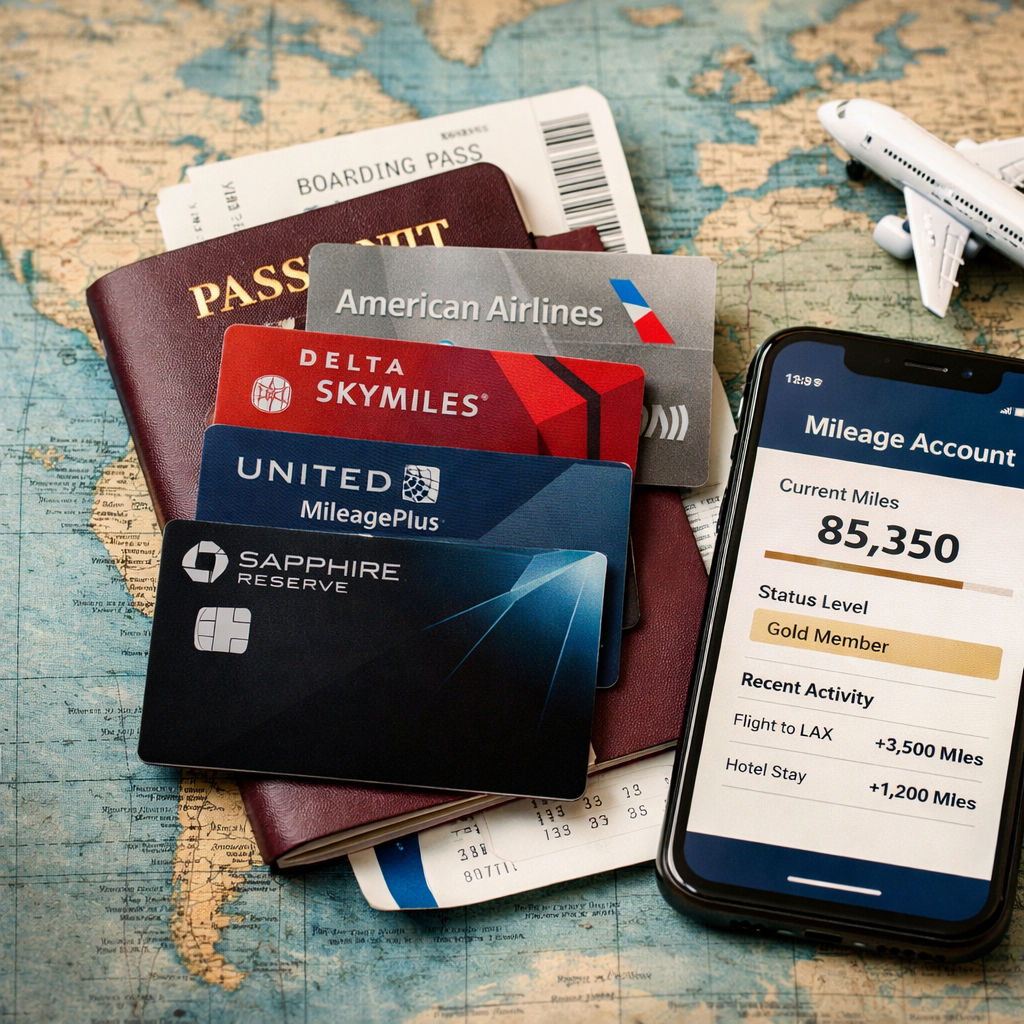
2026 Guide: Top Airline Credit Cards For Frequent Flyer Rewards
If you mostly fly one airline and check bags or want priority boarding and lounge access, start with that airline’s co‑brand. If you mix and match carriers, a flexible “transfer king” card should be your anchor because transferable bank points are broadly valuable across many programs, frequently out-earning single-airline cards on total trip value, according to NerdWallet’s airline card analysis. Transferable points are bank rewards you can move to airline or hotel partners—often at 1:1 ratios—to unlock higher-value redemptions across multiple programs. Examples include moving points to United MileagePlus or Air France–KLM Flying Blue. See our primer on flexible currencies in our transferable-points hub.
Top picks at a glance (fees, earn, perks, who it’s for)
- Delta SkyMiles Platinum Amex — $350 fee; 3x on Delta and hotels; free bag, credits, MQD help; best for regular Delta flyers wanting perks and status support.
- Delta SkyMiles Reserve Amex — $650 fee; 3x on Delta; Sky Club access, companion cert, MQD acceleration; best for heavy Delta users who value lounges.
- United Quest — $350 fee; elevated United earn; two free checked bags, annual United credit; best for United regulars who use bags/credits.
- United Explorer — lower fee (often waived year 1); solid earn on United/travel/dining; free bag, priority, Club passes; best for casual-to-regular United flyers.
- Southwest Priority — ~$149 fee; strong earn on Southwest; annual Southwest credit, 7,500 anniversary points, Upgraded Boardings; best for Southwest loyalists.
- Chase Sapphire Preferred — $95 fee; broad bonus on travel/dining; 1:1 transfers and portal uplift; best for non‑loyal flyers needing flexibility.
- Capital One Venture X — $395 fee; at least 2x everywhere; big travel credit, broad lounge access; best as a premium flexible “sweep” card.
- Amex Platinum — $895 fee; rich lounge network and large credits; best for frequent travelers who’ll fully use credits and partners.
- Atmos Rewards Ascent Visa Sig. — issuer fee varies; 3x on Alaska & Hawaiian; companion fare; best for West Coast flyers riding Alaska/Hawaiian often.
- JetBlue Plus — ~$99 fee; strong JetBlue earn; 10% points rebate, 5,000 anniversary points; best for JetBlue loyalists.
Source notes: flexible points value (NerdWallet), card lineups and standouts (CNBC Select, Upgraded Points, Daily Drop, AOL, One Mile at a Time). Specific benefit terms change—always confirm current issuer terms.
Points and Perks Guide
We build fast, no‑nonsense buyer’s guides with clean comparisons, transparent fee‑offset math, and a five‑minute decision flow so you can pick confidently without hours of research. This guide leans on two frameworks:
- Airline Loyalty vs. Transferable Points: decide your anchor card first, then add perks.
- Annual Fee Offset Quick Rules: simple math to see if a card pays for itself.
When we reference elite boosts like MQD/MQP accelerators, see our earning elite status guide for details. And when we talk about flexible currencies, see our transferable-points hub for strategy and partner picks.
Delta SkyMiles Platinum American Express Card
Best if you fly Delta several times a year and want free bags, modest credits, and meaningful MQD support—then pair a flexible points card for non‑Delta spend.
Key facts and why it works
- Annual fee: $350. Earns 3x miles on Delta purchases and on hotels. Many issuers cycle welcome offers; a recent example was 80,000 miles after $4,000 in 6 months (subject to change), per CNBC’s best airline cards roundup.
- Value: First checked bag can save a roundtrip traveler $60–$125 per trip; recurring credits and MQD help can push you toward status faster. See our elite status guide for how MQDs/MQPs stack with flight activity.
Mini spec box
- Fee: $350
- Top earn: 3x Delta; 3x hotels
- Standout benefits: Free checked bag, priority perks, MQD support
- Ideal traveler: Delta credit card fit for regular Delta flyers seeking Delta benefits with a manageable fee
Delta SkyMiles Reserve American Express Card
Delta’s premium option for heavy SkyMiles users who want lounge access, a valuable companion benefit, and accelerated status progress.
- Earn and fee: 3x SkyMiles on Delta purchases; $650 annual fee, according to Upgraded Points’ airline card analysis.
- Why upgrade from Platinum: You fly Delta monthly, visit lounges often, and can use the companion certificate and MQD acceleration. If you take only a few Delta trips yearly, Platinum is usually enough—Reserve shines when you fully leverage lounge access and status boosts.
United Quest Card
A strong mid‑tier United credit card for consistent United flyers who want bags and recurring credit value.
- Annual fee: $350, per Daily Drop’s airline card guide.
- Value stack: Two free checked bags, an annual United statement credit, and boosted United earn rates. If you take several United trips each year, the bag benefit plus credit can cover a large chunk of the fee.
Quick math (directional)
- Fee vs. offsets: $350 fee; typical United credit + two roundtrips with a checked bag can offset most or all of the cost for a solo traveler. Add a companion and breakeven comes faster.
Positioning: Pick Quest if you reliably fly United and will use the free checked bags and United statement credit each year.
United Explorer Card
A practical, lower‑fee entry for casual-to-regular United flyers who still want core perks. It has been highlighted as “Best for United” by CNBC’s roundup. Typical positioning includes a waived first‑year fee promo and on‑the‑ground perks like a free bag, priority boarding, and United Club day passes (promos can change).
Explorer vs. Quest at a glance
- Fee: Explorer lower (often waived year 1) vs. Quest $350
- Credits: Explorer limited vs. Quest recurring United statement credit
- Bags: Explorer free first bag; Quest two bags
- Best for: Explorer suits occasional/regular flyers; Quest suits frequent United travelers who’ll fully use credits/bags
Tip: Pair Explorer with a transferable‑points card for alternatives when United’s dynamic pricing spikes. See our transferable-points hub for pairing options.
Southwest Rapid Rewards Priority Credit Card
Best for Southwest loyalists who value boarding perks, anniversary points, and annual credits that reliably offset the fee.
- Recognition: Noted as “Best for Southwest” in CNBC’s expert picks.
- Why it works: Southwest’s first two checked bags fly free for all passengers, so the card focuses on repeatable value—an annual Southwest travel credit, 7,500 anniversary points, and Upgraded Boardings—making it easy to cover much of the fee with normal travel.
Example offset math
- 7,500 anniversary points at ~1.3¢ each ≈ $97.50 value
- Annual Southwest travel credit ≈ $75
- Total ≈ $172.50 in predictable value vs. ~$149 fee before counting Upgraded Boardings or in‑flight savings
Chase Sapphire Preferred Card
A high‑ROI flexible anchor for travelers who want broad redemption options and partner access instead of being locked into one airline.
- Why it’s a staple: CNBC calls it “Best for non‑loyal flyers,” and NerdWallet underscores the versatility of transferable points for finding outsized value across partners.
- Definition refresher: Transferable points let you move points to multiple airline partners—often at 1:1—to chase award seats, sweet spots, and better value than fixed cash rates.
Quick spec overview
- Point earning: Strong bonuses on travel and dining; elevated rewards through the issuer portal on select bookings
- Transfer partners: Access to major programs (e.g., United, Air France–KLM)
- Portal uplift: Typical enhanced value when redeeming via the bank portal vs. straight cash back
- Best pairings: Add a co‑brand (e.g., United Explorer) for bags/priority while keeping redemption flexibility
Capital One Venture X Rewards Credit Card
A premium yet straightforward flexible card with at least 2 miles per dollar on all purchases, a rich travel credit, and broad lounge access.
- Core facts: $395 annual fee and a baseline of 2x everywhere, both cited across 2026 roundups, including AOL’s best travel credit cards feature.
- Why it’s great: Use it as your “sweep card” for non‑bonus spend and for portal bookings; pair with an airline co‑brand for status waivers or bag perks.
What you get (high level)
- Annual travel credit usable via the issuer’s portal
- Lounge access spanning the issuer’s lounges plus partner networks
- Broad transfer options to airline partners
- Best for: Frequent but non‑loyal flyers seeking simplicity (2x baseline) and premium travel benefits without ultra‑premium complexity
American Express Platinum Card
The lounge and credits powerhouse for travelers who’ll fully use its ecosystem.
- Fee: $895 in 2026 roundups (see Daily Drop’s airline cards coverage).
- Value thesis: Exceptional lounge coverage (Centurion and partners) plus a suite of annual credits. It can be a net win if you visit lounges 8+ times per year and track credits diligently. Membership Rewards transfers add more flexibility for international awards and premium cabins.
Who it fits
- Frequent travelers who prioritize lounge access
- Users who can reliably redeem airline/travel credits, rideshare, and hotel benefits
- Collectors who value Amex transfer partners and premium cabin award charts
Atmos Rewards Ascent Visa Signature Card
A niche‑strong choice for Alaska Airlines or Hawaiian Airlines loyalists—especially West Coast flyers.
- Why it’s here: Flagged as a top pick for Alaska & Hawaiian flyers in recent expert lists (CNBC) and cited in airline‑card roundups (One Mile at a Time).
- Earn and perk: 3 points per $1 on Alaska & Hawaiian purchases and a Companion Fare benefit that can deliver outsized value on transcon or island‑hopper trips.
Ideal profile
- West Coast flyers leveraging Oneworld connections via Alaska or frequent interisland/West Coast–Hawaii travel on Hawaiian
- Travelers who can plan at least one companion trip per year to monetize the fare benefit
JetBlue Plus Card
Designed for loyal JetBlue flyers who want ongoing value via rebates and anniversary points.
- Recognition: Often listed “Best for JetBlue” by major roundups, including CNBC.
- Perks that add up: 10% rebate on TrueBlue points redemptions for JetBlue flights and 5,000 anniversary points.
Mini calculator
- Redeem 60,000 points in a year → 6,000 points back (10% rebate)
- Add 5,000 anniversary points
- At a conservative ~1.3¢ value, that’s ≈ $143 of annual point value—often enough to meaningfully offset the ~$99 fee before counting any flight or bag benefits
How to choose between airline loyalty and transferable points
Decide in five minutes
- If you fly one airline 6+ times/year and check bags or want priority/lounges, start with that airline’s co‑brand.
- If you split travel across carriers or book partners often, start with a flexible transferable‑points card, then add a co‑brand for on‑the‑ground perks.
Supporting notes
- No‑annual‑fee airline cards are fine for infrequent travelers, but frequent flyers usually need higher-tier perks, a point echoed by NerdWallet’s airline guide.
- Chase Sapphire Preferred is a versatile on‑ramp to transferable points for broad partner access and portal uplift.
- Quick definitions: Airline co‑brands are cards tied to one loyalty program; they excel at perks like free checked bag, priority boarding, and credits. Flexible cards earn bank points you can transfer across partners for maximum redemption flexibility.
Quick rules to offset annual fees fast
ROI shortcuts
- Free bags: Expect $60–$125 roundtrip per traveler (1 bag). Two roundtrips or adding a companion can offset many mid‑tier fees quickly.
- Lounge visits: If you value lounges at ~$35–$50 per visit, 6–8 visits/year can cover a big slice of a premium fee—especially when paired with a $200–$300 annual travel credit.
- Anniversary/airline credits: Map guaranteed credits/points to “cash” value to find breakeven month.
Fast offset table (directional estimates)
- United Quest ($350): United credit (~$125) + two roundtrips with 1 bag ($120–$250) → net effective fee often <$50
- Southwest Priority (
$149): $75 travel credit + 7,500 pts ($97.50) → net effective fee ≈ $0 or better before Upgraded Boardings - Amex Platinum ($895): 8 lounge visits ($280–$400) + core credits ($300–$500 used) → net effective fee can approach $0 for frequent travelers who track benefits
- Delta Platinum ($350): 1–2 trips with a checked bag ($60–$250) + credits/MQD support → net effective fee often <$100 for regular Delta flyers
Frequently asked questions
Are airline credit cards or flexible points cards better for most travelers?
Flexible points cards are better for most travelers who fly multiple airlines because you can transfer points to partners for the best deal. At Points and Perks Guide, we suggest starting with a flexible anchor, then adding a co‑brand if you reliably use perks like free bags, boarding, and credits.
How many flights per year justify an airline card’s annual fee?
For many travelers, 3–4 roundtrips with checked bags or frequent priority boarding can offset a mid‑tier fee. If you also value lounges or use annual credits, even 2–3 trips may be enough.
When should I transfer points to an airline program?
Transfer when a specific award seat is available and the miles price beats cash by at least 1.5–2.0 cents per point after fees. Confirm space first, then transfer because most transfers are one‑way and irreversible; our transferable-points hub covers timing tips and partner options.
Do checked-bag and lounge perks stack with elite status?
Yes, they usually stack. If status already gives free bags or lounge access, the card can extend those perks to companions, add credits, or provide priority benefits even when you’re not on an eligible fare; see our elite status guide for nuances.
What’s a simple two-card setup for frequent flyers?
Pair one flexible card (e.g., strong 2x everywhere with transfer partners) with your main airline’s card for bags, boarding, and elite boosts. At Points and Perks Guide, we call this the “anchor + co‑brand” setup because it maximizes earning while preserving on‑the‑ground perks.
Links referenced once each:
- Flexible points value and card landscape: NerdWallet’s best airline credit cards
- Co‑brand standouts and category picks: CNBC Select’s best airline credit cards
- Delta Reserve earn/fee context: Upgraded Points on airline credit cards
- United Quest fee and mid‑tier value: Daily Drop’s airline cards guide
- Venture X baseline earn and premium positioning: AOL’s 2026 travel cards feature
- Niche pick for Alaska/Hawaiian flyers and companion value: One Mile at a Time’s airline card roundup
Internal resources:
- Transferable-points hub
- Earning airline elite status guide